

Share this article


The current state of AI for insights: A market ready to accelerate
At the beginning of 2025, the conversation around integrating AI into the workplace was one of potentialities. Corporations were filled with discussions weighing the risks and benefits of AI adoption, and the logistics of enterprise-scale roll-outs.
In fact, of the corporate leaders surveyed by McKinsey about AI in the workplace one year ago, 92% reported their plan to increase their AI investments, while only 1% of them thought of their companies as having “mature” AI deployment. It was clear that AI was here to stay, but the shape it would take within the enterprise seemed still up to debate.
As we move into 2026, a lot of this speculation will fall away as insights management moves into a new era. Companies and investors alike are beginning to see the returns from their AI investments. According to PwC’s 2025 Global Investors Survey, investors report AI-driven improvements in productivity (86%), profitability (71%), and revenue gains (66%) in the companies they invest in, and as a result, 78% say they would at least moderately increase their investment in companies pursuing enterprise-wide AI transformation.
And lastly, there is growing comfort with AI technology amongst its end users. Stanford’s Artificial Intelligence Index Report found that, around the world, AI optimism is steadily rising, and in fact has “seen the sharpest gains in countries that were previously the most skeptical” (optimism Great Britain, Germany, USA, Canada, and France grew last year by 8%, 10%, 4%, 8%, and 10%, in 2025 respectively).
The result is a market that is primed to take full advantage of AI in 2026.
Insights management trends for 2026
Following suit, the insights management industry will also enter a new era in 2026. AI’s impact on productivity and profitability is seen most acutely in the fields of consumer insights and market research.
In the past, organizations have spent huge amounts of time and money working to operationalize their insights. With knowledge scattered across research repositories, analytics platforms, and SharePoint, insights leaders continue to face a recurring challenge: the hidden cost of fragmented customer and market data.
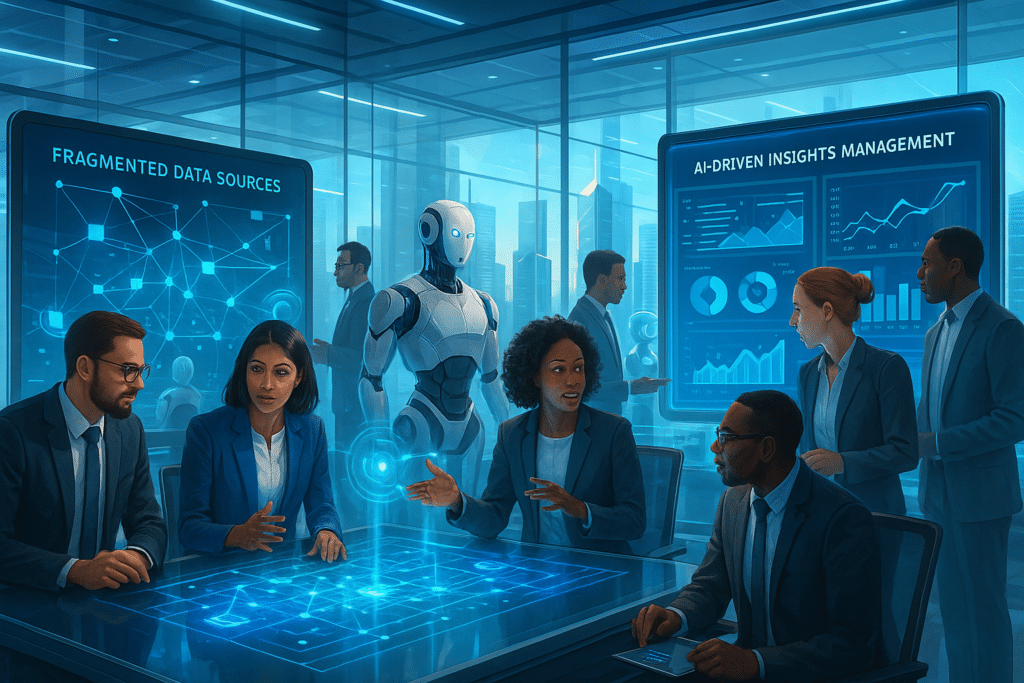
Now, with the confluence of increased AI adoption, new automations, and the growing need for strategic intelligence, organizations can reshape how they connect and leverage their company knowledge. Those that embrace this shift will be equipped with a competitive edge that accelerates their decision-making and transforms the strategic value of insights across the enterprise.
If you’re responsible for marketing strategy, innovation pipelines, or high-stakes decision-making, understanding today’s knowledge-management shifts isn’t optional. It’s your edge. Let’s dive into the AI-driven trends redefining how leading organizations think, learn, and win — and that will define this next chapter.
1. Agentic AI takes center stage in insights management
From assistants to autonomous insight agents
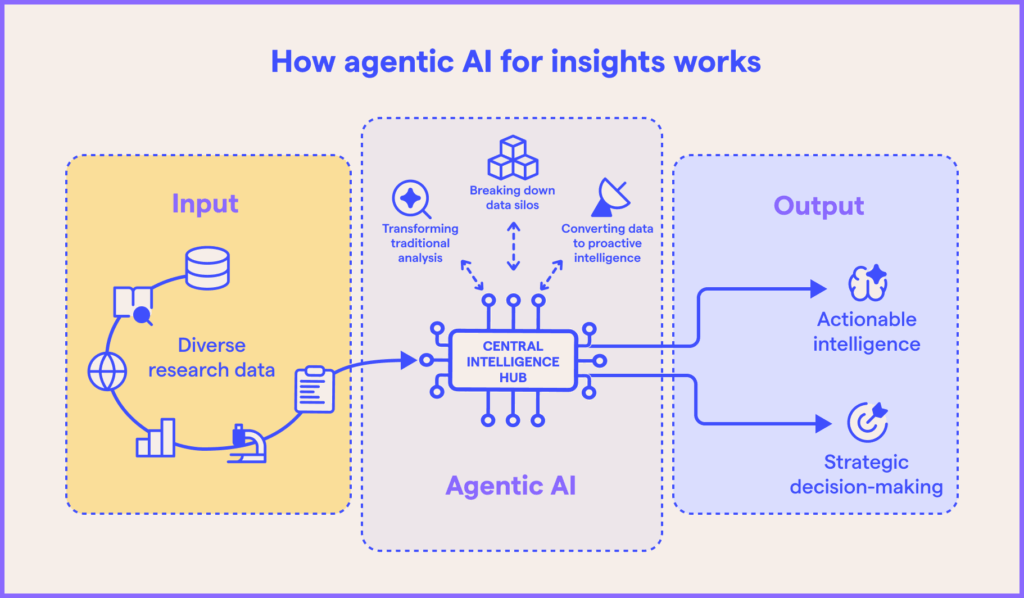
Agentic AI has already gained a lot of momentum in the past year, but it will move to the center stage in 2026. This major shift will see a departure from passive, query-based AI models toward agentic AI capacity to independently complete complex analysis tasks. Rather than waiting for prompts, these agents will proactively search, synthesize, and summarize intelligence drawn from an organization’s entire knowledge ecosystem.
This change is already underway. In McKinsey’s recent survey, “The state of AI in 2025”, they found that sixty-two percent of survey respondents say their organizations are at least experimenting with AI agents. Next year, enterprises will move beyond this experimentation phase and toward systematic adoption of AI tools that can deliver measurable ROI.
To put it more simply, this signals a transition from AI that assists to AI that executes.
Why autonomous insight workflows matter
Agentic workflows eliminate the operational friction that has historically slowed down insights functions:
- They reduce or even remove time spent manually “insights-hunting.”
- They enable continuous monitoring of key markets and consumers
- They ensure teams are working with the most up-to-date, relevant intelligence
AI-powered solutions like DeepSights™ are built-to-purpose for these exact insights management tasks.
DeepSights enable autonomous insight agents that are trained to perform tasks such as trend monitoring, white-space detection, multi-source synthesis, and concept generation. In 2026, these agentic capabilities will become foundational for organizations that want to innovate ahead of the curve.
2. Synthetic personas become a standard research tool for insights management
Dynamic, AI-generated personas that behave like real users
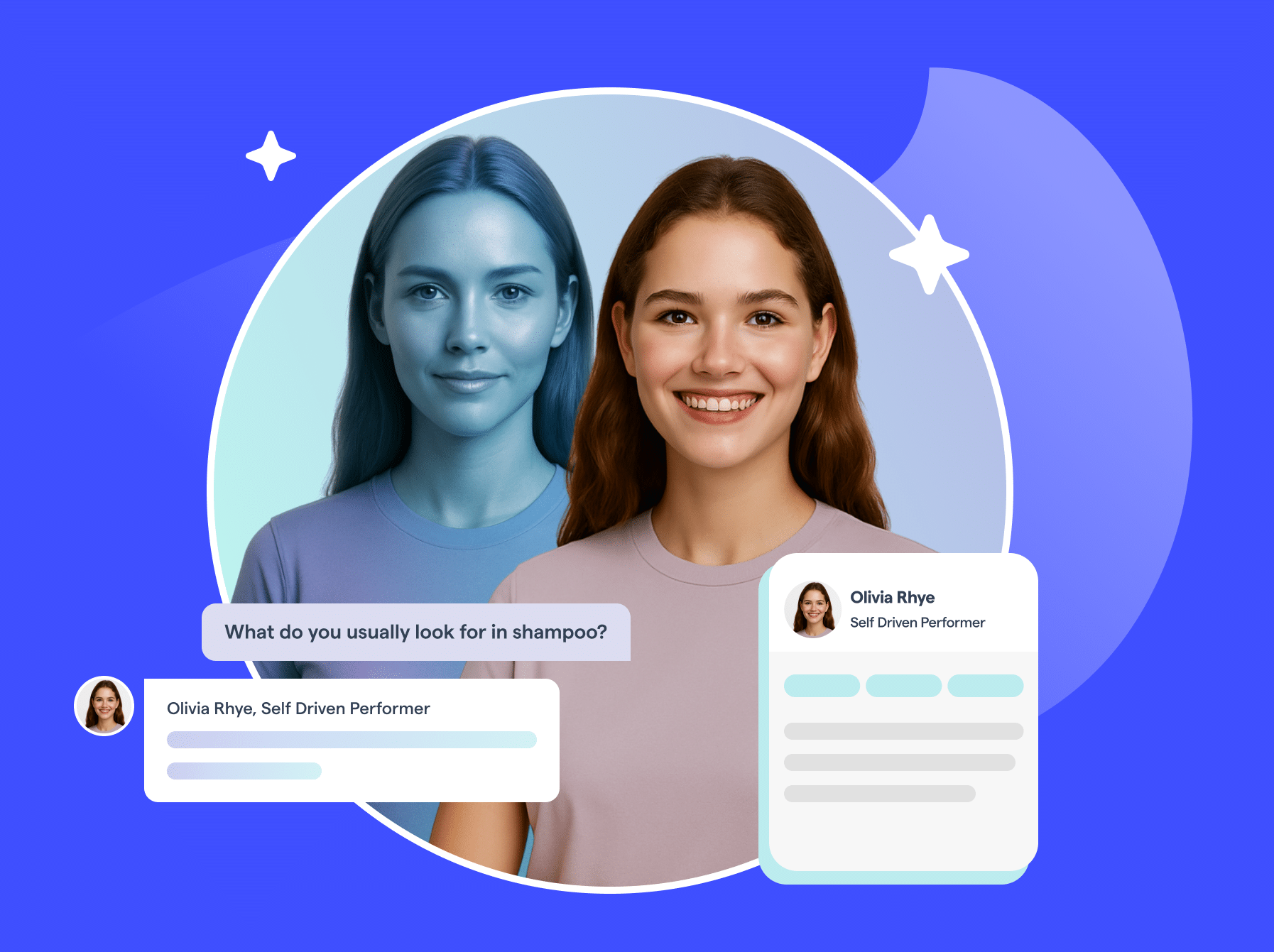
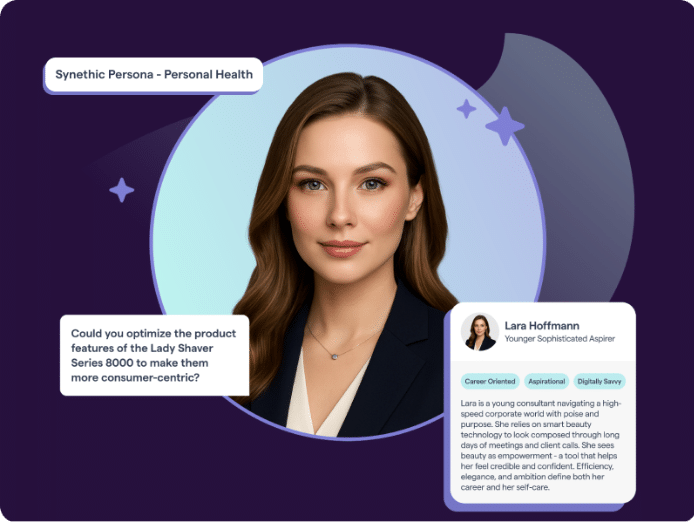
Synthetic personas, sometimes referred to as “synthetic users,” have emerged as one of the most powerful applications of AI within market research. Unlike traditional personas that exist as static references in decks or reports, synthetic personas evolve dynamically as news, primary research, or market intelligence reports are added to the company’s database. Additionally, these personas can simulate customer conversations and behavioral patterns — enabling product teams to continuously engage in concept testing and early-stage validation.
Through agentic AI, these personas provide an “always-on” proxy for customer segments, capable of helping teams explore product-market fit, messaging effectiveness, design alternatives, and customer journeys with unprecedented speed.
Philips Healthcare: an early adopter of synthetic, AI-powered Persona Agents
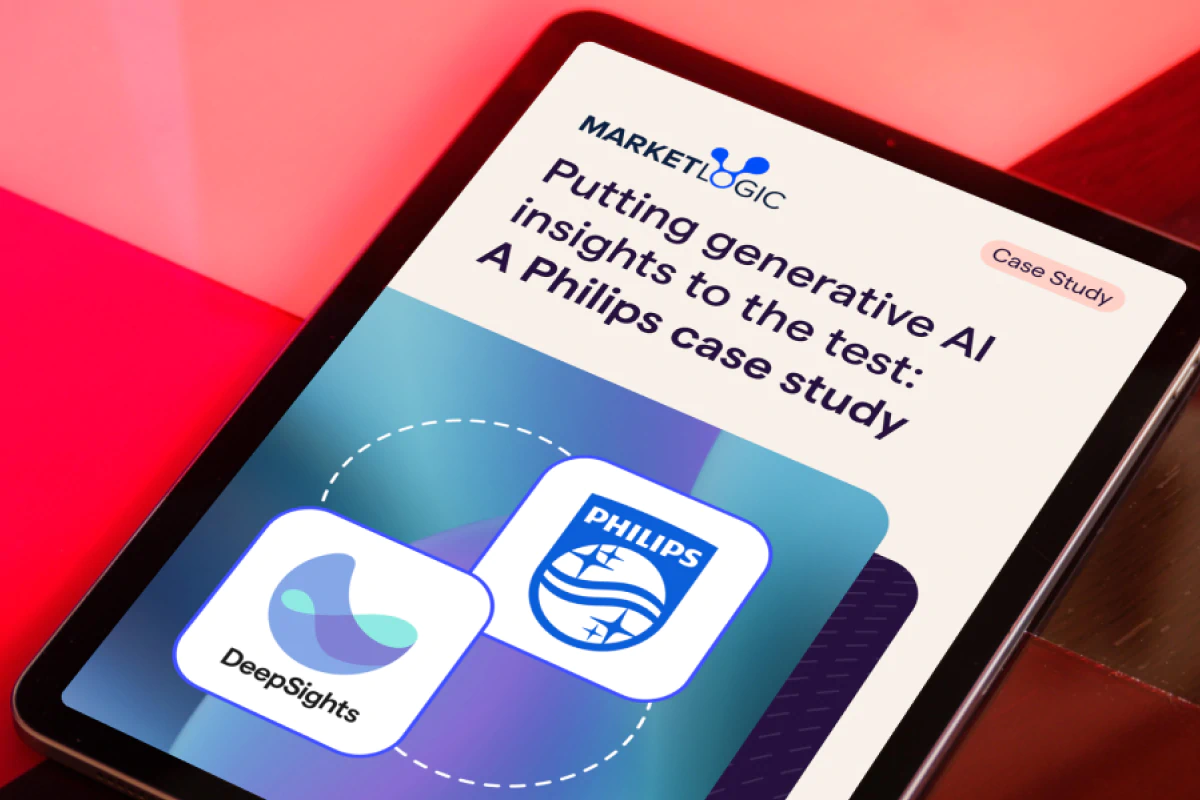
In 2025, Philips Healthcare took a decisive step forward by embedding this new technology into its market research workflows. Together with Market Logic, Philips brought synthetic personas to enterprise scale across all their personal health categories to help accelerate their research and decision-making cycles.
As more global organizations follow suit and adopt synthetic personas, agentic AI will inevitably enter the mainstream. But ultimately, this evolution demonstrates how AI can make organizations more human by placing empathy and consumer understanding at the heart of every decision.
3. Hyper-personalized insight delivery replaces generic dashboards in insights management solutions
Tailored, role-aware insights surfaced at the right moment
Dashboards have long served as the default reporting mechanism for the insights function. But in the next year, businesses will begin to opt for more hyper-personalized insight delivery, where agentic AI automatically surfaces the most relevant intelligence tailored to a user’s role, decision context, and historical behavior.
Instead of expecting business users to search through overloaded dashboards for the relevant insights, AI has the power to proactively push insights to the right person, in the right format, at the right time. This may look like:
- Analyst-level summaries for senior leaders
- Competitive intelligence for product teams
- Consumer behavior changes for marketing
- Relevant past research for stakeholders beginning new initiatives
In short, individual users will only receive the insights that matter to them, as soon as they are available.
Reducing noise and boosting decision-quality
Hyper-personalized insight delivery improves and amplifies the usability of the current dashboards; it maintains the trustworthiness of information while ensuring the autonomous delivery of specific insights to the most relevant stakeholder.
AI-powered insights delivery also excels at synthesizing disparate types of information: structured and unstructured data, and even visual data can all be integrated into someone’s personalized dashboard.
Platforms like DeepSights already lead this shift by providing intelligent, role-aware recommendations that align insights directly with strategic and operational decision points. This hyper-personalized future means no more dashboards collecting dust, and improved data-driven decision-making across the board.
4. Integrated insight ecosystems replace siloed tools as insights management trends
Moving beyond disconnected repositories
The goals of knowledge management have always been to break down silos and create a single source of truth that can be accessed by stakeholders across an organization. And yet, many enterprise organizations still manage their research, market intelligence, competitive data, and customer analytics across siloed systems. This fragmentation leads to duplicated work, lost insights, and slow decision cycles.
This legacy approach will soon be replaced by integrated insight ecosystems enabled by:
- Advanced APIs
- AI-powered semantic search
- Enterprise-wide taxonomies
- Cross-platform integrations
These ecosystems ensure that insights flow effortlessly across CRM systems, research libraries, content hubs, analytics platforms, and cross-functional tools.
Making insights discoverable everywhere
In the past, companies sought to centralize their enterprise data within an insights platform, but in rapidly moving markets, this step is no longer sufficient. The future of insights management has to deliver near omnipresent intelligence.
Moving into 2026, teams should expect— and require —insights to be integrated directly into the systems where they already work, from project management suites like JIRA or Asana, to CRM environments like Salesforce, to collaboration tools like Teams or Slack.
Many companies are already beginning to build this AI “ecosystem”, ensuring that multiple AI tools don’t accidentally duplicate the silos that they were created to dismantle. You can hear more about how eBay is using DeepSights as the “intelligence layer” of their broader AI ecosystem here.
5. Data integration via ethical, transparent, and trustworthy AI becomes non-negotiable in insights management
Addressing concerns around accuracy, bias, and explainability
As AI tools automate more aspects of insight generation, organizations must ensure that their systems uphold the highest levels of transparency, data governance, and accuracy. Analysts at Gartner predict that trust and explainability will become cornerstone evaluation criteria for enterprise AI solutions.
This trend is especially prevalent in industries with high regulatory scrutiny, such as pharmaceuticals and healthcare or financial services, where reliability, traceability, and verifiable sourcing are essential.
In recent leadership roundtables, leaders from Bristol Myers Squibb and Perrigo have highlighted the need for specialized, governed data and insights solutions that ensure integrity and reliability at scale. Compliance and automation must coexist, and this can only be achieved with human oversight.
Building trust across teams and stakeholders
More data does not always translate to more accuracy in market research. Additionally, general-purpose AI tools often fall short when interpreting consumer and market intelligence data.
Hallucinations, outdated information, or unverifiable statements can completely undermine a company’s trust in its insights, leaving individuals to opt to make decisions without data instead.
Therefore, trust is a necessary prerequisite for any level of AI adoption. Teams must be confident in where their insights come from, what reports or datasets were used, and whether there is any bias or conflicting data in the sources.
Platforms like DeepSights will play an increasingly central role in supporting these frameworks by offering features such as “AI-watchouts” to avoid hallucinations, as well as traceable insight workflows, user access controls, and compliant data integration across the enterprise.
Our main market research pain point was being able to complete everything according to our compliance standards, while also having searchable research that’s accessible and democratized. [Now DeepSights has] allowed us to really move forward with this AI journey.” –
Mary Platts, J.D., Associate Director, Global Compliance & Ops. Excellence – Commercialization, Bristol Myers Squibb
Using data effectively starts with choosing the right data integration platform
The future of insights management is intelligent, automated, and deeply interwoven with enterprise AI strategy. Organizations like Forrester have already concluded the economic impact of AI-powered insights management tools, finding that Market Logic’s DeepSights solution delivers an incredible 411% ROI.
Therefore, it will be the organizations that harness this new generation of technology that innovate faster, respond to the market with greater precision, and build a stronger competitive advantage.
To summarize, in 2026:
- Agentic AI will automate and accelerate insight discovery
- Synthetic personas will revolutionize early-stage research and validation
- Hyper-personalized intelligence will replace outdated dashboard models
- Integrated insight ecosystems will eliminate silos and unlock institutional knowledge
- Ethical and trustworthy AI frameworks will ensure responsible, high-confidence decision-making
As enterprise AI moves from an era of prediction and potential to one of mature integration and tangible ROI, insights leaders are well-positioned to spearhead the creation of AI ecosystems that enable the flow of “always-on” insights throughout the enterprise.
Making this future real requires the right foundation: a purpose-built intelligence platform that unifies knowledge, increases access to insights, and scales responsibly across teams.
Market Logic brings you transformative capabilities in one comprehensive platform that elevates how your teams achieve success and business growth with its trusted, award-winning solution, DeepSights. DeepSights is designed to enhance the way your organization captures insights, turning it into actionable intelligence that fuels innovation. Request a demo today to learn more.