


Share this article


Lessons from Market Logic’s London Insights & Innovation Roundtable
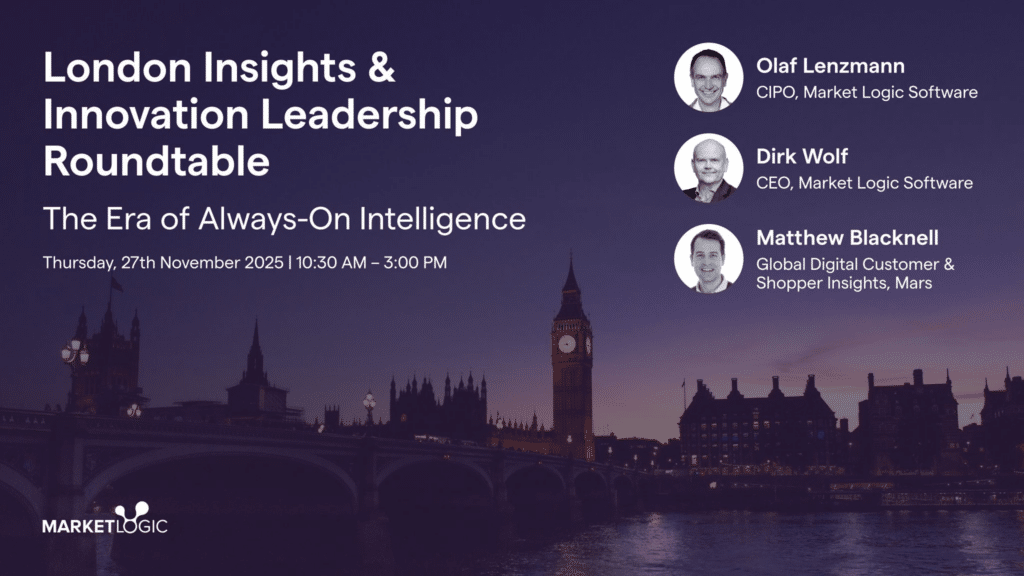
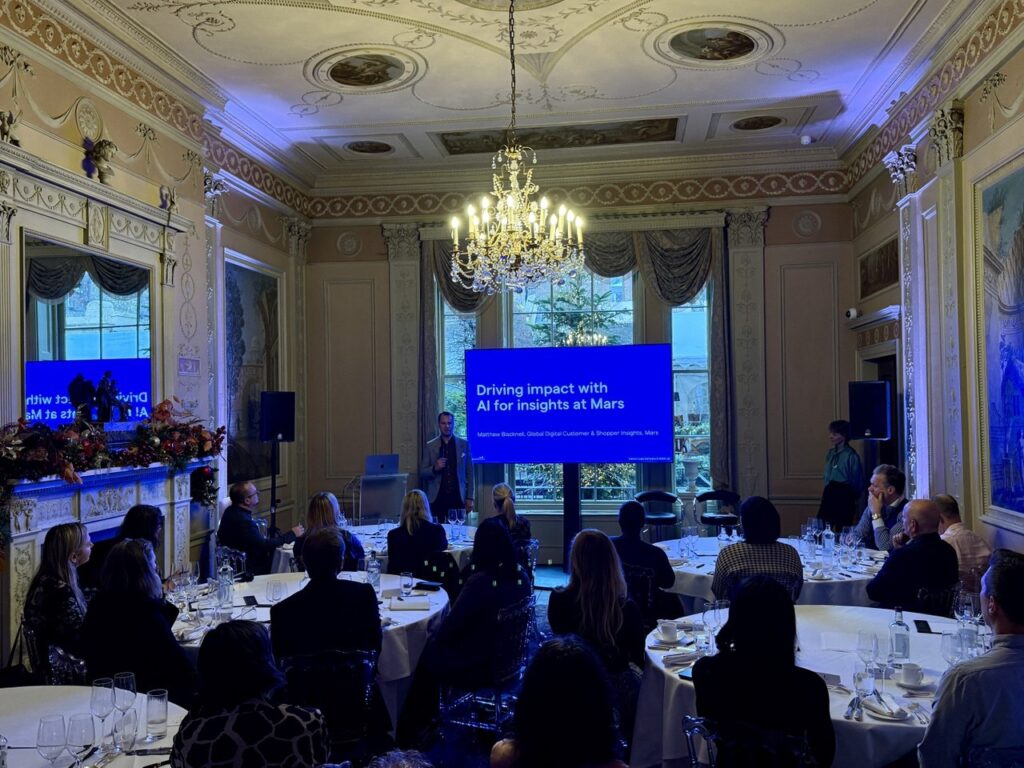
Building an always-on market insights culture has become a strategic priority for global enterprises as AI reshapes how organizations access, activate, and operationalize their collective knowledge. This shift was at the heart of Market Logic’s annual London Insights & Innovation Roundtable, where senior insights, marketing, and commercial leaders gathered at Home House to explore what always-on intelligence looks like in practice.
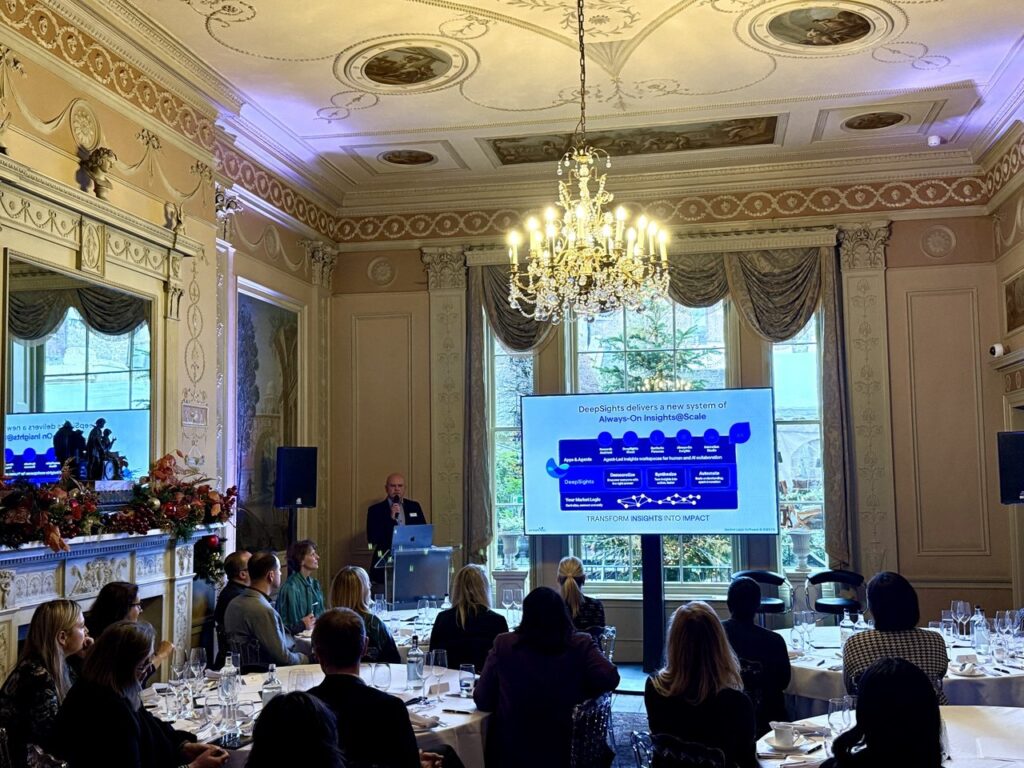
Dirk Wolf, CEO of Market Logic, framed always-on intelligence as an emerging operating capability: one that continuously surfaces an organization’s institutional knowledge at the moment of need. Olaf Lenzmann, Market Logic’s CIPO, showcased how DeepSights Agents now streamline trend exploration, category strategy, early innovation workflows, and persona refinement, transforming processes that once required weeks into minutes.
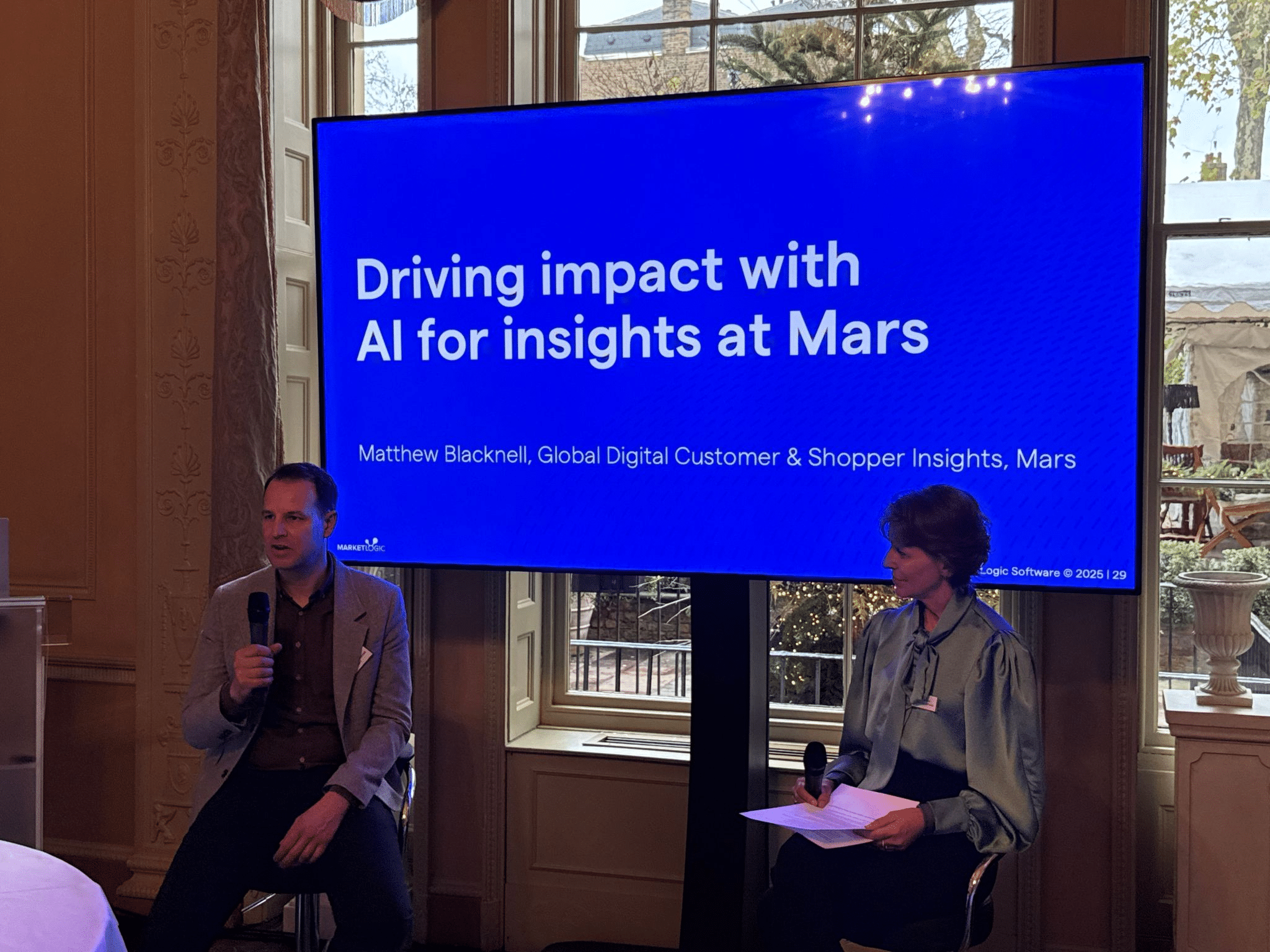
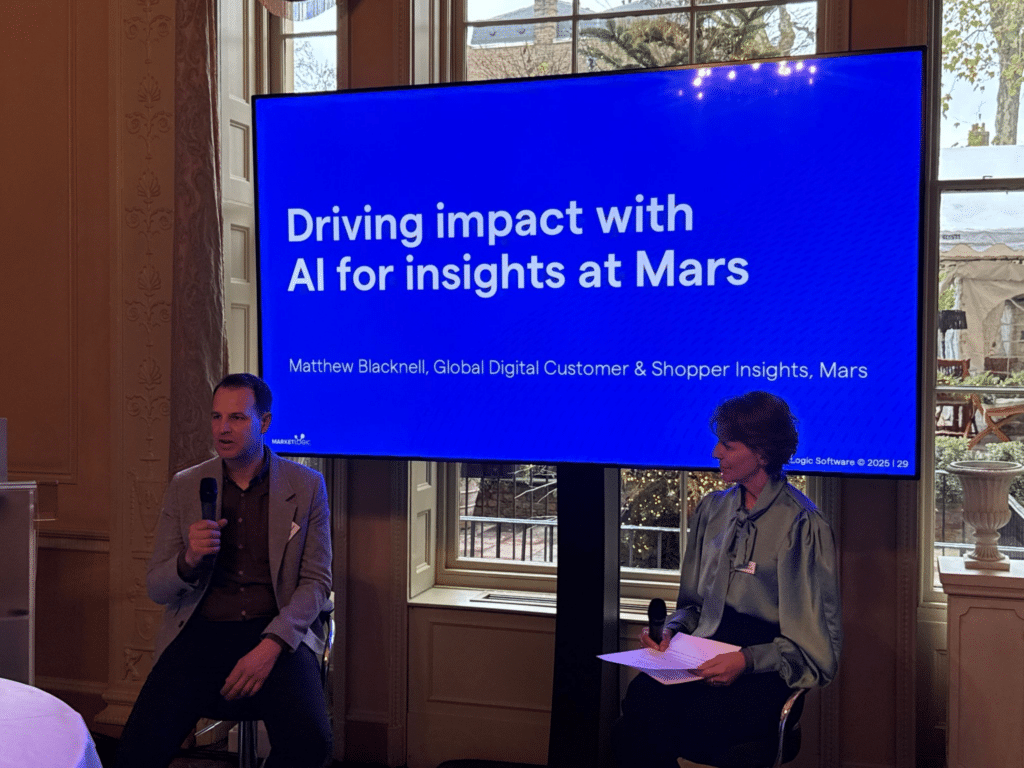
But the highlight of the morning was a candid and deeply practical session with Matthew Blacknell, Global Digital Customer & Shopper Insights Lead at Mars. His story offered one of the clearest examples of what it actually takes to scale AI-enabled insights in a complex global enterprise, and what changes when the organization starts treating knowledge as an asset rather than a by-product of research.
Case study: How Mars is building an always-on insights culture
A distributed enterprise facing a universal challenge
Mars is a global powerhouse in snacking, food, and pet care, serving consumers in more than 80 countries. Its scale brings extraordinary opportunity and significant complexity. Each segment has its own insights teams, toolkits, and decision processes, producing a rich but fragmented body of knowledge. Creating a unified, always-on view of what Mars knows has become a strategic priority for unlocking value across the enterprise.
Nearly a decade ago, Mars began centralizing its research into Synapse, powered by Market Logic. This consolidation closed redundant repositories and established a single home for knowledge across the enterprise. That foundation proved critical.
But the true transformation began two years ago with the introduction of Market Logic’s AI assistant DeepSights, powering always-on AI insights at scale and space.
DeepSights didn’t replace Synapse, it activated it. It revealed the latent value of Mars’ vast knowledge base, turning a structured repository into a dynamic, conversational intelligence system used by thousands. As Matthew shared:
DeepSights helped us unlock the value of the knowledge we had already built, it changed how teams engaged with insights.”
Usage expanded, new functions came on board, and insights began flowing directly into everyday decisions. This single shift unlocked new sponsorship, new curiosity, and far broader adoption.
From cost pressure to value creation: AI as an inflection point
Before DeepSights, the insights function, like many others, faced the familiar pressure to demonstrate ROI and reduce duplication. Research was sometimes viewed as a cost to manage rather than a strategic lever.
DeepSights flipped that dynamic almost overnight.
Mars quantified the value of its consolidated knowledge at $790M, a figure that reframed the conversation across the business. Knowledge wasn’t an archive; it was a capital asset that needed to be activated.
Showing the business the scale of the knowledge asset fundamentally shifted the conversation.“
Why DeepSights succeeded where traditional search stalled
Mars discovered a behavioral truth: employees were willing to spend 30 seconds searching for insights. If they didn’t find what they needed immediately, they emailed the insights team.
DeepSights changed that pattern.
Because it understands natural language, business context, and Mars’ acronyms, teams now:
- Make DeepSights their first stop instead of their last
- Ask more complex, strategic questions
- Spend more time exploring insights (a jump from 30 seconds to several minutes)
- Obtain consistent, trusted answers
DeepSights usage grew 174% YoY, making it the dominant mode of search across the enterprise. As Blacknell shared:
We saw a shift from quick keyword searches to much deeper exploration, with people spending several minutes engaging with insights instead of 30 seconds.”
This is democratization with impact, not simply giving more people access, but enabling them to actually use what they find.
Democratization done right: Champions, governance, and trust
Mars did not leave adoption to chance. Instead, they engineered trust and behavioral change through:
1. A gobal network of knowledge champions
Each business segment appointed champions, not just in insights, but across sales, category, and marketing.
This allowed rapid local rollout, peer-to-peer training, and a direct feedback loop.
2. Rigorous responsible AI governance
With thousands of employees trained in responsible AI, Mars treated trust-building as a non-negotiable.
We required unanimous confidence before rollout, if even one market had concerns, we didn’t proceed.“
3. Clear communication and behavior design
Mars moved away from traditional platform walkthroughs and instead focused on a crisp, role-specific value narrative. Rather than delivering long training sessions, teams now receive short, 15-minute DeepSights demos during regular team meetings, each one tailored to the decisions and workflows of that function. This shift made the value immediately obvious and lowered the barrier to adoption.
Communication was further adapted to each business segment, using:
- Tailored use cases aligned to functional needs
- Gamification in some segments
- Performance measurement and accountability in others
This flexibility allowed adoption to scale across different teams, cultures, and working styles, ensuring DeepSights became embedded in everyday decision-making.
Real impact: Efficiency gains, strategic re-focus, and faster innovation
Three types of impact are now visible across Mars:
1. Less duplication, more strategic work
Synapse + DeepSights significantly reduce re-testing and re-scoping.
Learning plans increasingly prioritize forward-looking, transformational work.
2. Amplified return on research investment
A study conducted in one market now informs decisions globally, multiplying the ROI.
We know a project might deliver a 10× return; by enabling other markets to find and use that work, we can often triple or quadruple the impact.“
3. Faster, more informed innovation cycles
DeepSights now supports the earliest stages of innovation, from initial discovery and problem framing to trend synthesis and concept refinement.
Teams described this upfront stage as noticeably quicker and more thorough, enabling better-informed decisions earlier in the process. As a result, they spend less time revalidating what the business already knows, and far more time shaping future opportunities.
What’s next: Decision-ready insights and a connected AI ecosystem
Matthew emphasized that the next chapter goes beyond democratization, toward smarter, more connected and automated ways of working, where insights, data, and tools integrate seamlessly across the business.
Richer data for more accurate recommendations
AI tools cannot rely on qualitative narratives alone. Mars is rethinking how research is structured so insights become decision-ready data, quant-coded, structured, and machine-consumable.
Connecting the AI ecosystem
Mars, like all large enterprises, is navigating a landscape of:
- Internal LLMs
- Agency-built AI tools
- Enterprise platforms
- New modalities of decision intelligence
The priority is not to control the entire stack but to ensure that enterprise knowledge remains connected, discoverable, governed, and ready to integrate as the landscape evolves.
What every insights leader can learn from Mars
Matthew’s story surfaces the universal challenges — and opportunities — facing insights, marketing, and commercial teams:
1. Data isn’t the problem, activation is
Teams are buried in information; DeepSights solves the last-mile problem.
2. Knowledge is an enterprise asset
When treated and valued as such, adoption accelerates dramatically.
3. Democratization requires governance
AI is only as strong as the trust people place in it.
4. Innovation moves faster when teams start with existing knowledge
5. The future of insights is decision enablement, not research delivery
AI doesn’t replace the insights function, it elevates it.
The Mars case shows what’s possible when insights teams think boldly, build trust deliberately, and use AI not as a shortcut, but as an amplifier of human expertise.
Want to see DeepSights for yourself? Schedule a demo to see how DeepSights’ always-on insights and our DeepSights Agents are reshaping workflows for insights teams worldwide.