

Share this article


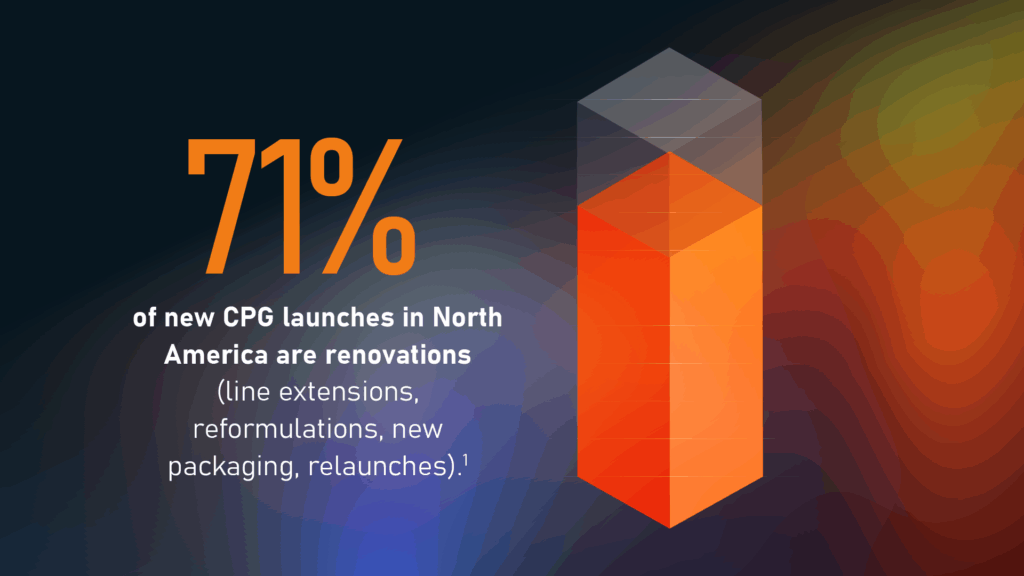
Standing out has never mattered more – or been harder to achieve. 71% of new CPG launches in North America are renovations (line extensions, reformulations, new packaging, relaunches).1 Over time, this focus on minor improvements rather than truly new offerings has blended many categories into a crowded sea of sameness.
Meanwhile, private label brands continue to gain ground. Consumers increasingly see store-brand products as equal to or better than branded ones, with 83% now saying private labels deliver the same or superior quality in the grocery channel.2
Uniqueness remains one of the strongest determinants of innovation and brand success, yet it’s where many fall short. Brands and innovations that are meaningfully different are more likely to earn premium pricing, secure distribution, and build loyalty.
In the fourth article of our Innovation Reignited series, created with Ipsos US and Alchemy-Rx, we share guidance for the C-suite on how to ensure a truly differentiated pipeline, stand out, and drive innovation and growth.
Pressures driving the need for differentiation
Consumers demand more: They expect brands to evolve continuously and deliver improvements that are relevant and valuable, not just different for the sake of it. They seek better performance, new benefits, and more convenient solutions. If launches don’t deliver, consumers will switch, trade down, or disengage entirely.
The fight for visibility is fierce. Shelf space is limited. Digital platforms reward algorithmic performance or paid placement. Social commerce adds a new set of gatekeepers. From buyers to influencers, those controlling access expect innovation that drives category growth, not just share shifts. If a launch doesn’t offer clear incrementality, it won’t earn attention – or distribution.
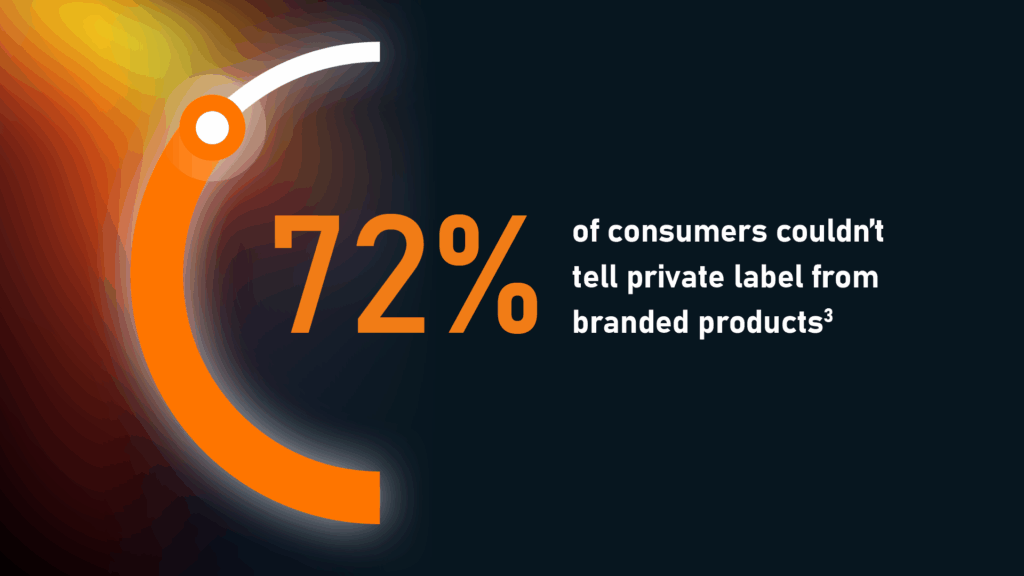
Private label has raised its game. With stronger branding, quality, and design, private label has become direct competition, not just a budget alternative. In one study, 72% of consumers couldn’t tell private label from branded products in side-by-side comparisons.3 And it’s not just retailers: content creators and influencers are launching their own lines, further fragmenting the market.
Copycats are faster and better than ever. Global players, digital-native challengers, and retailer-owned brands are replicating innovation in weeks, not years, often with comparable quality and lower price points.
Brand growth has slowed. With fewer paths left for expansion or acquisition, mature CPG brands must turn to innovation to fuel revenue and rebuild equity. With differentiation of new products declining over the past few years (55% decrease in innovations seen as highly differentiated over the last five years4), risks to brand perception and equity are sure to follow. Safe, incremental, easily copied innovation isn’t going to make a meaningful impact. Your pipeline must deliver more value consumers and retailers, with distinction that competitors can’t easily replicate.
Build a pipeline competitors can’t copy
Differentiated innovation doesn’t just stand out, it’s hard to replicate. That’s what makes it valuable. The goal isn’t just to launch products; it’s to gain sustained growth from differentiated innovation that only your brand can deliver.
Innovation can stand out in a few different ways:
- Functionally distinct: Better performance, quality, or utility
- Aesthetically unique: A design or sensory experience that stands out
- Emotionally resonant: Benefits that connect to consumers’ feelings or identity
Innovation can stand out in a few different ways:
- Legally, through patent or trade secrets
- Practically, by requiring major capital or operational complexity
- Strategically, by tying closely to brand equity or proprietary IP
Truly differentiated, ownable innovation takes more investment, but it’s also much harder to replicate. And that’s what drives long-term advantage.
Innovation and brand can build each other
Innovation isn’t separate from brand — it’s one of the most powerful ways to shape, reinforce, and grow a brand.
When done right, innovation brings your brand positioning to life. It delivers functional and emotional benefits that make your brand more distinct, more defensible, and more valuable over time. And when consumers experience those benefits, brand equity grows — improving not just the success of a launch, but the strength of the brand behind it.
Example: A clean beauty brand known for natural, non-toxic ingredients isn’t seen as delivering visible results. To close that gap, they launch a plant-based retinol alternative — clinically proven to reduce fine lines, without irritation. The innovation reinforces their brand values and improves perceptions of performance. It strengthens the brand and delivers a benefit that other brands may not have the equity or credibility to deliver.
The most strategic companies don’t treat innovation and brand as separate entities. They use innovation to close the gap between how they’re perceived today and the positioning they aspire to own.
Make innovation a strategic growth engine lever
Differentiation builds defense and drives growth, but only when your business strategy, brand positioning, and innovation efforts are working in sync.
Yet many companies struggle to treat innovation as a true growth engine. Over 60% are freezing or cutting innovation spending — even as one in three expect more than 25% of future revenue to come from new offerings.5 Innovation needs ambition, alignment, and investment.

Five questions to challenge your strategic alignment:
What business are you really in?
Are you defining your category too narrowly? Organizations often limit innovation by framing themselves around products, not the broader needs they serve. Look through the consumer lens at how the market is perceived. How you define your playing field shapes what’s in scope for growth.
What does your brand stand for?
What do you want it to be famous for, and how far is that from how consumers perceive your brand today? Innovation can reinforce or reshape brand meaning, but only if your promise is clearly defined and distinct from the competition.
How is innovation prioritized?
Is innovation treated as a driver of growth, or sidelined for short-term wins? Unrealistic payback windows, over-applied ROI criteria, and internal pressure for fast wins can limit your ability to fund big ideas and place future bets.
How are ideas managed through development?
Do strong ideas stay strong — or get diluted to hit cost and feasibility targets? Is research used to reduce risk and guide iteration, or only to validate what’s already safe?
What’s your tolerance for change?
If the right innovation demands a new business model, channel strategy, or partner — will your systems flex to support it, or will the organization default to what’s familiar? Avoiding risk might feel safe… but it won’t shift your growth trajectory.
Gauge your innovation funnel for differentiation
A truly differentiated pipeline should deliver clear incremental value for consumers, build your brand, and be hard to replicate. To pressure-test your current funnel, ask these questions of each project:
Is it insight-led?
Was this idea sparked by a proprietary research finding, unique tension, or consumer need that gives you a head start over the competition?
Does it add clear consumer value?
How much more functional or emotional benefit does this deliver vs. current solutions, substitutes, or alternatives? Is it enough to command attention — and a premium?
Does differentiation stay intact from idea to launch?
Has the idea stayed true through development, or has it been diluted by feasibility, cost, or compromise? Are differentiated launches supported commercially for success?
Does it reinforce the brand?
Does it align with your positioning and strengthen what you want to be known for? Or could it just as easily belong to a competitor or private label? Better yet, is it something that only your brand can uniquely offer?
Is it uniquely ownable?
Can this innovation be protected by IP, brand equity, exclusivity, or trade secrets? Would consumers still attribute it to your brand without the logo? What makes it hard to copy? If you’re unsure if an innovation is different, ownable, or brand-reinforcing, it may be time to revisit your strategy. Because if it isn’t, sell-in, sell-through, and growth will be a challenge.
A call to action: Innovation funnel consultation
Are your innovation plans building long-term brand growth — or just filling a pipeline?
Alchemy-Rx is offering a complimentary consultation to help you pressure-test your funnel through the lens of brand alignment and competitive differentiation. They’ll offer an objective point of view on where your pipeline is strong — and where it needs fresh thinking. That includes how well your innovations reinforce brand positioning, how to make ideas more ownable, and how to better link your brand and innovation strategies. Reach out to hello@alchemy-rx.com to learn more.
How we can help
- Ipsos brings world-class research capabilities, with proven methodologies to uncover deep consumer and category understanding. Their tools validate whether innovation builds brand equity and strengthens specific functional or emotional attributes.
- Market Logic powers the DeepSights™ platform, helping teams extract insights from existing research, across brand, category, and consumer studies, to spark new ideas and inform better development.
- Alchemy-Rx helps organizations uncover innovation opportunity areas and fill their innovation funnels with relevant, differentiated ideas.
Let’s build a pipeline that stands out and builds your brand.
Dive into the Innovation Reignited Series
This article is part of our Innovation Reignited series, a collaboration between Ipsos, Market Logic, and Alchemy-Rx. Stay tuned for more articles, videos and webinars where we’ll highlight common challenges and provide practical advice to generate growth through innovation. We’re jointly commissioning new market research to bring light to the true state of innovation in PG. These results will be shared in a comprehensive report as an exciting crescendo of our series.

Sources:
- Mintel. The Role of Innovation in the Future of the CPG Industry. 2024.
- McKinsey. State of Grocery Consumer Survey. 2023.
- First Insight. The Quiet Takeover of Private Label. 2025.
- Ipsos. Early-Stage CPG Research in the US. 2021 – 2025.
- McKinsey. Innovation Survey. 2024-2025.