

Share this article


In the second article of our Innovation Reignited series, created with Ipsos US and Alchemy-Rx, we explore how brands can transform data into insight and turn insight into innovation that drives growth.
Keep reading to get practical tips to transform data into insight, and turn insight into innovation that drives growth.
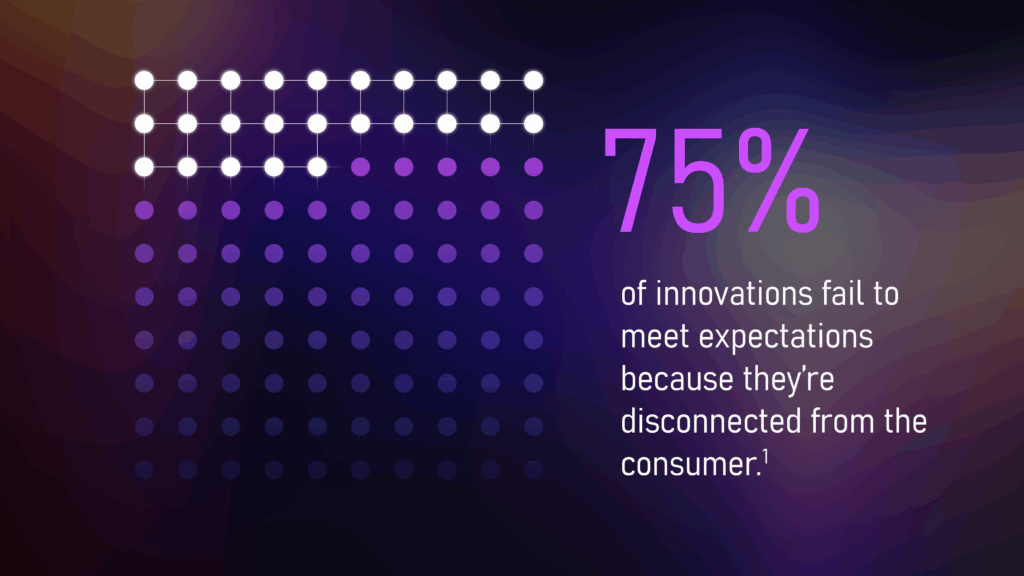
75% of innovations fail to meet expectations because they’re disconnected from the consumer.1
For many companies, the challenge isn’t needing more data; it’s having the right data and the ability to transform it into meaningful insights. We’re facing a flood of data, but a drought of insights.
Drowning in data
Modern organizations have more consumer data at their fingertips than ever before – POS data, CRM dashboards, social listening, trend trackers, panels, and more. Search algorithms and retailer platforms, from Google to Walmart to TikTok, all operate on different logic.
In theory, all of this data should unlock more insight – helping to identify market gaps, unlocking opportunities for innovation and understanding launch performance and how to optimize it. In reality, most organizations don’t have the time, tools, or expertise to distill meaning from the noise.
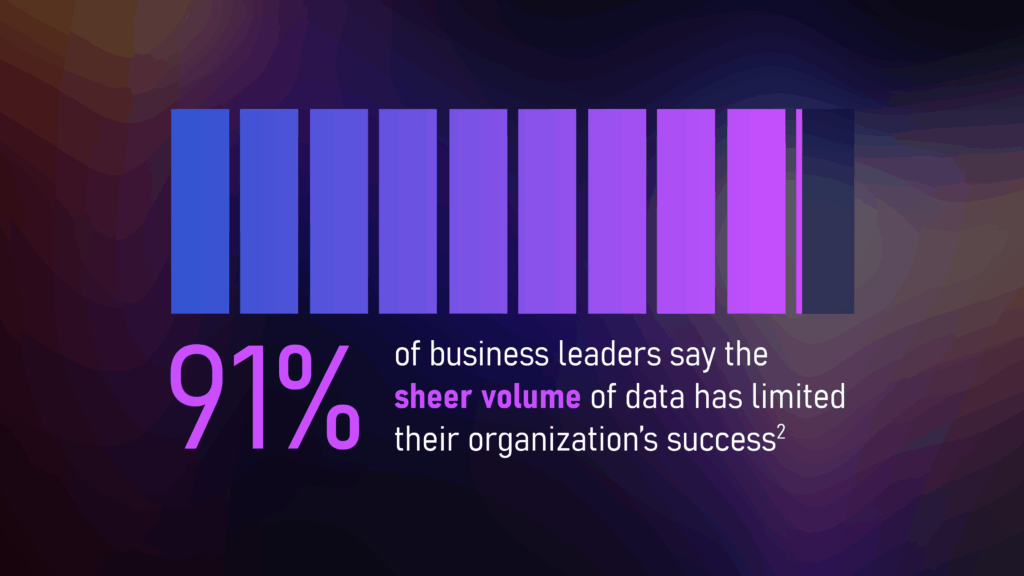
- 91% of business leaders say the sheer volume of data has limited their organization’s success2
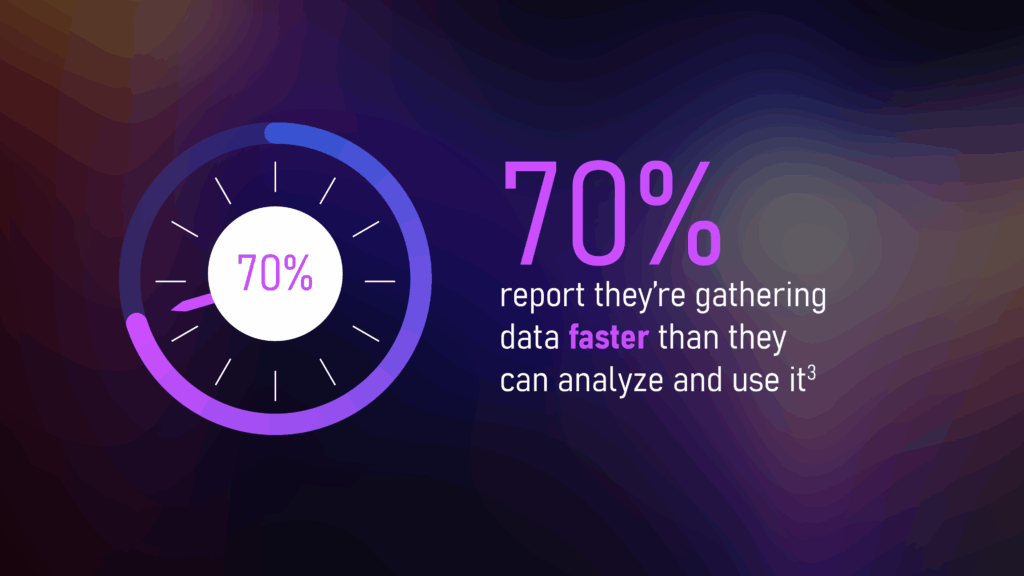
- 70% report they’re gathering data faster than they can analyze and use it 3
The explosion of channels, data, and complexity has made it harder to get clarity in a constant flow of information.
A lack of the right data
Despite this data abundance, few companies feel they truly understand their consumers: who they are, what they do, and why they do it. It’s more important than ever to understand where your brand stands and why consumers choose (or don’t choose) your offering.
Consumers are complex. They often post-rationalize their decisions or say one thing and do another. Research needs to dig below the surface, using methodologies that are reliable and predictive, not just descriptive. Breakthrough innovations demand deeper insight – understanding motivations, tensions, barriers and unspoken needs, which can only be uncovered through well-designed, strategic consumer research.
Yet, too many companies underinvest in this type of work, viewing it as an extra cost rather than a competitive advantage, with wide-reaching consequences:
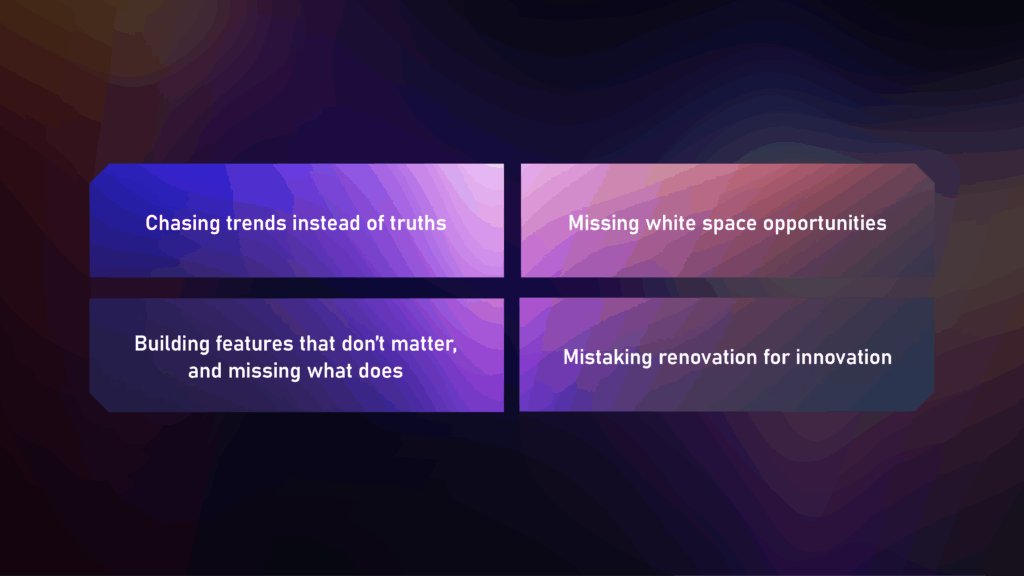
- Chasing trends instead of truths
- Missing white space opportunities
- Building features that don’t matter, and missing what does
- Mistaking renovation for innovation
Meanwhile, the consumer moves on – faster, and with more choices than ever.
Data ≠ Insight
Too often, companies mistake data for insight. But the two aren’t interchangeable. Data, if analyzed properly, can tell us what happened in isolation. But rarely does it spark new ideas.
Facts or common observations are often misconstrued as insights. Category truths, consumer demographics, or widely accepted consumer habits are likely also known by competitors and are, by definition, not insightful.
Data must become observations. Observations must become conclusions. And conclusions must be elevated into insights. That’s where value is created.

Insight has been defined as “seeing what everyone else sees but thinking what no one else has thought.” True insights reveal tensions, contradictions, or unmet needs that unlock opportunity – which are more likely to produce category-defining innovations.
Without true insight, companies fall into reactive innovation: optimizing based on yesterday’s data, rather than uncovering what consumers need tomorrow.
Insights are trapped in silos
In many organizations, insights don’t travel. Performance metrics sit with one team. Research reports sit on shared drives. Context from marketing or sales isn’t linked to analytics. Too much focus is put on what is happening rather than why it’s happening. As a result, data gets interpreted in isolation, and meaning is lost.
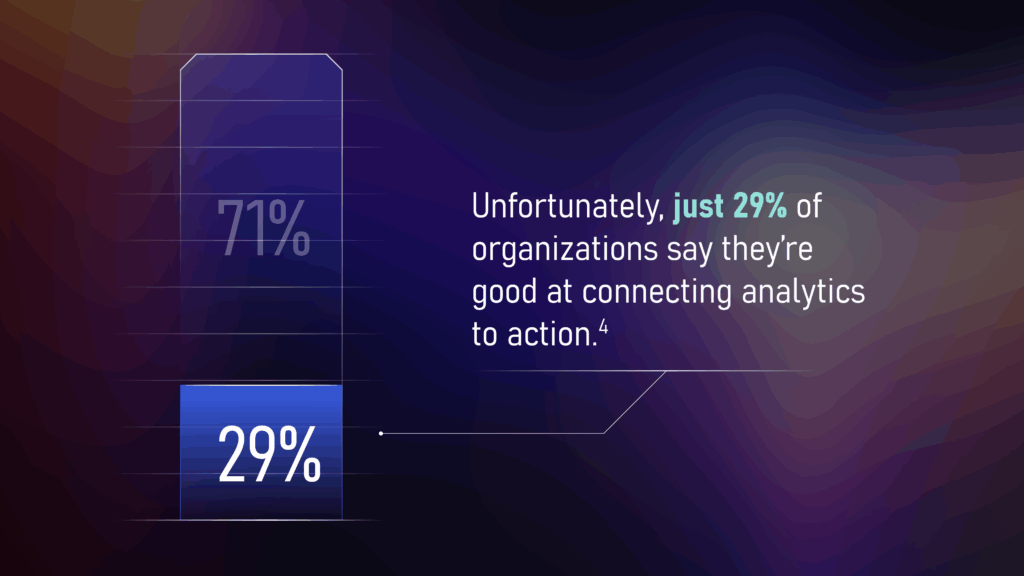
Unfortunately, just 29% of organizations say they’re good at connecting analytics to action.4
Insight is about achieving deep, accurate understanding – of your consumer, your brand, your market, and your competition. It’s about connecting the dots across timeframes, disciplines, and datasets.
Organizations need a joined-up approach – integrating quantitative and qualitative data, across sources like category audits, brand trackers, consumer research, and macro trends. Further, this data should be viewed through the lens of:
- Long and short-term market dynamics
- Category trends and lifecycle shifts
- Strategic brand positioning
- Competitive and channel context
- Consumer habits and usage behavior
Only then can data reveal rich insights, so teams can understand not just what happened, but why – and, more importantly, what to do as a result.
Let’s look at an illustrative example:
Siloed observations:
- Sales Data: Dry cereal sales among households with kids under 12 are down 6% YOY for the third straight year.
- Brand Tracking: Leading cereal brands saw a decline in “healthy” and “good for my kids” attributes, especially among younger millennial parents.
- Category Trends: Sales of kids’ yogurt pouches and refrigerated fruit cups are up double digits.
- Social Listening: Parents express frustration around weekday mornings: “chaotic,” “no time,” “just grab anything,” and rising guilt about defaulting to sugary or over-processed choices.
- Consumer Research: 68% of parents say they want healthier weekday breakfast options for their kids, but 52% say they’re “hard to find and hard to make.”
Combined to create rich insight: Busy parents are increasingly moving away from traditional breakfast options like dry cereal, driven by concerns over sugar, nutrition, and highly processed foods. At the same time, they struggle to find kid-friendly alternatives that are convenient and healthy.
Ideation opportunity: There’s a clear white space for healthier, convenient weekday breakfast solutions – not snacks disguised as breakfast. Think grab-and-go breakfast options that deliver on both kid appeal and parental approval.
Underestimating insight — and foresight — as strategic capabilities: Insight is a capability and a system. It requires the right data inputs, analytical capabilities, cross-functional collaboration, and a mindset shift. It also requires organizational investment: in the right data, in analytical talent, in cross-functional collaboration, and in the tools to synthesize information at scale.
79% of CMOs are feeling challenged to predict changing behaviors and shape new products and propositions to serve them.5 However, that’s exactly what needs to be done to unlock meaningful growth from innovation. Great innovators look beyond today’s reality or known trends. They have the foresight to develop innovations for anticipated consumer needs.
Gonzalve Bich, CEO of BIC, critically points out in our kickoff webinar Innovation Reignited: “First you have to set the vision for what 10 years from now is going to look like… and innovate towards that”.6
Recommit to insights for innovation in 5 steps:
- Use your data as raw material: Invest in tools and talent to make sense of data across sources. Learn what metrics matter most. Leverage AI to synthesize and surface patterns but remember: AI is only as good as the questions it’s asked.
- Invest in strategic consumer research: Build a roadmap with the right research partner to uncover motivations, barriers, unmet needs and white space – using sound methodologies, not shortcuts.
- Synthesize across datasets: Layer data to uncover true insights – market share + consumer qual + trend reports + brand performance. Use technology to centralize this and foster cross-functional discussions around what it means.
- Flex your Insight and foresight muscle: Create the conditions for insights to be uncovered, shared, and acted upon. Embed insights into strategic planning. Raise the standard of what qualifies as an insight. Teach your teams to look for contradictions, patterns, and opportunities. And don’t stop there; look forward to plausible future scenarios with foresight.
- Ideate from insight: Use your insights to spark ideas. Build ideas that solve real consumer problems in new, compelling ways. Provide incremental and new value to consumers, relevant to their needs and different from how they solve for it today.
How we can help
- IPSOS brings world-class research capabilities, with proven methodologies to uncover deep consumer and category understanding
- Market Logic powers the DeepSights™ platform – helping organizations extract insight from their data and research, at scale
- Alchemy-Rx helps organizations find and act on growth opportunities, facilitating ideation grounded in insight and strategic direction
Reach out to Alchemy-Rx for a free assessment of your existing insights and a plan for how to activate them for innovation.
Innovation that delivers real growth isn’t about being first to market. It’s about being first to insight.
And that’s not all
This article is part of our Innovation Reignited series, a collaboration between Ipsos, Market Logic, and Alchemy-Rx. Stay tuned for more articles, videos and webinars where we’ll highlight common challenges and provide practical advice to generate growth through innovation. We’re jointly commissioning new market research to bring light to the true state of innovation in PG. These results will be shared in a comprehensive report as an exciting crescendo of our series.

If you’re responsible for driving growth, now is the time to act.
Access expert perspectives on this topic in our webinar ‘Innovation Reignited: Why CEOs can’t afford to stand still’, with Gonzalve Bich, CEO of BIC.
Sources:
- Ipsos. Concept Testing Database. 2024.
- Oracle, DKC Analytics, and Seth Stephens-Davidowitz. Decision Dilemma Global Study. 2023.
- Forrester. Unveiling Data Challenges Afflicting Businesses Around The World. 2021.
- Forrester. Digital Insights Are The New Currency of Business. 2018.
- Dentsu Creative. CMO Survey. 2024.
- Gonzalve Bich, Innovation Reignited: Why CEOs Can’t Afford to Stand Still. 2025.