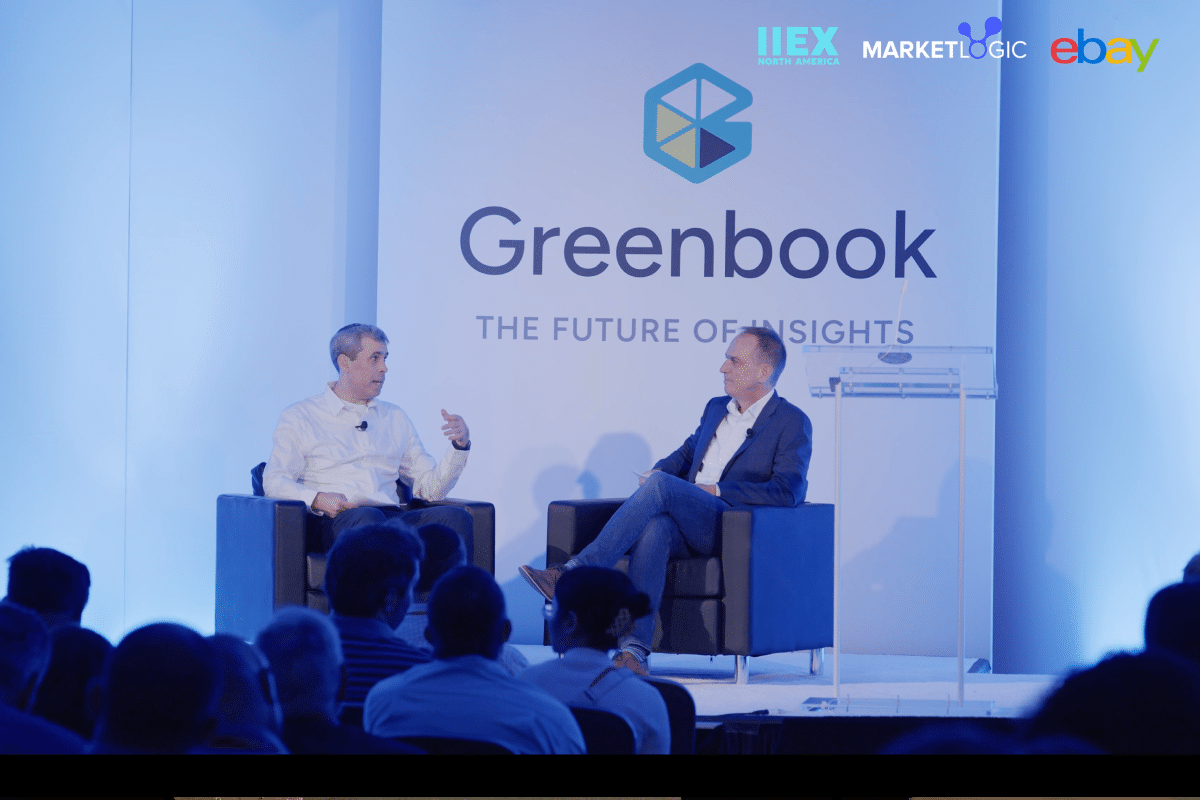


Market Logic was proud to sponsor MRMW EU 2025, one of Europe’s leading market research and insights innovation conferences. Held on November 6–7, 2025, in Berlin, Germany, the event brought together global experts to explore how AI, automation, and insights platforms are reshaping decision-making in enterprises.
Co-Creating the Future: How Philips and Market Logic Built Personas for Deeper Consumer Understanding
Discover how Philips and Market Logic co-created Personas to bring consumer understanding to life and accelerate decision-making across teams. This 20-minute session is packed with practical examples and live insights from Philips’ real AI adoption journey.
Watch the Full Session On-Demand:
Recorded live at MRMW EU 2025, this session showcases how Philips uses AI Personas within Market Logic’s DeepSights™ platform to drive faster, insight-led innovation.
Thank you very much for being here, everybody. Super pleased to be here together with from Philips. I’m from Market Logic, and today we’re gonna speak to you all about our Personas offering and how we at Market Logic together with Philips co built this offering and really brought it to the market. So just quickly, as I said, I’m the director of product management at Market Logic, and I’m joined today here by Sehnaz. Yeah. So we have one mic. My name is Sehnaz. I’m from Phillips as an AI platform manager. I previously worked at Unilever. I’ve been at Phillips for a year. Really excited to be here. Great. So I’ll her the mic when she does the majority of the talking, but that was just a quick one. So, I mean, as you gathered there, we’re both not actually from directly in the insights world per se. We’re coming with a little bit of an outside in look. I’m a product manager at a tech company. Is bringing an AI kind of angle as well on the Philips side. And the plan today is really spend a few minutes just quickly introducing Market Logic and giving you a bit of a framing of what our Persona’s offering is all about before we turn it over to Sehnaz to really talk about how they co built this together with us, some of the learnings they’ve had, and, of course, show you the product and so on. Then I’ll come back in to give a little bit of an overarching look what we’ve learned on, bringing this into the market across our customer base. So who is Market Logic? Many of you will know us. We’ve been in space for over fifteen years. We are a software provider. We provide a SaaS platform that’s used by some of the largest and most well known brands in the world. Of course, our sort of predominant user group that we serve is the insights teams at these companies, so we’ll typically have kind of global buy in. And all of the insights content, market research, competitive intelligence, often data, and so on will be sitting in our platform on behalf of our customers, and this is used to then serve up insights on demand, so to speak, across the business for both business stakeholders, but also those insight professionals themselves. We layer on top of that a whole suite of Gen AI tools, sort of our marquee tool called DeepSights, provides on demand business answers based on all of that content. And today, we’ll focus, as said, largely on a newer Gen AI offering, our personas piece. Yeah. So quickly just sort of framing the personas before we I hand this over to Sehnaz. So what are they really? Right? Sometimes they’re called kinda out there in the field synthetic data. Actually, Sehnaz and I had a little discussion on this yesterday in reversing. We would prefer not to call them synthetic. Although they’re powered by large language models, they’re really underpinned by our customers’ proprietary data. Later on, I’ll go a little bit deeper into what types of data generally can be used, and should as well speak about how, Philips specifically, had these built. But the important thing to remember is, yes, they’re powered by large language models, and that’s where a lot of the creativity and their output and so on comes from, but they are backed by our customer’s proprietary understanding of the customer segments and so on. And, yes, I think we’ll go in to look deeper into everything you can do with them, but, ultimately, you’re able to have this chat like experience with them as though you’re speaking to real customers or b to b groups, investigate their lifestyles, run concepts by them in an early stage, and so on. I think we’ll go deeper into all of that as we go, Ultimately, letting you really talk to your consumers at any time. And there was an interesting statement in one of the earlier sessions. I think it was Daniel from LinkedIn. He spoke about how AI is letting you paraphrasing. The the point that I got from what he said was that AI lets you or takes over a lot of the tasks that maybe you don’t wanna do so it can carry out some of those rote tasks and so on. I say, yes. But we see this persona’s offering as going beyond that. So I think everyone here agrees that everybody would like to be able to speak to their customers actually even more than they currently are able to. And what this lets you do is do that faster in a convenient way, run ideas by these customers, if you will, before actually speaking to real living customers. At least that’s how we see it. And with that, I would turn it over to Jan. Yes. Hi, everyone. So, yeah, so how our partnership developed over time. Market Logic actually was a data aggregator for us for all of our consumer research reports. So it was a one stop shop internally for our colleagues to reach all reports in twenty nineteen. So then with of course the AI boom, Market Logic developed DeepSights. So with those reports within the platform called Eureka that we called it internally, we were able to synthesize the data in a much faster way. Fun fact, I even saw a colleague put their out of office saying, if you have a question, reach out to DeepSights. So it was pretty cool to see also. And then in twenty twenty twenty four, we we started also developing our internal AI tool like all big companies are doing right now. We started tapping into the API worlds. We said, okay, we want our reports back, Joe. So we started then getting a Google Cloud API and now we are also going into the persona API. We call them synthesized personas because they are based on consumer research that we’ve done previously. And then we we we deploy this to all of our personal health categories. So how it started? It started with a vision. It started with Okay. Thank you. Is this better? Yeah. Yeah? Okay. Great. So yeah, I started with the vision and speaking a lot with Joe. And we have these reports. What can we do? We wanna create these personas. We started small. We started with one category and country combination. We we saw that it did create an output that we wanted, and then we started to scale. We have four main categories, and for all of them, we started creating different personas. And now, as I mentioned, because we have our internal tool, we want a persona API. We have our own internal consumer insight and innovation tool. With the personas, we are integrating them as a last stage for optimizing certain concepts, which I will explain in a bit. So as I mentioned, we have our reports that we’ve conducted and we also have we also provided, Joe and Market Logic, certain like Philips abbreviations, definitions and also certain structures that we train our internal colleagues in our marketing academy. So it’s important that the marketeers have an output of the reports that we’ve done, but also how we’ve trained them in terms of how to create an insight, that specific insight structure that we want. So it was really a way to reach our marketeers. The next step, of course, is to enhance the personas, to enrich them even further and with transcripts. So we have our interview transcripts as well, which we will feed into the personas. And of course, further consumer research reports, especially qualitative ones. So of course, we create these personas. Colleagues, they say, when should we use these personas? That’s one of the biggest questions that we have. So the first one is, of course, it’s a faster and a much easier way to understand our consumers, to deep dive into them. The second one is to really optimize our consumer insights. We we ask them, does this resonate with you? Does this insight feel like it like it’s okay? Do you what do you like about it? What you dislike about it? So questions like this, similar to product features. So I actually was doing a training internally and there was a OneBlade CMM. She wanted to optimize her product feature and we asked the persona, do you like this product feature? How would you optimize it? And they really like the output. If they didn’t like the output, we would ask the persona, well, can you rephrase it in a better way? Which it helped also to do. And lastly, I think the the most cool feature I like about it, it’s just not text and speaking. You can ask an image. So if you wanna upload a pack image and ask the persona, do you like this pack? How about this other pack? So the image, the storyboard, and the links, all is you can ask the persona if you like it or not and get feedback. In the next slide, I was gonna explain. So with ChatGPT, you can see very commonly ChatGPT tends to agree with us Or tends to be overly optimistic sometimes, which we we appreciate, of course, optimism, but we also want some realistic objections. Right? So we told Joe, said, Joe, can you make it a bit human, like a real consumer? Right? So we started altering that as well. And then we wanted to have realistic objections. Okay. They like the pack. Great. But how can we improve the pack? Right? What don’t you like about it? So it started giving realistic objections about the the information we provided. Of course, contextual accuracy is super important. It has to reflect the reports, the the study that we’ve done. So we were of course continuously checking that, testing it and providing feedback to Market Logic to improve it. And and lastly, the depth and authenticity was really important. So if we were talking to a younger persona, it should be talking about TikTok. It shouldn’t be talking about or if we’re talking to a persona from China, it should be talking about those social media data there. So that was really important for us. So now we’re gonna show a real use case that we actually did with our colleagues. I hope this video will work. Yep. So you can see here we have a younger and older version of the persona. We have it per country, per category. We’re uploading an image and we’re actually asking, do you like the pack or not? Right? So this is a male grooming persona example here. It talks about what it likes and also what it dislikes. It found the backside to be a bit wordy. And for example, then we upload a second image. How about this one? And it even tells you which one it prefers. It’s great. Of course, we’re the end decision makers here, but it’s it’s nice to see what the consumer target really prefers and what it could be better. In the outcome here, you will see especially like, well, it would be good if I saw a more sustainability angle to it because it’s a younger persona. Right? So these are aspects that are really important as well to get this type of feedback. So maybe a bit of an unpopular opinion, but AI is the easy part. I think change management is harder. I was at Unilever before, experienced a similar, same at Philips, so it’s really important to really onboard your colleagues into into using these new AI tools. Of course, training is critical. But I think the second really important thing is having super users. We call them super users, but they act as ambassadors. Right? So we find people in the organization that like our tool, that wanna promote our tool, and then they share best use cases across their their teams. So that’s that’s really helpful as well for us. We did evolve the personas together. It did really start with a vision. The first iteration does nothing look like it today, so I’m really happy with it. So it’s great. And with feedback sessions, we were able to ensure that it had a more human tone and it was more had more realistic objections. So that was really important for us. And the innovation road map. As we go on, the technology develops, we see something, Joe sees something and we add it to the road map. So that’s also one of the great parts of it. And the last slide here, learnings. So for us, it’s road maps, of course. Maybe this is not new to anyone, but having a structured road map is really important because you when you start developing with your bless you. When you start developing these type of new AI tools, it’s important to align internally with your stakeholders, but also aligning with Joe. I continuously ask Joe when is the persona is gonna be done. So it’s it’s important to be the road map to have it internally and externally aligned. Feedback is really critical. We as I mentioned, to improve and ensure that it has also contextual accuracy. The third one, API. As all the companies are developing internally, it’s important that we had an API to our internal system. Surprisingly, Market Logic was really one of the few who provided an API at the time, so that was really beneficial for us. And with further qualitative inputs, we plan to enrich the personas to keep them up to date, but also to make them more relevant to our current times. Yes. I will pass it on to Joe. Thank you. Great. Thank you very much for that, Janice. So I think a couple of themes. So first of it was cool for me to see this kind of recap for us a little of course, I was working on this project over the past six to eight months, but to really see the way that you boiled down the learnings that you guys were making and then passing through to us, that sort of cooperation going on this. Couple key kinda general themes that came out was and this is what we see kind of across our customer base, this idea of building in house versus using a tech provider for various offerings. Right? There’s always a trade off there. I know you guys are also pursuing a strategy that’s a mix there, and it’s also a way for us to learn in that. And then just this this kind of general idea of how to roll these these platforms out internally and so on, I guess, is important. So, yeah, from my side now, again, I want to step back. Think Chan has did a very good job of explaining some of the ways that they’re using their personas, and, actually, I think Philips is using them in a way that’s representative of how the customer base at large is doing it. I just wanna highlight a few of the yeah. Maybe the specifics of what we see other customers do, but I think the first is, I think, close to what Sehnaz was showing. You can really go to these personas in groups as individuals and run campaign testing by them, explore their lifestyles, so on. So essentially taking what’s in maybe those static persona segmentation decks that already exist, but not really query them in a lifelike realistic way. One that we didn’t talk about here with Philips is more of a beat. Oh, sorry. Is thank you for yelling that, Natalia, is more of a b to b or expert case. So for instance, picture a lot of our pharma or health care customers. They don’t wanna speak to the end person who might maybe they do also, but one of their key groups to talk to is, for instance, ACPs or insurers and so on to get a better understanding of how those fire groups or expert groups need to interact with them. Take, for instance, a drug adoption campaign. So how can we, as a pharma company, understand how different groups of health care professionals potentially switch to our drug versus provider? What types of materials can you provide them? And we have customers who are literally seeding in examples of emails they might send off at some portion in the drug adoption ladder and getting feedback on how that would go. I’m getting again told to speak louder. Sorry. Yes. And then I think showed very well that stuff around packaging and so on, the personas do a very good job. Okay. So something we haven’t really talked about, think, has hinted to it, but it’s what can we create these personas on? What kind of data are we taking from customers? And what the that provides the best sort of input to make these personas realistic, but tied to an underlying data? There’s essentially two or three ways that we’re taking these, and I’ll get into a kind of a piloting one that’s not officially live yet. The first is a lot of our big customers have these persona segmentations already built. They’ve had them for years pre the whole space. As I stated, they’re, you know, they’re often sitting in PowerPoint decks. People are getting enabled on them, but then they’re statically sitting there, and the idea is understand these segmentation assets and use them when making decisions. So we can take those presentations, and that’s a component of what we did with Philips. We apply our expertise to turn them into large language model optimized description that’s gotta be technical that then feeds the model and underpins how the persona works. A lot of customers don’t have that, though, or maybe they have that and it was done in twenty twenty and only in markets x y zed, but not the not other important markets, or maybe not done for young versus old older segmentations and so on. Right? So in those cases, or if they don’t have them at all, we can take kind of level lower. So we can take raw transcripts. We can take more sort of generic data about the the customer segmentations. It could be quant. It could be qual data, and we can work with that to create the personas together with the customers. So we don’t need a full final sort of segmentation program. We can also work with this lower level of datas. And then we also got a couple partners who are putting, personas directly into our system. And finally, we’re starting to pilot with a different approach, which is rather than having these just owners set up and existing in the business, if that’s not the case at all, but you have, for instance, demand spaces data available. Right? We are working on ways to enable on the fly creation of personas. So picture rather than going and talking to that segmentation that’s been set up by your insights team, you could go in and say, I wanna speak to a Czech woman who purchases Oreo. This is a real example that we’re working on. And she would just spin that persona up on you, but still based on the underlying data that the company holds, so not just from the large language models back end. So just quickly on all of that, what what we see sets us apart, some of this exists in the in the space among other personas providers. First of all, I I think we we covered. Right? Like, the ease to set that up, the tailoring that we can provide. Not all providers are doing this based on the underlying company’s proprietary data, but then the way that we can work with our customers to really ensure that they’re specific and and tested and vetted. Some of the advanced capabilities we we offer is a whole, like, let’s let’s call it enterprise grade project management around that. So project storing, chat history backed up. As I’ve said, we also facilitate the group chats, the images that go in there. We provide summarization of all the chats, leveraging the power of Gen AI, and so on. And then ultimately, this is scalable and credible. Right? So we are very well known and, say, large provider for a lot these companies so we can be trusted with all of that data. What’s to come? So I kind of alluded to some of this. I wanna leave time for questions, so I just wanna cover these briefly. Happy to discuss any of them, in a little more depth as we go. The first is, remember we spoke about, as Sarah’s mentioned, this DeepSights application we have, which serves up insights for our customer base. Currently, the persona’s offering, while part of the same platform, is somewhat separated, if you will, from the underlying market research, and we’re looking at ways to lead that more. So imagine you speak to the persona, you get some output, it gives you feedback on a concept. Now with a click, you could go check how does that stand up to, like, for for this previous actual research we’ve done, what kind of suggestions could I get out of that interaction with the overall market research repository they were holding? So that’s one very interesting area we’re going. We also are starting to offer a series of agents. We call them DeepSights agents. For instance, producing innovation ideas and so on, and there’s very clear ways that you could imagine linking the outputs of those agents to this understanding we have of our customers’ personas to then give feedback. And that doesn’t take an end user going in and actually working with personas. We can do all of that in the back end, which I think is a very interesting area. We’re also working on, like, AI moderation. So imagine in addition to speaking to this AI powered persona, maybe you just brief an AI, and then it actually carries out the the the conversation, if you will, on your behalf, and then you get the output of that maybe amalgamated and so on. I talked about the on the fly piece. We’re also looking at ways to rather than having, I don’t know, five, six, seven personas per category country, why not spin up a thousand, like, lighter versions of the persona and subject them to surveys and so on? So there’s a lot of cool areas we’re looking to go there. And finally, we talked about it already, but we we have this API offering to ultimately make this in in our platform available set of personas available anywhere else in house to our customers so other systems and tools can be going there, interacting with the personas. Nobody needs to come into our platform if that’s not the strategy, and so on. Yeah. And with that, just kind of in closing, yes, please come see us at the booth. Play around with the personas. If you scan the QR code, there’s a little sign up process, but actually, you can get into the personas yourself and start chatting with them. Cool. Thank you very much. Great. Well, thank you. Next question. We first Western, hot mic week bar, consortium, got the presentation. And that’s just that you had some guardrails in the in the in the platform. Said something like verify before use, and produced by AI. And I’m a go walk by the God rails on what you’re asking being to do in that situation. Clear. Can I say what you mean your thoughts? The God rail kite would you want to because you added that, you know. Yep. And so I think partially and this is kind of across the board with all of our Gen AI outputted offerings. We we have this kind of disclaimer in there. It should be clear to the end users. I mean, just in case it isn’t. Right? They’re not talking to a real person. Right? This is being generated ultimately by a large language model, but based on courses underlying description as I described. And and I think a lot of the first stage of that is in the buildup of these personas, we do a lot of together with the given customer vetting. So for instance, in the Philips case, they really tested it against actual respondent interviews they had and ran the same questions by the personas, and then we found ways to ensure that that came together. Right? So there’s, yeah, some some guardrails in terms of understanding it. Maybe comment if if you if you have them do anything. Yeah. I gave the mic to Joe because I didn’t add that message. He didn’t. So but anyways but yeah. Regardless, as I mentioned, like, we do continuous feedback sessions. We ensure that the output is accurate with our colleagues. Like, three, four colleagues, we do, like, continuous testing. And, yeah, I I hope that those reflect the reports, and that’s how Joe and and the team supports us in that API world. Yeah. Yeah. We have time for questions. Yeah. Hi. Speaking. I have my speech progress from Rad International. I worked with Market Logic as well. Definitely go with you guys. Go to their booth. Nice. Yeah. My question is to share that because I want also to get into this, very soon, I hear and also not push backs from my stakeholders because lacks in my need to install it to our the environment for the about the country is going through, so I cannot connect with the the responses. My question is that since you’re modeling the external concern to the launch phase, I mean, launch is pretty serious, back to Williams of Commerce of Launch, but it’s an ad concept. What are the quick facts that you’ve seen so far barriers? And what are what are the stakeholders telling you against the model and how will you fight? Great question. So I think yeah. Okay. So with with this, I think maybe you’ve realized we we continue to say we optimize this. Right? So we we still have human in the loop. The final concept validation phase is done with humans for now. However, we do use we do use this primarily for optimization. Right? It could be a communication transcript. It could be, yeah, an image concept. So this is a really for now we’re using this really to optimize our content. We have human in the loop, which we reiterate as well and we do the validation again with real consumers. I think with all these organization pushback, of course, is the and the change management I mentioned will be there. However, I think it starts from the top. If you have leadership buy in with AI, I think and and we see it more often now. Leadership asks our colleagues to use AI. So at this point, they don’t really have a choice anymore, and and they can’t push back. Yeah. And at Unilever, was the same. We need senior stakeholder buy in. After that happens, you can’t really push back anymore. Yeah. Thank you. Any more questions? May may I ask a question? Sure. You know that at one point, you said about a thousand live personas. I’m interested to know whether that actually could create disparity in an organization because from my experience and sentiment, it’s very easy to create a persona per product, which then changes next year, which then changes next year. And more of sudden, it could lead to confusion within an organization. So how do you deal with that to avoid having multiple personas, but have one consumer segmentation, which is very clear, which is very concise, and we’ll check more to release. Yeah. That’s a so that’s that’s a good question. I I think that’s something that the persona’s offering per se is doing now. So in some of the other customers we’re speaking with, like, they have this segmentation and persona work done. It’s out there, but maybe it’s at a global level. And they’re aware that out there in the field in, with the regional setting and so on, people are remixing those personas or creating their own quick workshop, validating against those, but no one ever sees them centrally, and they they can just go away after. So this actually does a step towards unifying that, putting them in a central repository that’s in like I say, globally accessible even though it’s at geographic cuts and so on. So I think that’s actually advantage of the of the offering being in a central platform to the qual at scale piece where I said talk about spinning up a thousand. There’s definitely particularities to that that need to be sort of, let’s say, taken care of from the product perspective. So, yes, we’re now we are talking about creating personas on the fly that no one has validated per se. There has to be a lot of work done to ensure that those are coming off the back of actual research and so on. So either existing personas or some underlying dataset, and then they’re still put out there in this objective way that can be accessed by everyone saved, available to be looked at. Why do they make a decision? So so it plays a very good point. And I also wanted to ask that you said that you needed governance from above to ensure that it’s accepted. Yeah. Was that governance easy to get or was it just obvious? I think it was obvious. I don’t I don’t I don’t think as yeah. We we don’t get governance from senior they they already have it. Like they we don’t we can’t if we have a new like they have to have a buy in already. They have to believe that AI will speed things up, will optimize and make maybe our our concepts or our features better. So when they see that already, they already have a buy in. It doesn’t go down up. It goes yeah. Up down. And then they tell us, okay, we’re all using this and applying and deploying this internally. Yeah. And do they understand? Yeah. They do. I think everyone has to at this point, one way or another. I just think, yeah, of course, human in the loop is still very important, but how we use these tools to make our lives maybe easier, faster, better and maybe with better quality, I think that’s where the focus is. Thank you. And I’ll tell you this is a foreign policy. So on the personalized, how do you use quality to take care of changing customer preferences because the person who’s driving a certain important time if I just take the example of, let’s say, fashion, how customers describe well, inspired about fashion and choice of three years of the build has come out to change dramatically with our SpyGears, which I instead is kind of coming in it. And our first and various change over time. So I’m just trying to understand, like, how your customers adapt to those changing processes. Yep. So good question. I guess, first of all, correctly perceived, and I said it right, that they are in a sense static. Right? So we build them. We could figure them in the back end. We update them. Though although surprising to me as well, a lot of this bigger segmentation work that’s being done at our large customers happens maybe once every three years, so not that often. We build in those some automatic updating where we go in, take a look at some new data, and then add that to the persona descriptions. But we’re also exploring I mean, the fact that they do that they have traditionally done that every three years doesn’t mean that with tech, it can’t be sped up. So we’re exploring ways to, first of all, have continuously comb the repository to update them on the fly, but also to validate the output. So imagine the persona description stays static for some time period, say six months, but then bring in social listening or other types of sources at the time that the chat’s going on to validate that what’s being stated, like, lines up with the latest trends, I think. There’s a couple different ways we’re trying to do it, but good good question. Any two one out? We got a relaxation, Friday, about eight out. You may ask them to be out, which you’ve all been made equal. It’s always that leads me to Great. Great. But then you’ve had a great question. We both had a great question, and I wonder whether you could publish the thought. What is the relation to you were talking about is that where and how do we keep changing the authorities? So at the moment, I think someone earlier on said, well, the past instructs the future. We’re wondering, does it? So that’s the question. That’s the cast of the gentleman. Yeah. So I I think we also talked about this before I got on stage. I said, please don’t say that because of the yeah. Yeah. Because the first one is that we’re trying to understand our consumer segments. Right? Like, well, our colleagues are. So we want them to know who they’re targeting. The first one is to understand your consumer segment at speed. We do have multiple segments, younger, older, per country. Right? So to understand them at speed, their needs, their frustrations, those are possible through this platform. The second one is is to optimize. So this is not this doesn’t predict the future. Yeah. It’s, I guess, hard to do that With with with anyone. Yeah. But yeah. But we do we do update it with so we want to update it with social listening and with transcripts, real consumer interview transcripts. It will allow it to be more up to date about what real consumers are really talking about. And then as well as if there are any other reports, that’s how we will keep them up to date. Yes. Anyone else? Okay. Well, thank you very much. Thank you.
About the Session:
Speakers:
- Joseph Rini, Director of Product Management | Market Logic Software
- Sehnaz Arasan, Consumer Insights AI Platform Manager | Philips
Learn how conversational, data-driven Personas help insights and marketing teams:
- Bring consumer understanding to life through human-like AI interactions
- Accelerate research and decision-making cycles
- Scale collaboration across global teams
In this joint session, Philips and Market Logic shared how their partnership brought AI Personas from concept to enterprise scale, helping insights teams innovate faster and collaborate seamlessly. Together, they explored how living, conversational Personas enable rapid testing and refinement, how co-creation at scale turned vision into enterprise capability, and how seamless integration into Philips’ workflows makes insights faster and more connected.
Why It Matters
This case study highlights how AI can make organizations more human, bringing empathy and customer understanding into every decision.
By combining insight management, AI-driven personas, and collaborative workflows, companies like Philips are setting a new standard for enterprise innovation.
Explore More:
Learn more about DeepSights™ AI Personas and how they bring customer understanding to life.