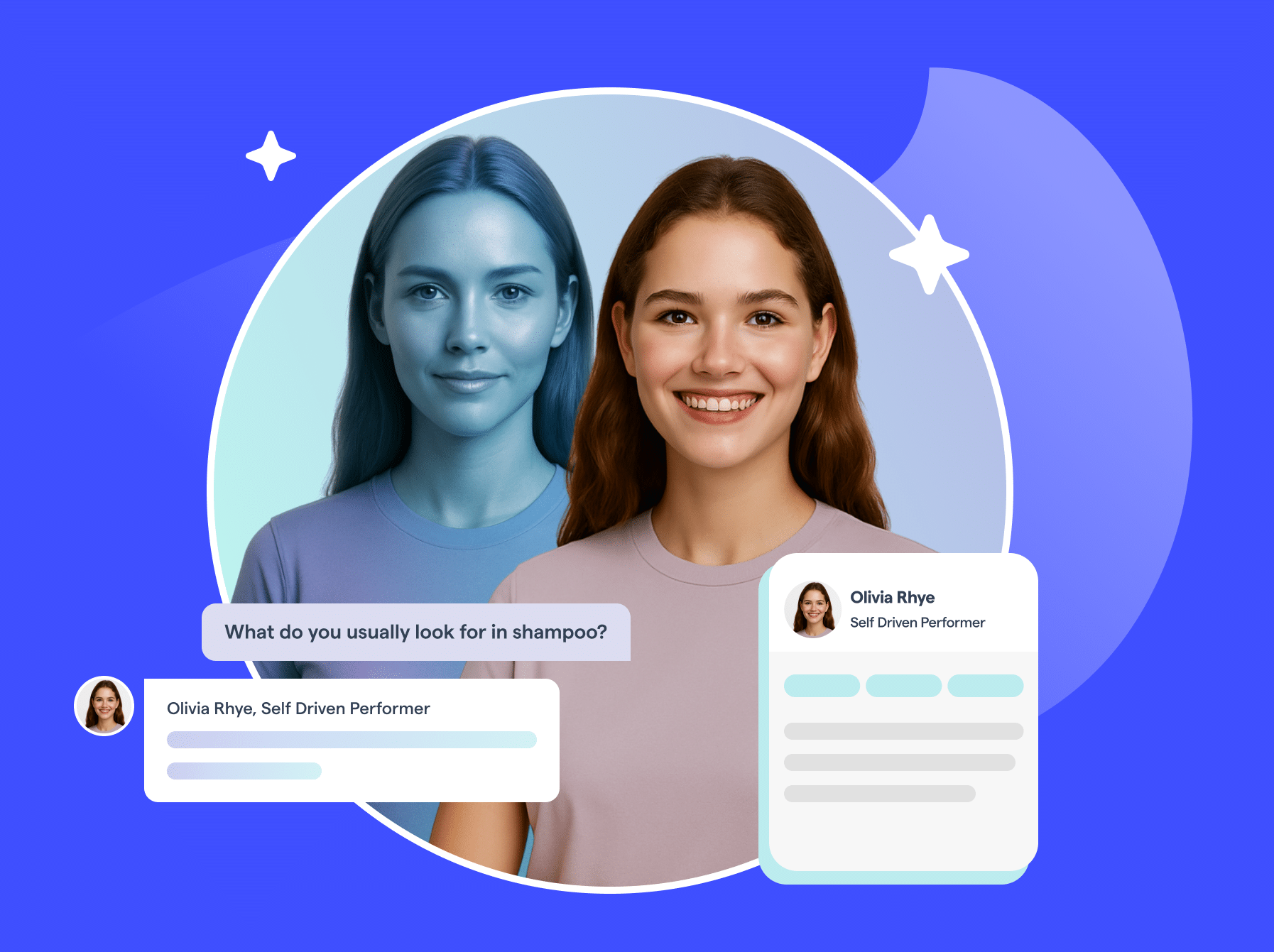


Yes. So very excited to be here to talk to you all about, Market Logic and how we see insights innovation really coming together with our personas agents offering. So quickly, who is Market Logic? Many of you may know us in this space, but the requisite kinda introduction to who we are. We are a SaaS provider. We provide a platform that some of the biggest brands in the world, use to house, centralize, and ultimately democratize all of their, proprietary market research, brand intelligence, integrated syndicated reports, trends, and so on in one single place, giving them a platform to access, distribute, and use those insights throughout the business. So both insights users, also business users, and innovation stakeholders are really in our platforms, serving up their content. But what we see on top of that is a suite of GenAI tools, whether that be, the ability to provide business answers powered by large language models, synthetic customer segmentations or personas or agents that are always on doing the work in the background of really collecting and synthesizing insights, as the the kind of next level of where the traditional knowledge and insights management platforms are going. And today, I wanna take you through a kind of day in the life, what an innovation or insights manager, would be doing in a platform like ours as of today, really. So as I said, I’m gonna demo, in a second, but I wanna take you a little bit through what we see happening in the space. And I’m gonna try and orient this all around Maya. So Maya is a fictional, insights or innovation manager at a large FMCG company. She is tasked more and more with not just serving up insights for the business community, but really herself influencing the growth agenda, influencing, innovation, and identifying, new trends. In this case, we’re gonna focus on her looking at the, insights available to her to identify some breakout ingredients and introduce some new, innovative product ideas in the hair care and, ultimately, scalp, space. So what’s the challenge that we see, with our customers and kind of across the area, both in the FMCG, retail, automotive, pharma, and healthcare spaces? It’s really what we see as going from the status quo of passive consumption of, all this incredible research that our customers hold, but often it’s just read and filed away. Trends then remain kind of hidden in PDF, disconnected, in repositories. And on top of that, they’re not really being leveraged by all of these great capabilities that Jenny I now offers to make the most of all of that research, disseminate their organization, but ultimately, do some value add work on top of it. And the new model we see emerging is what we’re terming always on intelligence. This is where GenAI agent to capabilities combined with human expertise, because that’s always the key and important part that we see, allowing, teams to blend those trend reports, the proprietary research with LLM based reasoning to fuel ideation and innovation. And how does DeepSights do this? Well, I’m kind of alluding to this. I’m gonna go through this in the demo. It ultimately is connecting the dots between all of those different pieces of research held in our customers’, repositories with a suite of purpose built AI tools. And in the demo, you’re gonna get to see a lot of those, in action so you can get an understanding of how customers are leveraging these today to be impactful and, ultimately drive results. And what I’m gonna demonstrate with Maya is how she can go from, in six, seven minutes, in a single sitting in a platform, from combing through and getting a better understanding of all of that primary research, syndicated information, and news and taking that through to an early validated product idea based on the research, validated in an early stage way against synthetic or, simulated personas that are nonetheless built on her company’s underlying data, so she can get a realistic feel for how those ideas would likely, do in the marketplace. And I’m also gonna give you a little peek at, an innovation studio pipeline tool that we have that lets you leverage, GenAI in your innovation processes. And I just kinda alluding to here to what, you’re gonna see Maya doing. So we’re gonna go into this chat experience and start to, look for some new ideas in scalp health and ultimately expose those to those personas like I mentioned. So I’m now gonna come over to the, platform. And this is, of course, a demo environment, but it resembles a lot of what our customers we’re working with. It’s containing all of that proprietary research on on their behalf. There’s a couple different ways that a business user in the platform could sort of comb and peruse content, but I’m gonna come to the DeepSights chat experience. And this is what we’re terming a reasoning chat because it really leverages the latest powers of a large language model to work with the knowledge, and help guide the user to make the most of it, as they investigate tasks. Gonna actually go to a chat that I was already doing here as Maya, just to speed things up and let you see, the the real power here. And Maya’s now looking to better understand ingredients that probably professional hair care providers, are leveraging. And I can give you a hint. We’re gonna try and arrive at some that take some of these professional ingredients and have them turned into a product that, end consumers might wanna purchase. So first of all, you can see that the chat brought back a whole host of synthesized information based on the underlying proprietary research held by this customer, and any of the given statements, within the, repository are sourced inside it so I can drive through and see exactly where they’re being pulled from at any time. This may resemble what you’re used to in many of the chat environments or or those retrieval augmented generation experiences. So you’re getting a a sympathized answer across all the sources, but I think here’s where the power of what the DeepSights reasoning chat now really lets you start to see. So Maya now wants to sort of better understand this answer here and figure out what consumer segments likely show the most willingness to pay for these more clinical professional grade solutions. And, again, the chat experience goes back to the repository. It refines its search, tries to find data to specifically, answer that question. And you can see it’s given now a much more refined answer around particular supplements or segments that would likely, resonate with more of a professional grade type of hair care product that they would nonetheless buy for home care. And this is where I’m now gonna continue the chat as Maya here. So I want to understand how consumer preferences or adoption rates for particular types or focus area that we’ve identified of microbiome balancing scalp products would compare to traditional ingredients. Right? So getting very niche in terms of what the data found in the repository likely contains, but the reasoning chat is able to handle that, and it’s gonna go off and comb the repository. You can, of course, see what the model’s thinking, if if you wish to understand a little bit what it’s reasoning here. So it’s looking for consumer preferences. It’s trying to find adoption rates here. It’s looking for trends over time. It’s looking to the data, but it’s also reasoning with with other content it’s seen in the chat. And it’s come back with quite a, as you can see, nuance, but also very, applicable sort of answer here, pulling data points from the various reports and putting this together for the user, in a very, synthesized way. I’m just gonna ask the model, hey. That’s great. I’d like to probably share this with an internal stakeholder. Could you put that into a quick table for me? And now we have the power of the large language model. It’s able to work with all of that material. Again, model’s trying to figure out what I’m asking at it first, And it quickly wraps that into a nice, answer comparing how the traditional treatments, these new microbiome based treatments would, would resonate with these various consumer groups. So that’s great. That’s something you could take away, share with stakeholders, and so on. But now I wanna sort of move into that innovative growth oriented flow that we talked about. So as Maya is looking to really ideate on some early products and ultimately put those in front of some consumers, She’s gonna ask, okay. Reflecting on the discussion, could you propose some product directions, right, early stage, but nonetheless, data based product directions that we can investigate around professional grade microbiome balance and scape scalp products, so really what we’ve talked about in the chat to date. And the reasoning chat is now looking at the trusted ingredients, trying to understand the consumer segmentations that we’re interested in professional grade treatments in order to propose some early stage areas we might wanna investigate. Just to kind of finalize that, it might ask provide four two sentence early speech. And I’m now gonna show you how I can take these and expose these to our synthetic personas in a second. But just to get some quick, real, actionable product ideas out of this, system, the chat comes back with them. I’m gonna grab the first three here, and I’m done with my interaction as Maya with this reasoning chat experience. And now let’s go over to the personas offering. So what are the DeepSights personas? These are synthetic customer segmentations built entirely on our customers’ data. So often, these will be living in PowerPoints and presentations, probably predating the whole large language model era. And, traditionally, they’ve been sort of disseminated within the organization, and marketing innovation insights teams, are meant to try and leverage them to make the the most of them in terms of new innovation product ideas. With the power of GenAI, we can now bring these to life in the platform. So Maya here has six vetted personas. As said, these are core segmentations identified by her her organization for, yeah, strategic innovation, and she’s able to speak to either one or several of these. I’m gonna come into a project that that I already started around the new scalp treatment and just quickly click into an existing chat that Maya may have had. So for instance, she identified three of the personas, the holistic explorer, the trend driven urban professional, and the conscious minimalist to get a better understanding of them and their routine. Right? So this is very data backed, responses that we’re getting out of these, synthetic personas, and we’ve done a lot of work to ensure that these are validated against real, customer segmentation responses among our customers. And Maya has then tried to figure out just early stage, now validating what she saw in the DeepSights chat research against what real customers might think. Would you consider professional grade hair care products for your scalp care? And here’s where she can really start to steer that innovation process towards, a very targeted set of segmentations. And as you can see, like, each of these has some interest in the, the trend, not surprising as these have been selected as potential targets for this product. But Sofia looks to be, rather interested in the product. So I’m gonna kick a chat off with her in a second to really expose her to those product ideations. Before doing so, I might wanna bring back to some stakeholders just a general understanding of what, the three key segmentations said about the general idea. I’m simply gonna summarize the chat. That chat is then exposed to a large language model. It produces a quick summary of what we talked about. It even pulls some key quotes here. So I can just package that, copy that, or download it, send it off to a stakeholder. And then with that, Maya is able to quickly communicate her, let’s say, high level findings around how interested the segmentations might be with the new product. Let’s come back in and actually go speak to, the identified I’m sorry about that. Speak to the identified persona. So that was Sofia. Right? First of I click on Sofia. I see a nice little description of her, and I’m gonna start chatting with her. And all I’m gonna do is now paste in the the three concepts or early stage product concepts that we identified in the previous chat. I’m not gonna really prime Sofia on what I want out of her, but the persona knows, so it’s customized to already reflect upon what’s being exposed to it. Takes a second as this model, now based on the data underpinning the the Sofia Lammer’s persona, is gonna start reflecting on those three. As you can see, for each of the persona each of the ideas exposed to her, she can let us know what the appeal is, why or when why not it may not work for her, and so on. Right? So very data backed, sort of rationales for why that product might not work. I’ll just give you an idea of the type of direction that we often see customers taking this. That’s great. And you can speak to these personas just as you would to kinda, like, regular customers. Could you suggest a couple slogans for each? And this might help us better understand, like, what type of maybe marketing appeal, would resonate with, with with the persona around the various, product ideas. And here you go. Right? I can then ask her to give us, you know, further examples of that and so on and really just explore with the persona as I would do speaking to a customer if I had kind of unlimited access to them. So I won’t go further on that. One great new offering that we are about to release with our personas is the ability to generate visuals. So first of all, these personas can reflect on visuals. So let’s suppose I had, you know, already done some work to arrive at a new concept for a or a new packaging for a concept. I could ask the persona to reflect on that. Worry about spelling mistake. It can handle it. Right? So now Sophie is able to look at that image, and she’ll let us know what, about the image resonates with her. I could then, you know, ideate further and try to figure out change we might make to it. So, you know, the packaging is gorgeous and so on. And the second thing that we can start to do, and I just said that we’re gonna release this, in kind of the coming weeks, is now generate images. So imagine for that first chat we were having, with the three personas where I’d ask them all to, you know, let me know what they thought about the general idea. At the end of that, I hit summarize, visualize, and boom. I have a kind of takeaway visual which captures each of the personas generally and give me a bit of a rundown on why they may may like the product, may not send it off to an internal stakeholder. Maybe I’ve also worked through a few different product concept ideas, and I could have the model generate kind of the pros and cons or the befores and after. This is a really great way to visualize that insights we’re getting out of the customer segmentations and have them index, able to distribute internally, and sort of make the most of what these models can do. Great. So that’s what I wanted to show you with personas. The last thing I wanted to show was a quick sneak peek at what, we see customers now doing in our innovation space. So I’ve just come into what we call the innovation studio, and this is sort of the gold standard that we see customers who are using that reasoning chat, using personas starting to move towards. What this provides is a sort of environment that leverages both the power of Gen AI and human intelligence in a project based collaborative workflow to identify sort of top line innovation, ideas and ultimately progress them through. I don’t wanna focus too much on each of the, areas because I’m conscious of time here. But, ultimately, after a brief setup, concepts or insights can be identified from a number of different places. White spaces can be identified both by humans but also by agents, and I wanna focus here just on the idea concept stage. So once key ideas are identified in this workflow, they themselves can be subjected to, evaluation and further, refinement by our agents, ultimately, kind of progressing them through two key concepts that we wanna move down that innovation pipeline. So that’s what we see as sort of the transition from a reasoning chat into the ability to interact with synthetic personas. And finally, really, the gold standard is is sort of human AI interaction, in innovation pipelines through our innovation studio. So with that, I’ll come back to the, presentation. Ultimately, to conclude that, I hope you enjoyed seeing where we see, this space going as we transition from more of a traditional knowledge management, insights management, platform and world to much more of an innovation driven, AI powered sort of experience. OK. Let’s open the floor up to Q and A. We have time for a couple questions, I think. First question, how do persona agents provide continuous consumer understanding? Yeah. So I think I take that question a couple ways. I think, we see that this from a lot of customers and prospects as well, and it’s around, one, how we’re setting them up and then how we’re updating. So currently, the personas are set up based on our customers’ understanding of their segmentations. Right? And, typically, those will be based on either u and a survey data, so, kind of biannual or sometimes only, you know, every three to five years surveys that are done that are then turned into customer segmentations, put in presentations. We bring those to life through a process with the power of large language models and have them in the system, as dynamic agents for customers to talk to. What we do with our customers is then regularly go and update them based on key data that they identify for us, whether that’s, like, recent, raw transcripts with these various segmentations or other data sources that they see as, fit to update their personas. What most customers are not looking for is, like, a really continuous updating of the personas themselves. They tend to have them fixed for some time period, and then we regularly update them in the back end. Now where we are going, though, in another sort of vein with the personas is to what we’re calling on demand or on the fly, generation. And here, you could think of rather than preset personas that the customers have got sitting there and we configure them more of a prompt based, hey. I need this particular, like, cut. Go to the data and generate me a persona or two on the fly, and then the customer could speak to those. And that same technology is gonna be leveraged to update the personas for customers interested in that. Hope that answers the direction. Yeah. Think so. I think we have time for one quick quick answer. But what are the key considerations for implementing persona agents in research? Maybe if you could just highlight them. Yeah. Good question. I think, a couple of things. Well, the first is having some of that vetted persona, research done in the first place or having raw transcript interviews with the given segmentations so that we can then take that and bring that to life in the in the system. The other is understanding how your innovation colleagues, your marketers, etcetera, want to work with those personas, how they’re working with real customers, and what components of how they’re working with real customers can be offloaded, augmented, and so on by the personas. I think those are kind of two key considerations that we’re seeing both before implementing, but also in the early piloting stages with customers. Very nice. Thank you, Joseph, for sharing your expertise on persona agents.
Market Logic participated in the global virtual event TMRE Continued (2–4 December 2025) to discuss what’s on the horizon for the consumer insights industry. Alongside leaders from across the insights community, the event covered everything from the strategic role of insights teams to DIY research and how to introduce AI into research workflows.
Day 2 was themed around “The Next Era” of insights, and we joined the agenda to offer a deep dive into how DeepSights’ Persona Agents are reimagining how insights and business teams interact with their consumer segments in real time.
In this session, Market Logic’s Director of Product Management, Joseph Rini, showed how Persona Agents help teams:
- Accelerate time to insight: Get validated feedback in minutes
- Reduce research costs: Extend the usability of existing studies and avoid the duplication of efforts
- Boost innovation: Test early-stage ideas and concepts and iterate continually
- Enable collaboration: Democratize access to customer voices insights across the organization