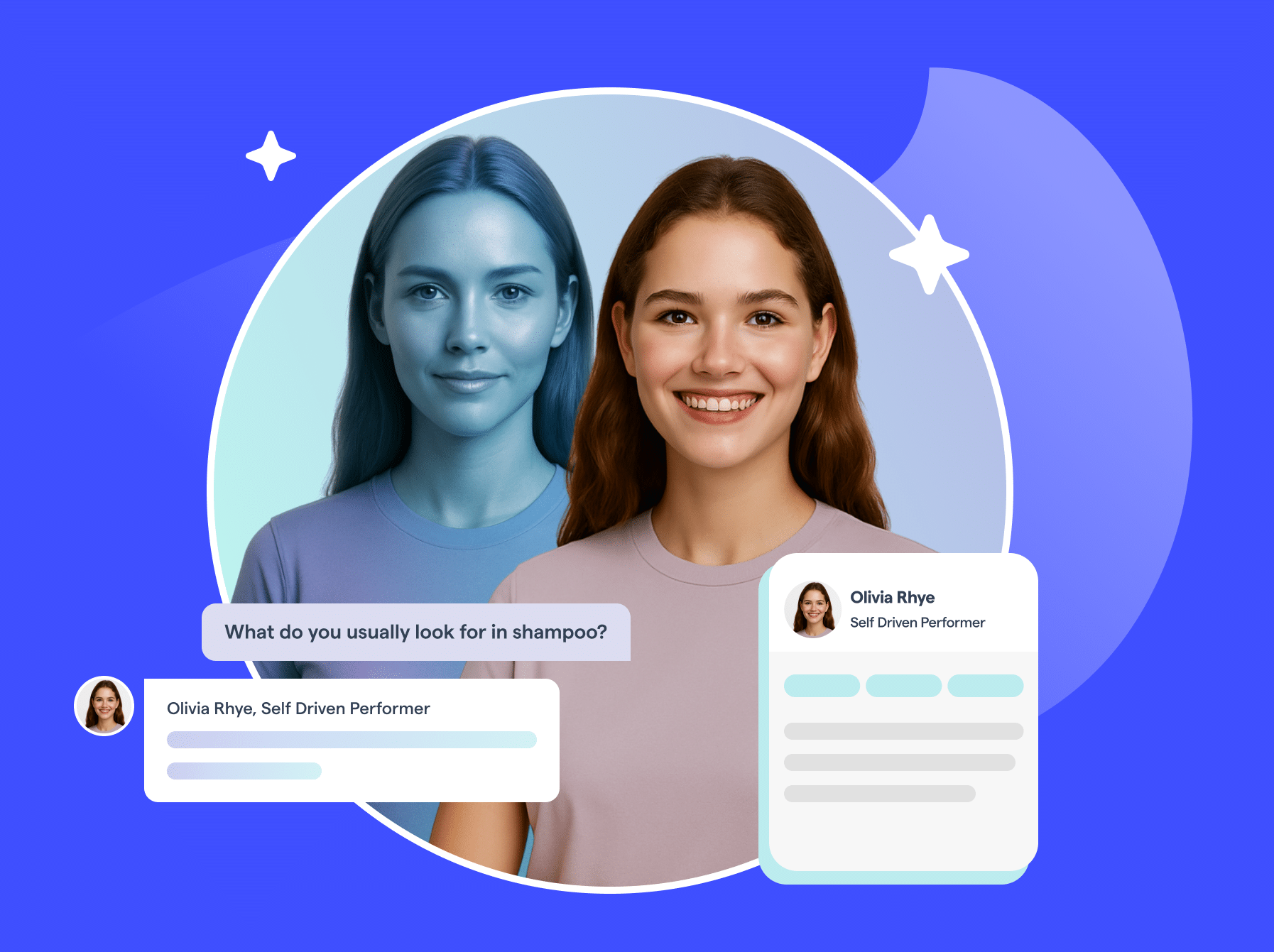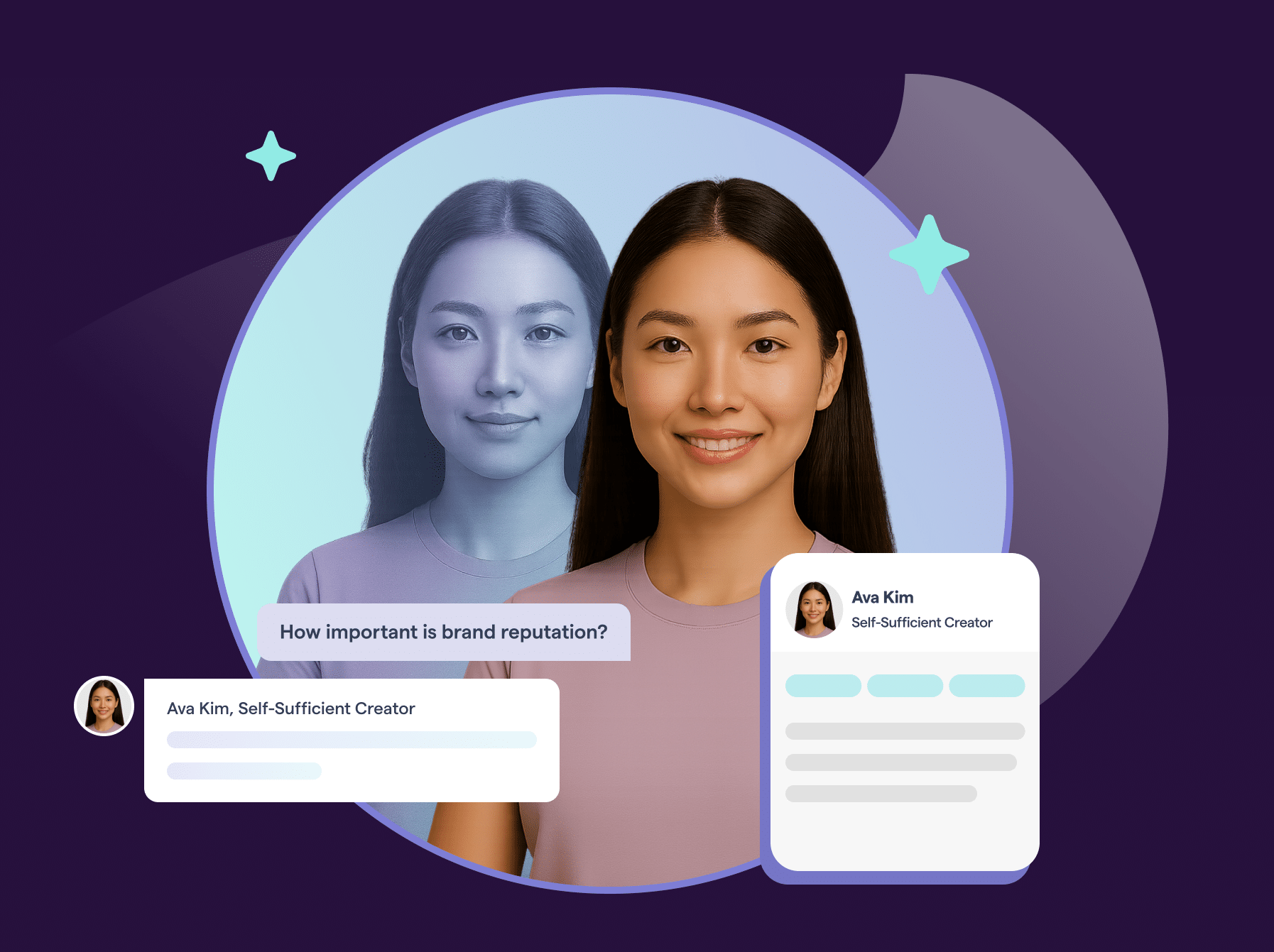


Imagine if your customer profiles could talk back, and your teams could simulate consumer feedback anytime, anywhere. Enter Persona Agents, a powerful application of Agentic AI that transforms traditional segmentation into living, conversational agents.
Built with and drawing on your own trusted data, each persona simulates a real consumer—complete with demographics, preferences, tone of voice, and behavioral traits. These AI-driven agents simulate real customer segments, complete with demographic details, behavioral traits, tone of voice, and life context. But unlike static profiles, they’re interactive, so you can talk to them.
Hello, everyone. Welcome back to this final session of the insights to action summit. Thank you if you’ve been with us throughout the day, and I hope you found this a valuable event. We’ve had loads of great content. I’m particularly excited to see what’s new with this final session because Joe from Market Logic Software is gonna take us through how the new DeepSights persona agents are adding value for insights team by synthesizing data from all of these different sources and making it available for people to interact with conversationally. So, that’s what we’ve got now. Do please post questions or comments as we go through. You can follow-up with any of the team afterwards if you like. But I’m gonna hand straight over to Joe to take us through, persona agents for twenty four, seven consumer understanding. Great. Thank you so much, Mike, and thanks everybody for joining in what I think is the last session. So thank you very much for taking the time. Great. Okay. So, yeah, my name is Joseph Rini. I am director of product management at Market Logic Software. And today, I wanna speak to you, as Mike said, all about our new personas agent offering. And many of you in the space will be aware that this is really a big topic, these days. A lot of providers are doing something around synthetic qual and, in particular, synthetic segmentation, synthetic personas. And our offering is a bit different than what many players are doing, and I wanna really make sure that today I drive that home. Of course, I’m gonna give a demo of the system, but I’m also gonna situate this persona’s offering within Market Logic’s kind of larger, AI framework very quickly and then really go in and show you the tool and talk about some of the ways that you could yourself can set up personas at a player like Market Logic. And I think this this particular offering, we’re seeing is really one that people wanna touch and feel. So it’s an interactive offering, first of all. And we’re seeing a really, like, a strong bias fraction on this in terms of wanting to trial it and get it set up. So I will spend some time, on that piece as well. So who’s Market Logic? I think many, of you know us at this point. We we use the slides just sort of drive home who we are. So we’re a SaaS provider, of an a AI, powered platform used by some of the world’s largest, companies, insights, marketing, sometimes r and d, teams. We’ve been in this space for about fifteen years. You could take a look at, you know, hundred plus, of our kind of global customers here. Here are the companies I was speaking about. And as I was saying, many of these have a personas program set up. That doesn’t mean they’re using Market Logic’s personas or any tech providers personas. That may mean that they only have the kind of hard copy, if you will, type of personas program, which is set up in PowerPoints, presentations, and so on. But many of them are also starting to trial, either Market Logic or other players, which we’re aware kind of through our interaction with them. So market logic, what we’re seeing more and more in the space, and this is kind of more of a broad, value proposition that we bring, which I’ll situate the personas in, is, of course, we see there’s this limited access to data out there. I think we’re all aware of this. It’s not that the data isn’t technically available anymore. It’s rather where is it? Is it in a place that’s, feeding, insights, decision makers, marketers, etcetera, at the time that they actually need to make decisions? And if not, a lot of what we’re seeing is guesswork, slow action, and then increased, risk and wasted spend. And what Market Logic is more and more trying to do and where we’re starting to play more and more is in what we’re calling always on intelligence. So this is leveraging AI to unlock insights, make them available twenty four seven, and enable our customers to really act faster and execute winning strategies. And there’s two pieces to, DeepSights, our offering, that I wanna kind of highlight today in situating our personas. There’s this idea of always on learning agents and always on advice agents. I’ll just skip right through to them. Always on learning, could think of as autonomous agents continuously analyzing the stream of new information that’s being made available to our customers to surface new knowledge, new insights, and so on. And you can see across the bottom some of the areas that our agents are surfacing, consumer trends, consumer insights, category problems, target groups, and this is coming across all of the different types of data, reports, integrated content, and so on that our customers have coming into their Market Logic systems. And, of course, you could go and peruse and actually use this data on its own. But where we’re seeing more and more, really, customers moving with our, help is to always on agents that are powering things like providing advice. So here’s a look at our, latest chat based experience, really leveraging agents to provide insights, analysis, and advice, answer questions, evaluate hypothesis, give recommendations, and so on. So leveraging all of that knowledge, and insights. We’ve also have an innovation pipeline tool, really facilitating human AI collaboration to systematically especially at the early innovation stage, surface top line, sort of innovation ideas and so on. I don’t wanna spend too much time talking about those because today we really wanna focus on the personas piece. So what are personas? I think you got a quick look, and I’m gonna go into it in a second and give you a a demo of the software. It’s really bringing these consumer segmentations to life in an LLM based chat experience, ready to respond, ready to be spoken to twenty four seven, and we’ll go into that in a second. And what’s, kind of unique about these personas? Well, first of all, they’re built on our customers’ unique data and insights. As I mentioned a bit later after I show the demo, I’ll talk about some of the ways that we’re setting these personas up, what type of content we’re using from our customers to really build these and bring these to life. They’re always on. They’re available for both individual and group sessions. And with these personas, you can then go in, explore, the persona’s lifestyle, routine, and attitudes just like you’re speaking to an actual respondent, in a respondent session or as if you were able to just chat quickly with one of your customers. You can also test and explore early product ideas, concepts, ad copy, marketing approaches, you name it. So for us, this doesn’t replace some of the more regimented, tests that are out there in the marketplace, but it does let you ideate a lot quicker, run ideas by these, synthetic customers, and kind of kick out some of the bad ideas, refine ideas before you go on to that next step of actually, testing them. And it’s ultimately accelerating time to insights. So no longer waiting, weeks, days, but really hours, minutes. You’re able to go in, speak to these synthetic personas, and get feedback from them. And some of the, yeah, just to kinda double down on some of the things that we see our customers doing with these personas today is, early campaign testing, as I said. So really asking the persona how they would react to new ad copy, to new slogans, etcetera, exploring their lifestyle. So simply having them, have the persona talk you through their typical routine or other attitudes they may have, things that might come up throughout the day. In particular, with our pharma and health care, customers, we also see more of a b to b or expert persona kind of setup where, you’re able to interact with could be doctor groups, could be synthetic, purchasers, and try to understand what might move them along, for instance, an adoption ladder of treatments and so on, and really get realistic feedback there. Also, a kinda key place where major savings are available because rather than having to go to these groups, you can speak to the synthetic personas that resemble them. Of course, as I mentioned, also, product, concept reviews, getting feedback on packaging. So, yes, we can support, image upload, I’ll actually show that in the demo. Meaning, you can actually run visuals by the personas and get their feedback on the actual packaging, how it talks to them, and so on. And you can ask the segmentations to speak about, you know, what they might do differently than the other personas or segments in the group so you can really get a nice laid out kind of breakdown across multiple segments. And with that, I’m gonna go ahead and demo the system. Great. So I’ve now come into the DeepSights persona space, and I’m I’ve just arrived at kind of the overarching page, and this is grouped by, it’s configurable, I would say. Many of our customers will have, different categories set up, and you can see the groups of synthetic synthetic, personas that have been, set up there. Mean, snacks and beverages in this demo system. Right? We’ve got a bunch of different categories set up. Let me click on Mark Brown. So this is a synthetic Philadelphia based consumer. You can see a quick breakdown about all about Mark to get a bit little bit of an understanding, about him. Right? So this guy would have probably lived in a deck in a PowerPoint presentation, been circulated at the customer side long before, the DeepSights product was being used to them, but it really sat in a static environment. And now we’re bringing that to life by having brought it into the system. So in a second, I’m gonna go ahead and chat with him. I’m gonna come into one of, our projects so you can organize all of your single or group, chats into a project. And I was just speaking to Mark a second ago. So just to save all the back and forth, I’m gonna show you quickly, what I was talking about with him. So quickly, hey, Mark. Tell me a bit about yourself. And as you can imagine, I’m now getting something like that description that you saw, but much more fleshed out about Mark’s kinda daily routine and so on. And I wanna explore, snacking with Mark, in particular, try to find out a key area of the day that we might be able to launch a new product. Right? So I’ve come in and asked him to kinda break down how these different components of his day, relate to slacking snacking, not slacking. And finally, asked him what part of the day would be most present. Right? So he’s identified this key afternoon, time period. And now I’m gonna continue this chat just in front of you. So first of all, I’m gonna ask okay. Oops. I’m sorry about that. What kind of snack would you consider in this afternoon period? Right? So you can imagine I’m now trying to get him to build on this and actually start suggesting to me, key ideas. So I’m gonna go ahead and ask that question to Mark. Takes a second as the large language model thinks about the context of the conversation we just had and the latest question. And as you can see, at three eight three PM, he’s looking for sustained energy without the crash. Right? So a very realistic kind of customer driven type of answer here. And as a second follow-up, I’m going to show him some copy or a bit of a description of a new product idea we’ve worked on. I mentioned we can also upload images and so on, which I’ll do in a second. But in this case, I just wanna run by him text based quickly a product idea that we’ve been thinking through. You can kinda just scan this. Right? So it’s a kinda crash free snack building on what he suggested above was his kind of pain point here. And I’m gonna fire that off to Mark. And in a matter of seconds, as you’re gonna see, he’s essentially going to reflect on that idea and let me know, hey. That works for me. That doesn’t work for me, and so on. And if you take a look at the answer, you can see, first of all, yes, he’s identified that it does work for him. He points out what works for him, so some of the key points that we might wanna double down on here. He also lays out some of the concerns around performance or more like, proving that it would perform and so on. He even suggests some slogans that would work for him. And you can imagine. Right? I could now go many different directions here. I could ask him to double down on some of these slogans and try to work through that. I could then reiterate on the actual product idea and so on. Let’s say I’m gonna finish with this particular chat. So what I’m gonna do is summarize the chat, and this is a great feature where what we do is we send that conversation off to a large language model in the back end, and we generate a nice description of everything we talked about. And we surface some key quotes from the discussion we just had, so you’ll find all these quotes right throughout the conversation to help either support or maybe point to contradictions in the overall discussion that we’ve had. I can copy that. I can download that and so on. So that’s one example of how I might explore some product ideation with one of our personas. I’m gonna come back to that project where that introduction and that kind of discovery that I was doing is living, and now I’m gonna kick off a group chat with several of the personas to demonstrate how that looks. So let’s bring Mark back in, but, also, let’s add Isabella and and Sophie and start to chat with them. And I didn’t show it there, but, of course, I can hover over and take a look at any of the other, personas as well. Right? So I can all times go back and figure out who these people are, and get a little just refresher on exactly who I’m talking to. Now often, our customers will actually know these personas fairly well as they may have had some enablement around them and so on. Not always the case, but always good to let them, you know, be able to take a quick look and see something about them. And in this case, as I mentioned, what I wanna do is you can see it here. I have a kind of product images I was working on, some ad copy or some packaging. Could you describe reflect on the packaging. And I’m simply gonna ask all of the personas to take a look at the packaging, describe, and reflect on what they’re seeing. Takes a second as the model now is analyzing that image, and each of the personas is gonna give me their own position on what they saw in that packaging, what appeals to them, and so on. Right? So starting with Mark, like the look of the packaging, was a bit concerned with, okay, the the the fact that it’s generic and so on, and that’s gonna continue now with Isabella, who, again, as you can see, is giving totally different kind of feedback here. She’s concerned about, like, the format itself with the the bold that we’ve shown to her. And above, I think, Sophie was also, you know, giving her feedback on areas she could see optimizing it. So I like what Isabella said. I’m just quickly gonna hone in on here, and this is a great feature that we have. So rather than having to ask all of the personas again and getting their constant kind of input on each of these, even within a group session, I can now just add Isabella, go in and say, yeah, your minor concerns. Sorry. Me. As you can see, she was, concerned about the container getting lost in the freezer. And I hope this kinda shows you the degree or the kind of nuance that you actually end up getting into with these personas as they give very realistic responses, and you can end up really kinda diving into, very particular areas that they identify. So, I mean, again, very specific here, but color accents, particular, ways to place the packaging, and just like her overall assessment. Right? And I could go from there and continue to, again, drive down on this, ask her for further suggestions. And, you know, I could summarize it again. In this case, what I wanna do is take all of that conversation that I had with the group, but especially what Isabella said. So I’m simply gonna export that here, and I now download that into a nice Word document. I have that. I can, you know, go ahead and go away, send that off, and so on. Yep. That’s great. Great. Good. So I hope that gave you a nice idea of what you can do with these personas, just how realistic the they are. And now I wanted to quickly talk just two, let’s say, use cases or two key areas, vectors that we’re, really seeing, customers start to double down on these. The first is in the FMCG space. I could have also highlighted the really the retail space, the automotive space. The problem well, I think it’s clear. Right? We’re seeing customers, shoppers switching brands, sustainability, health, convenience, are, you know, more important than ever. Brands struggling to anticipate shifting customer priorities. This might be a problem. I think most customers will be facing some degree, or some variation of this. And synthetic personas in this case, of course, they let you simulate consumer behavior. They let you stress test marketing and packaging. They let you explore switching triggers with the customers. And, I think I demonstrated some of those actually in the demo, so that should be fairly clear what what I mean here. This is just giving you an idea. That’s Mark who I was speaking to. Right? This is often what the materials that will look like. This is a summarized version of, you might get a five, six, seven, eight slide presentation looking like this, laying out what market looks like. The health care pharma space, I think, is a very interesting one that might be interested interesting to a lot of you. I mentioned it kind of in the intro there. But here, we’re seeing in addition to patients, right, we’re working on health care professional personas. So for instance, pharma companies really need to rely on segmentation research to try and understand what they know about, I don’t know, HCP groups and so on. And getting in contact with these experts is very costly, slow, and just generally limited in terms of what can be done there. So we’re seeing customers of ours simulate HCP behavior, testing marketing before launch, trying to optimize their channel strategy, even feeding, for instance, email attempts that they would run by ACPs against the personas to get feedback about the how that email would resonate with a given group then tweaking it or having the persona itself actually rewrite the thing, for the the end user. So there’s a lot that can be done once you have these, synthetic personas kind of in your hands, so to speak. So that kinda concludes what I want to talk about in terms of showing this and how our customers are using them. And as I mentioned, this often turns very quickly to, okay, how can we get started? And I think that’s a key piece of this entire synthetic personas and synthetic qual, discussion. So there’s really four ways, and I’m gonna go through each of them in a second, that we’re setting these up for our customers. So, yeah, the first thing to say is Market Logic sets these up for our customers in our system. In a bit, I’ll talk about some ways that customers or partners themselves are starting to set them up. But, really, it’s us with our expertise, in terms of prompt engineering, the system in the back end and taking your materials or our customers’ materials and turning them into personas. That’s the key here. So the first and probably the most common way is we build personas based on your predefined persona presentations. And some of those kind of slides that I just showed a second ago with Mark and the HCP dentists there are an example of a kind of presentation we might get with five to eight personas per category or per geography or just for the company at all, if you will. And we take those materials. We rework them into a synthetic, persona description and plug that in in the back end and bring that to life and then turn that over to our customers. The second area that we, I was gonna say, have started to, but really we’re in full force, in doing this with many customers at this point is using not finalized persona presentations because maybe they don’t have them, maybe they’re out of date, maybe they haven’t been done in a particular geography or for a particular HCP or expert group, is we can take reference materials that could be more raw kind of segmentation, reports, and research. Another key one is actual raw respondent transcripts. So customers will be handing us transcripts already, separated by segment group, and then we do the work of deriving the persona with our expertise and bringing that to life in the back end. Again, then turning that over to the customer. Another area is it here? Yep. Jumped to both of them, but that’s fine. So the two other areas which are more, niche are certainly not, as popular or not being as used, I should say, as much with our current customers. On the left hand side, we work with several different partners at this point who feed in their own persona descriptions, definitions into our Market Logic, side, and we’re doing this both via the partners themselves in our platform, really configuring, testing, and then launching the personas for our customers. And we’re also now building out API connections so the partners can, be building the persona descriptions on their end, but passing them to us via an API, and then we plug them in on our, sort of end user interface. And, of course, there, we’re able to then blend them with our offering as well. So there’s a lot of, exciting stuff going on there. And I think, especially in the cases where customers don’t really have a fully built out segmentation or personas, setup currently, it’s often the case that either they come with a partner or we can point them to one of our trusted partners to help them build and set up that persona offering in the first place. And then let’s say the LLM based chat that we offer is kind of only part of that picture, but, of course, it becomes a key, whole. And then then the last piece I have here with little asterisk is we’re currently exploring this or piloting this with one of our major customers, but it’s rather than going from predefined personas, we can start to or we aim to start to supporting on the fly persona curation. So maybe this is where you come to the system, you describe the persona you wanna speak to today, and then the system combs the data, either looks at our DeepSights repository, maybe looks at key, for instance, UNA study data or key transcripts and builds the personas on the fly at that moment. Now this has both as positives and negatives as you can imagine. These personas are then no longer the kind of vetted signed off personas that the insights team has worked on. But at the same time, that allows for a lot of, tailorization in terms of supporting insights, researchers, marketers, etcetera, in really getting a persona that fits their particular needs. And then I I I just wanna add that reach out if you wanna discuss other possibilities. I think we started with the upper left one here around really building up from predefined personas, and we’ve slowly built our expertise up and added all of these other use cases over time. And I think there’s a lot of other possibilities out there for what can be done in terms of building these personas. So what’s to come? Just in kind of closing, I wanna talk about some of the areas that we plan to keep building out with our personas offering. The first thing is really integrating these personas throughout our insights platform, and I think that’s a key advantage that Market Logic can have over many players who are offering personas as a kind of standalone entity or offering, if you will. So we’re already working on, one, surfacing these personas from the underlying of, kind of overall repository, but also then connecting the personas into, various aspects of our flow. So if you think about, our innovation, tool, which I pointed to at the beginning, now as we have agents surfacing innovation ideas, we can be passing them to the personas to rate them or, add to them and so on. So really fleshing out some of our agent work, as well as surfacing them in other areas of our platform where users are looking for insights. In addition, we we’re building out API support. So one of Market Logic’s tenants is really to support interoperability across platforms, especially in this Gen AI space. It’s less and less the case that customers want to just use a single SaaS platform or a single in house offering. So the ability to allow API calls across platforms is something that we’re proud to support. We’ve been doing with many of our other GenAI, components for a couple of years now, and we are currently, this fall, going to be releasing API support there for the personas. Meaning, you could chat with the personas or have the personas reflect on concepts, ideas, etcetera, from some other tool or platform, via API calls. The next thing we’re doing is doubling down on leveraging AI to drive insights within the personas. And here, I’m really talking about one, AI support for actually facilitating the persona chat. So imagine you brief an AI tool or AI agent, and it’s then able to speak to the personas on your behalf and kinda bring you back that summarization or that export of the chat, rather than you having to really drive, that chat. As well, we want to leverage AI to take the outcomes of those persona chats, check them against the trusted insights repository, and give our users, a kind of high value insights backed assessment of what that, persona chat or how that persona chat stacks up. I already mentioned, we’re piloting ways to create personas on the fly, which is very exciting for us. And finally, we’re starting to early look at ways to leverage our persona technology to unlock kind of qual at scale style offerings. And what I’m talking about here is more along the lines of potentially spinning up many, many personas and then subjecting them to, for instance, evaluate concepts or ideas or to fill out surveys and so on. So there’s a bunch of players doing that in this space. I think we’re now well posed, with what we’ve done with, the personas to date to build that out into more of a quality scale offering as well. So that’s some of the stuff that we’re working on here. We are really doubling down on this personas offering because we see, the power of it, and we’ve seen the huge customer, yeah, feedback and the fact that it resonates with them. And this is what we, kind of plan to work on in coming, months, I would say. So with that said, switching gears more to just kinda general sort of assessment of how Market Logic and DeepSights has been has been doing for our customers. We have a great Forrester report showing, you know, great return on investment. I don’t wanna spend too much time on this, but, know, feel free to go take a look on our website and take a look at that Forrester report. And I should note that, like DeepSights, generally, our offering around the personas, we are offering free trials. So, you know, go ahead to reach out to us. You can scan the QR there or just contact us, and we’d be happy to set up and let you actually try our personas and get a feel for what they can do. As I said previously, I think especially in this kind of Gen AI synthetic world, that’s really the way that customers need to use these in order to get convinced of their value. And with that, I would like to stop sharing Thanks. And come back to you, Mike. Thank you, Joe. Great. And I found this whole development quite fascinating because it it’s a an entirely new way of interacting with data. If I’m in a, you know, innovation team, a brand team, and I’ve previously either asked a question to the CMI team or I’ve had to read a report or something like that. You know? Now this is like it’s almost like you’re just kinda squeezing a lot of that knowledge and and funneling it into these these different kind of persona interfaces. What how are teams deploying and driving impact in these sort of early stages? Does it tend to be quite upstream stuff that’s about ideation, you know, generating ideas around topics, or are they coming and sort of trying to validate and screen ideas that they might have and go, okay. You know, what do you think to this product name? What do think to this for the packaging design? How how is that working? So that’s a good question. I think we’re actually funny. And, I mean, not just saying this, but we’re seeing kind of broad range there. For sure, it’s at the early stage of the funnel that we’re seeing customers, like, try out innovation ideas and so on. You can imagine with the the sort of chat based environment, you can really run a lot of ideas by these personas and quickly ideate with them. But we also have customers who are testing kinda down at, like, let’s say, this the stage of ad copy. So they’re, you know, really releasing an ad, and they wanna test which of two or three would would stack up, and they’re using the personas for that. I think in the pharma case I was talking about, again, it’s kind of a wide range, but we’re certainly seeing some of our customers really testing what they will send or how they will speak to HCP groups in the personas kind of the day before, if you will. So it’s kind of, you know, throughout the flow, I would say. It’s not just at the at the early stages. Yeah. Okay. I was, I think I was just sort of slightly, thinking forward in your presentation. You know, I guess the the way in which these, you you interact with them are likely to evolve with real time video avatars, I guess, you know, as more of a kind of conversational thing. And then, you know, who knows? Maybe it becomes kinda like a robotics thing. You know? We’ve actually got, you know, physical participants coming into ideation workshops that are that are, you know, persona represent Yep. But long way that this could go, I suppose. When you were you were sort of having that discussion with the two or three persona types, it occurred to me that actually researcher capabilities are gonna become much more important around this. You know? How do you frame a meaningful question? How do you extract me you know, insights that are gonna gonna sort of stretch from that persona or from these interfaces. You know, the way that you design questions, the way that you ask, that you don’t lead, that you generate new insights rather than just, you know, a a sort of generic stuff is gonna become a a an even more important skill. What what are you seeing as is there a requirement for training for people to be able to interact, or is it is that still kind of emerging as to what what’s the skills development that needs to go into when people are using this stuff? Yeah. Good question. I think so first of all, correct. I mean, in some of the the raw respondent transcripts that we’ve been given to then create the personas, the the way that the whole conversation is going on is, of course, not the way that I was chatting, right, with these Yeah. Kind of, let’s say, structured questions and a rather structured answer from the persona. It’s more back and forth, back and forth, one word answer. Right? So it it is a totally different way to speak and interact with the personas. But, I mean, as I said, we are validating that the kind of final response you can get out of them is quite close. So it’s interesting that you can speak to them in different way, but really get meaningful insight from them. Yeah. I think most of the customers we’re working with are requesting some kind of trainings around around this. And if they’re already using our DeepSights or, I mean, if they’ve done other Gen AI enablement internally, they’re more comfortable with the kind of prompting and question asking that’s done, but each tool is different. So there’s certainly some requests around, hey. How do we speak to these in a way to elicit, you know, meaningful feedback from them, not overly lead them and so on? Yep. And and part of it is just how we configure these as well. The whole back end is based around a set of guidelines to ensure that the personas, let’s say, stay in character, respond a certain way. We can also configure customers specifically how they respond Yep. The extent to which they will just literally the length that they speak, but also the format and so on, and in particular, for particular types of questions asked. So if they’re asked to give a concept or idea, we can have it configured to do that in a structured way according to our customers Yeah. Kind of feedback. So it’s kind of a a two way thing. It’s specializing it for the customer in the setup Yeah. And then depending on some training, of course Yeah. Facility. I guess a lot of context around organizational culture and things as well, you know, how how they might deliver the responses, you know, may vary depending on, you know, how that how that organization typically works or the way that they make decisions and that type of thing. Yeah. The so this is a kind of quite a accidental, but bookending in a way. We started the event yesterday with Conveo, who you may or may not know, but is a qualitative Yep. You know, sort of upscale AI moderated video interviews. And, obviously, they have persona based outputs that are the synthesis of those individual primary conversations, qualitative conversations that happen. Yep. DeepSights, I guess, the difference, what you’re talking about, is you’re synthesizing more sources of data. Is that, you know, is that really where we’re the the difference is here? So upon just hearing you, the the example of how, Convio is doing them based on, as you said, right, so actual respondent video interviews within transcripts, I guess. Yes. Yep. Some of the customers that we set this up for would be literally the same as that. So they provided us with their own respondent transcript interviews that they have, and we then turn them into personas. I think a difference, though, from, let’s say, this Conveo that many of our customers are are supplying us with is they’ve got some team internally or often could be an agency who’s building these personas based on a wide swath of potential data sources. Yep. Right? Responded data, u and a studies that they boil down to these, segmentations, so on. Often, there’ll be a workshop component around that. And then finally, we get these presentations. So Market Logic actually isn’t seeing all of that different, all those data sources. Right? We’re getting the kind of boiled down presentations. And as I tried to show there on the one slide, we’re starting to move that direction in terms of getting this kind of wide range. And the next thing that we wanna do is start combing the full DeepSights repository. Right? Because we actually hold, typically, maybe all of the customers’ proprietary market research. Not all of that is, of course, relevant for these personas. Yep. In fact, often, they the customers, the POCs, or the the people in charge of the personas don’t actually want us going to the broader Okay. Repository and watering down or just adding in content. Right? But often they do as well. So it it varies. Depends, you know, how how much of a stamp they want on the personas to picture. Yeah. Okay. Maybe that was a a slight misunderstanding on my part. I I thought that you’d be, you know, you’d be building or enriching those personas with all of the stuff that’s connected through DeepSights, but not necessarily. I guess it depends on the on the client, the organization. Exactly. Yep. Yep. Okay. Good. Well, I’ve been asking all the questions. I don’t know whether anyone else has any questions for Joe. I think this is a really compelling capability when you think about, you know, static outputs, things that date, making them live, grounding them in a, you know, persona characters, having them interact with one another as well as with, you know, with the teams. I think this is a really a rich seam of innovation for insights driving action and and impact in organizations. So it’s really fascinating to see how these things are are developing and how they’re being adopted as well. You know, obviously, different organizations will be at different rates of progress. But thank you very much, Joe. Thanks to the Market Logic team for taking part and to everyone who has been in the event throughout the day, throughout these past couple of days. And enjoy the rest of your days wherever you are. Thanks very much. Take care. Bye bye. Bye bye. Bye.
In this session, Market Logic’s Director of Product Management Joseph Rini walks you through how Persona Agents can help you and your teams:
- Accelerate time to insight: Get feedback in hours, not weeks.
- Reduce research costs: No need for external vendors.
- Boost innovation: Test early-stage ideas before full-scale investment.
- Empower collaboration: Democratize access to segmentation data across teams.