

Share this article


By the end of 2026, AI-powered synthetic personas for marketers will no longer be experimental tools. They will be embedded directly into the workflows of marketing, brand, and category teams, helping shape decisions at all points along product innovation cycles.
This shift is happening because the way marketers work has fundamentally changed. Decision cycles are shorter. Categories are more volatile. Budgets are under scrutiny. And yet, the expectation to act on grounded insight rather than instinct has never been higher. Traditional research models, built around static personas, single-use research studies, and reactive requests, simply can’t keep up.
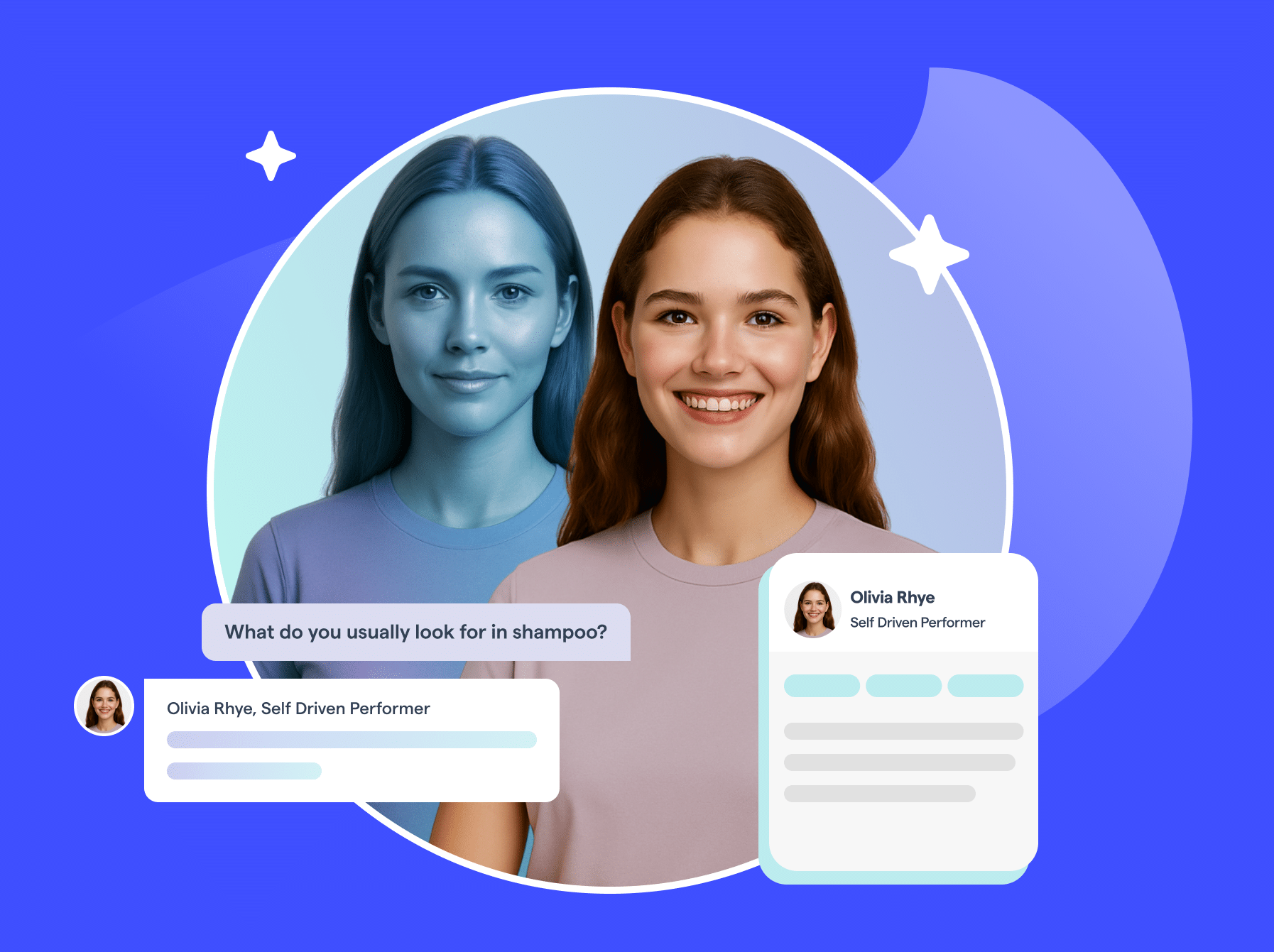
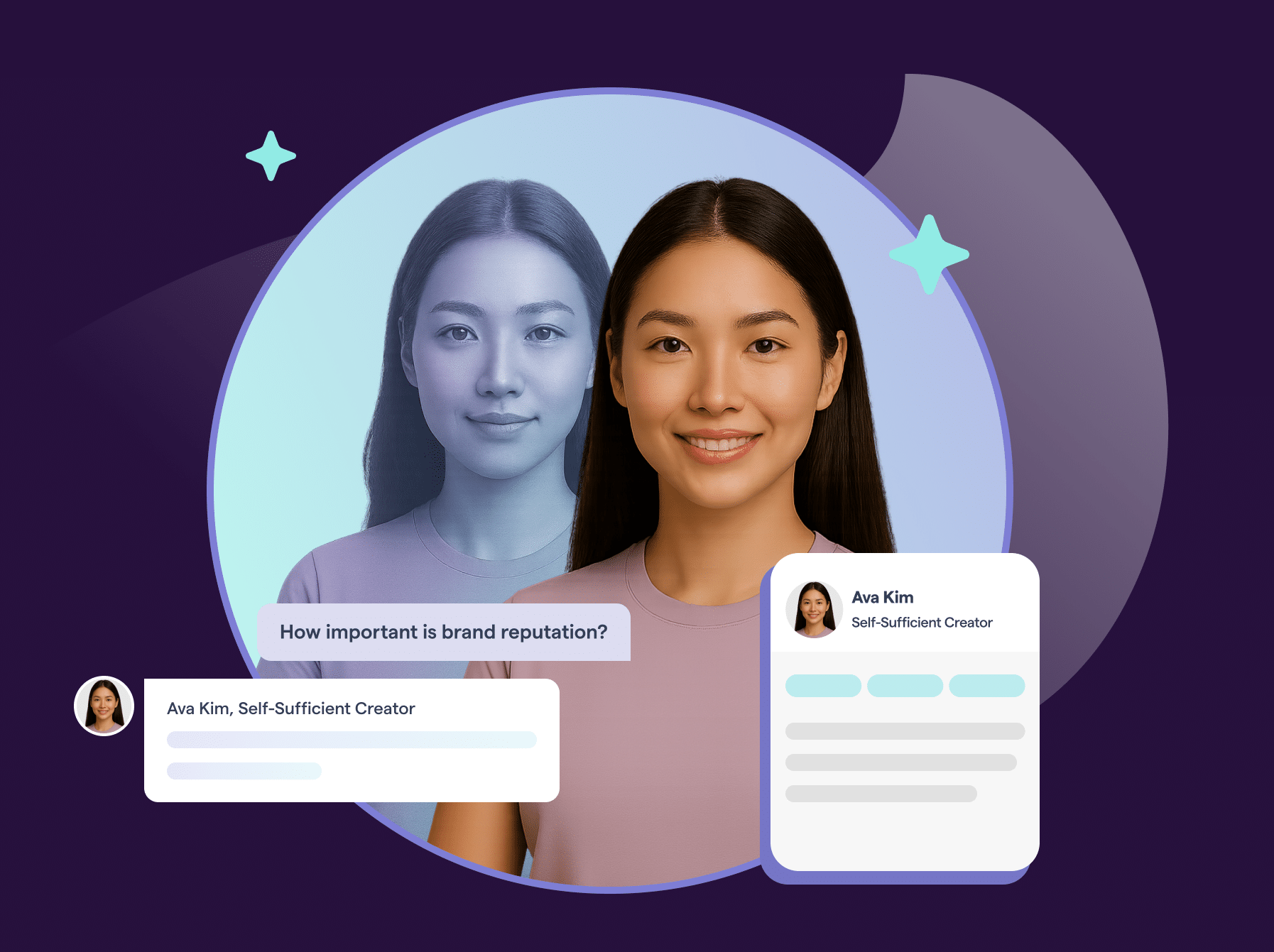
In contrast, today’s synthetic personas for marketers adapt to how teams actually work. They turn insights from an ad hoc resource into a continuous, active intelligence system. They learn your brand context, absorb new research as it’s created, and proactively surface relevant perspectives. In doing so, they shift the value of insights away from volume and toward impact — helping teams move faster, with more confidence, and less friction.
This evolution is driven by three factors:
- Speed: Marketers can’t wait weeks for new research when campaign windows are measured in days.
- Complexity: Global portfolios, fragmented audiences, and fast-moving trends require constant context, not one-off answers.
- Accountability: Leadership expects insight to demonstrably improve outcomes, not just inform presentations.
Synthetic personas meet these demands by making trustworthy insights always available — and are therefore able to accelerate decision-making for marketing teams, powered by agentic AI. Find out more via the link below.
What differentiates today’s synthetic personas from earlier AI tools
Earlier AI tools focused on automation: summarizing reports, tagging documents, or generating surface-level insights. Synthetic personas go further. They are agentic systems designed to adapt.
Modern AI synthetic personas for marketers continuously learn from new inputs: qualitative research, quantitative studies, trend signals, and internal knowledge. Over time, they build a nuanced understanding of category dynamics, brand strategy, and business priorities. The result isn’t just faster answers, but smarter ones.
A key differentiation from traditional personas is that synthetic personas are proactive, driven by agentic AI. Instead of waiting for a prompt, they surface insights when they matter—during planning, ideation, or validation—reducing the cognitive load on teams and increasing the likelihood that insight is actually used.
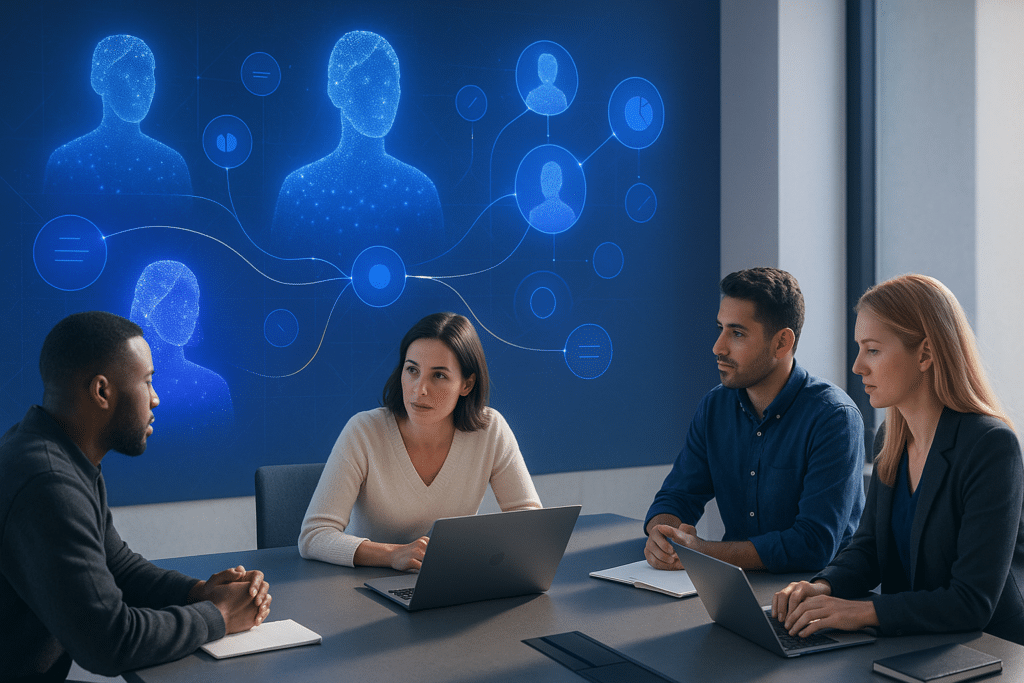
As teams abandon general-purpose AI tools for specialized, embedded AI capabilities, persona agents stand out as the perfect solution to deliver insights ROI across business functions.
From traditional, static personas to synthetic personas for marketers
The limitations of traditional, document-based personas
In the past, personas lived in slide decks or PDFs. They were useful reference points, but rarely consulted once the project moved on. These static personas were never designed for today’s pace of decision-making. Built from snapshots of research, they quickly become outdated as markets shift and consumer behaviors evolve. Teams know this—but updating personas is expensive, time-consuming, and often deprioritized.
As a result, personas lose credibility. They’re referenced early in projects, then quietly ignored when real decisions are made.
How synthetic persona agents learn brand context
In contrast, today’s marketing persona agents are active participants in the workflow. Synthetic personas for marketers solve this problem by treating personas as living systems, not fixed artifacts. These agents are continuously refreshed with new data —from ongoing research programs to external market signals — allowing them to evolve alongside the category.
Crucially, they don’t just reflect “the consumer.” They reflect your consumer (or a group of consumers) through the lens of your brand, portfolio, and strategic priorities. Over time, they learn what matters most to your organization and tailor insights accordingly.
Why adaptability matters more than accuracy alone
In traditional research, accuracy was the primary goal. In modern insight operations, relevance is just as important. An insight that’s 95% accurate but arrives too late—or doesn’t fit the decision at hand—has limited value.
Synthetic personas prioritize adaptability. They adjust their responses based on context, question framing, and evolving priorities, ensuring insights remain actionable even as conditions change.
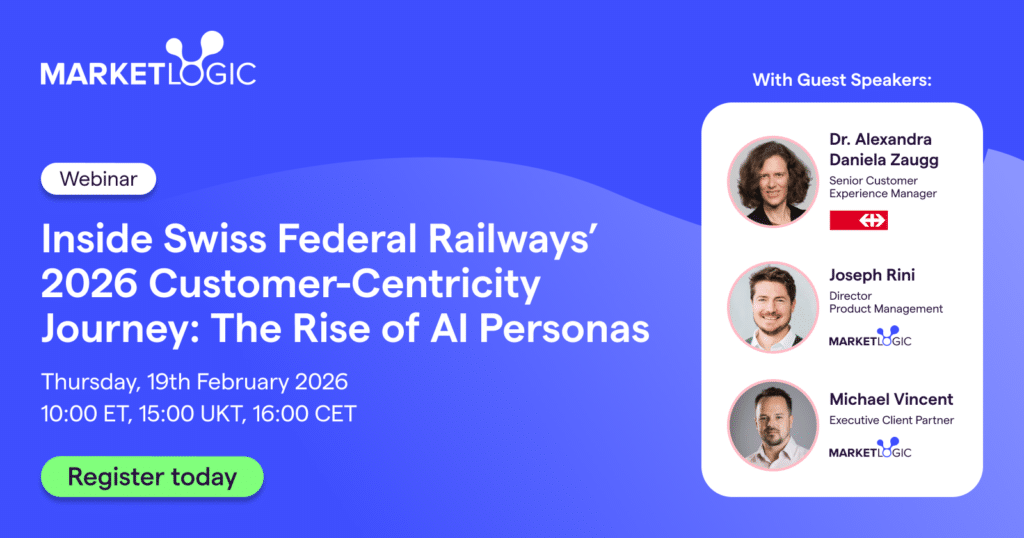
Leading, future-facing brands like Philips and SBB are already using synthetic personas to boost their customer understanding. By deploying Market Logic’s purpose-built solution, Persona Agents, SBB (Swiss Federal Railways) connects millions of passengers each week and is advancing its 2026 customer-centricity strategy by rolling out AI-powered personas — giving leaders across the business a scalable new way to engage directly with customer needs. Find out more about the real-life application of synthetic personas at our upcoming webinar.
How to use AI synthetic personas for marketers inside real workflows
Supporting planning, ideation, and validation
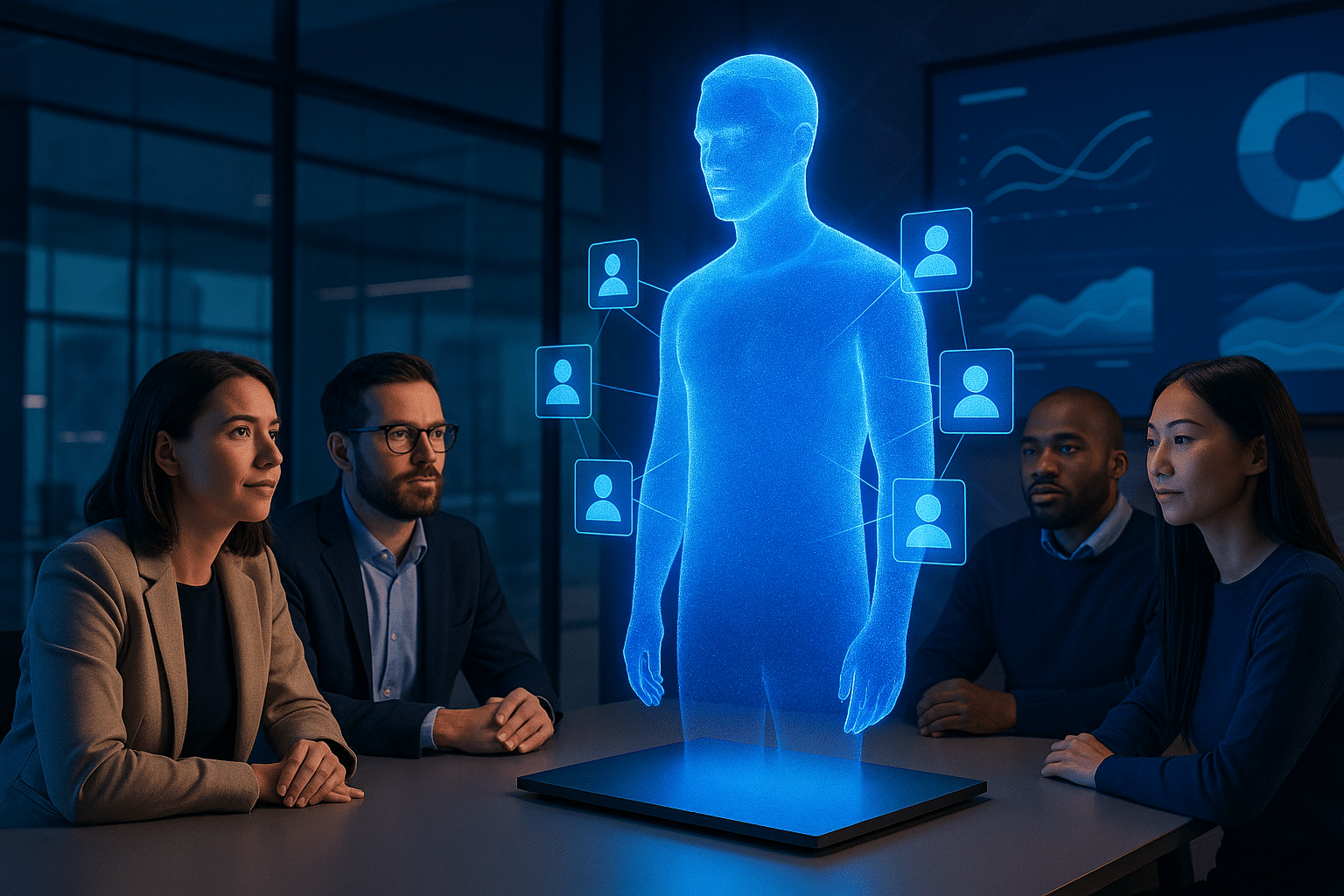
The real power of AI-powered synthetic personas for marketers emerges when they’re embedded directly into workflows. During annual planning, they help teams stress-test assumptions and anticipate shifts in consumer needs. During ideation, they provide instant feedback on concepts, messaging, and positioning. During testing, they contextualize performance data against known consumer behaviors and expectations.
This continuous presence reduces the need for separate “research moments” and integrates insight directly into decision-making.
Proactive insight surfacing vs. reactive research requests
Traditional insight teams operate reactively — responding to briefs, questions, and last-minute requests. Synthetic personas invert this model. By monitoring activity across projects and teams, they can proactively surface relevant insights before a question is even asked.
For example, when a brand team explores a new claim, the agent might highlight prior research, emerging concerns, or analogous category examples—saving time and reducing risk.
Where synthetic personas deliver the most day-to-day value
Day-to-day, synthetic personas excel at:
- Reducing repetitive questions to insight teams
- Increasing reuse of existing research
- Providing a consistent consumer perspective across teams
- Bridging gaps between insights, marketing, and innovation
The result is smoother collaboration and fewer disconnects between strategy and execution.

Driving market research ROI with synthetic personas for marketers
A recent Boston Consulting Group (BCG) report forecasted that agentic AI will triple marketing ROI. Specifically within this report, 71% of CMOs surveyed cited speed to insight as the top benefit of AI adoption.
In this way, synthetic personas for marketers sit at the center of the current marketing evolution.
Increasing insight usage across marketing and brand teams
One of the biggest challenges organizations face is not generating insight, but ensuring it reaches the correct stakeholders and is used. Synthetic personas dramatically increase usage by making insights accessible, contextual, and timely.
When insights are embedded into daily tools and conversations, they stop feeling like “extra work” and start shaping decisions naturally. AI-driven synthetic personas offer a lot of utility to marketing teams, but first and foremost is their ability to connect marketers to previously unknown insights.
Reducing research cost through reuse and automation
By centralizing knowledge and automating synthesis, synthetic personas reduce duplication. Teams no longer commission new research simply because they can’t find or interpret what already exists.
This shift lowers research costs while increasing the value extracted from existing investments—a critical lever for improving ROI.
Measuring success through activation and decision impact
The success of AI synthetic personas cannot be measured through mere adoption statistics. The most successful deployments will foster the continual use of persona agents within marketing workflows, ensuring all decisions are made with this new standardization of insights activation.
As McKinsey shared on how agentic AI can make good decisions, “To unlock the full potential of AI… organizations need to rearchitect how decisions are made and how work is done—by building a ‘smart ops’ structure where humans and AI agents operate in coordinated, complementary roles.”
Human–AI collaboration: How marketers work with AI synthetic personas

New skills marketers and researchers need in 2026
With the introduction of new technology inevitably comes the need for upskilling. In fact, research shows that marketers feel this more pronounced than other sectors. Marketing Week’s 2025 Career & Salary Survey found that “75.6% of marketers highlight AI as a major skills gap within their business, trumping both data and analytics (59.4%) and marketing technology (42.8%)”.
As synthetic personas become standard, marketers and researchers will need to develop new skills — not in analysis alone, but in collaboration. Asking better questions, interpreting AI-generated outputs, and guiding agents with strategic intent become core competencies.
Insight professionals, in particular, shift from producing outputs to curating systems—ensuring agents are trained, governed, and aligned with business goals.
Where human judgment remains essential
AI synthetic personas augment human expertise; they don’t replace it. Humans remain essential for setting direction, making trade-offs, and applying judgment — especially in ambiguous or high-stakes decisions. The most effective teams treat agents as partners: leveraging their speed and scale while retaining human accountability.
Finding a market intelligence partner to facilitate this shift is instrumental in getting this balance right, as it can guide you through synthetic persona best practices for change management and internal adoption of the tool, tailored to your industry and organization.
Market Logic helps organizations deploy a purpose-built solution for synthetic personas like DeepSights Persona Agents, working alongside leaders to ensure that synthetic personas aren’t just another tool in the stack, but adopted by teams in everyday workflows on a daily basis — leading to faster decisions, deeper understanding, and better business outcomes.
Balancing trust, control, and autonomy
Trust is built through transparency and governance. Teams need visibility into how agents learn, what data they use, and where their limitations lie. Clear guardrails ensure autonomy doesn’t come at the expense of rigor or compliance. When designed well, this balance accelerates decision-making without sacrificing confidence.
The future of insights is collaborative with synthetic personas for marketers
The rise of synthetic personas, such as DeepSights Persona Agents, marks a fundamental shift in how marketing teams work with market research and consumer insights. By moving beyond static personas and reactive research, organizations gain always-on access to perspectives that evolve with their categories and priorities.
With AI-native firms generating an average of 25-35 times more revenue per employee than their peers, as BCG research found, the ROI of this technology is clear. Agentic AI tools now span the entire marketing workflow. But synthetic personas in particular unlock value by enabling marketing teams to work on campaigns at a higher speed and volume — without sacrificing customer centricity, and while keeping research costs low.
In 2026, the most competitive teams will think holistically about how to both adopt persona agents and integrate them into everyday work. When paired with strong human judgment and the right technology foundation, synthetic personas increase insight usage, improve research ROI, and reduce friction across the organization.
In a world where speed and relevance define advantage, this type of actionable intelligence will set leaders apart.
Market Logic can bring you transformative capabilities in one comprehensive platform that elevates how your teams make decisions with its trusted, award-winning solution DeepSights™. By combining centralized knowledge management with adaptive persona agents, DeepSights helps organizations turn research into always-on insight. Request a demo today to see how DeepSights™ can power smarter, faster marketing decisions.