

Share this article


Organizations spend a significant amount on consumer market research to understand their target market and consumer behavior trends. Despite the critical and strategic investment in acquiring comprehensive studies, surveys, and focus group findings, many companies struggle to extract maximum value from these existing research assets — and to make decisions based on this existing knowledge. This is because valuable insights often remain buried within organizational silos, accessible only to the departments that initially received the findings.
When consumer research findings become fragmented across departments, platforms, and file systems, organizations inadvertently turn their most valuable market intelligence into dormant assets. Critical consumer preferences, emerging trends, and competitive analysis — insights that could fuel innovation and strategic decision-making — instead sit unused in forgotten folders and databases. A recent McKinsey analysis reveals that companies leading in customer experience (CX) achieved more than double the revenue growth of their CX laggard peers between 2016 and 2021, underscoring the substantial missed opportunities that result when insights are not fully leveraged.
Ultimately, organizations that are proactive instead of reactive to market shifts, using AI-driven market monitoring, are those that stay ahead of the competition. Below, we’ll explore the significant issues caused by underutilized consumer intelligence and how modern technology — such as AI-powered knowledge management systems — can turn overlooked research into actionable insights.
The issues caused by underutilized consumer intelligence
When organizations don’t fully leverage their consumer market research investments, it creates cascading problems that go far beyond operational inefficiency. The inability to access and synthesize existing consumer intelligence generates substantial operational challenges, directly impacting business performance and competitive positioning.
Crucially, it undermines efforts to build and maintain a truly customer-centric approach in the following ways:
- Duplicated efforts and wasted investment: Organizations frequently acquire new research without realizing that similar insights already exist within their knowledge base. This research data redundancy occurs when teams cannot easily search through or identify relevant past studies, leading to unnecessary spending on surveys, focus groups, and competitive analysis that add minimal net new value. The cumulative effect represents a significant misallocation of resources that could otherwise fund genuinely innovative research initiatives or expand market coverage into unexplored segments, fostering a deeper understanding of the customer.
- Stifled innovation and missed market signals: Without comprehensive access to all consumer intelligence, critical market trends and emerging opportunities remain hidden from decision makers. Consumer attitudes may shift, industry trends may emerge, and competitive dynamics may evolve while relevant insights remain locked away in departmental silos. This fragmentation prevents organizations from developing a deeper understanding of their market landscape and hinders the agile innovation necessary to capitalize on emerging consumer preferences or unmet needs.
- Delayed decisions and reduced agility: Fragmented consumer data creates bottlenecks in strategic planning and market response capabilities. When executives and product teams cannot quickly access relevant consumer insights, they must either delay critical decisions or proceed based on incomplete information. In competitive markets where timing determines success, this lack of agility translates directly into missed opportunities and weakened market positioning.
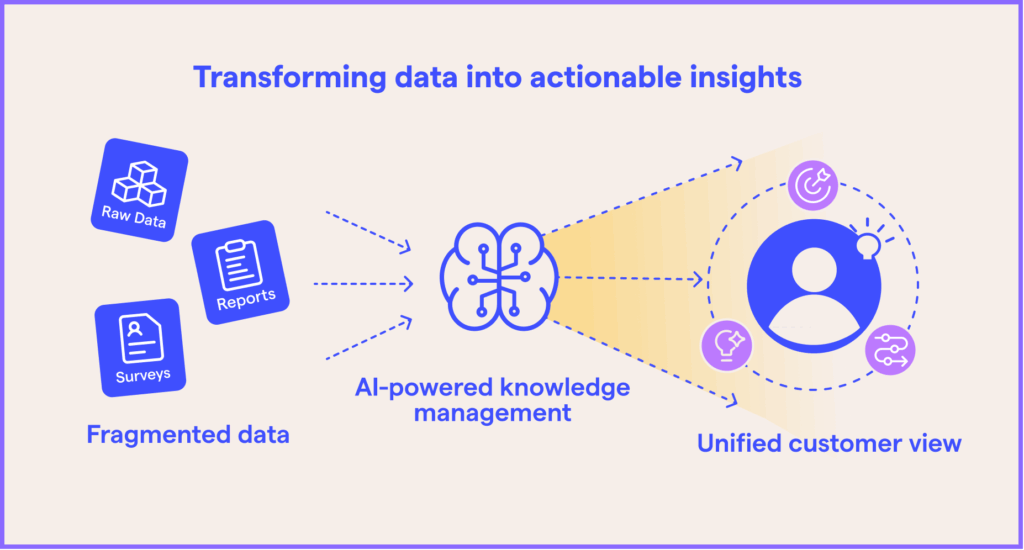
These issues of fragmented data, duplicated efforts, and delayed insights can significantly hinder an organization’s ability to be truly customer-centric. DeepSights™ is an award-winning AI-powered insights platform that unifies market intelligence from all your research data sources, directly addressing fragmented data, duplicated efforts, and delayed insights. By preventing duplication of effort through AI-driven knowledge checks and consolidating data assets, it ensures comprehensive access to valuable insights across the organization — accelerating smarter, more informed decisions and helping to spot market opportunities faster.

Transforming overlooked consumer research into actionable intelligence
To fill the gap between consumer research and decision-making, modern organizations require sophisticated solutions that can elevate consumer market intelligence from vast market research data into immediately actionable insights. The traditional approach of storing research reports in shared drives or basic document management systems cannot handle the volume, complexity, and interconnected nature of contemporary consumer research, leading to as much as 68% of valuable data going unused. Organizations need platforms that can process qualitative and quantitative data simultaneously, identify patterns across multiple studies, and surface relevant insights precisely when teams need them.
AI-powered platforms represent the most effective solution for transforming dormant consumer research into actionable insights. These systems can process vast amounts of consumer research data, identify connections between seemingly unrelated studies, and present synthesized insights that inform strategic decision-making across all business functions.
By leveraging these advanced capabilities, organizations can fundamentally change how they utilize consumer intelligence. This involves:
Going beyond traditional knowledge management
Traditional knowledge management (KM) and manual processes struggle to keep pace with the volume and complexity of storing and utilizing modern consumer research. Standard document repositories demand that users know exactly what they’re looking for and where to find it, making the crucial discovery of unexpected, relevant insights nearly impossible. Manual tagging and categorization quickly become outdated as research volumes grow and organizational priorities shift. These limitations are especially apparent when organizations try to synthesize insights across multiple studies or identify patterns that span different research methodologies.
The industry demands a more dynamic and intelligent approach — one that can adapt to changing business needs while continuously improving its ability to surface relevant customer insights. Modern consumer intelligence platforms must process natural language queries, understand context and intent, and deliver comprehensive results that span the entire research repository, ensuring a truly holistic view of the customer.
The role of AI for insights in synthesizing consumer intelligence
AI purpose-built for insights transforms how organizations process and organize their acquired consumer market research. By applying sophisticated algorithms, these systems identify patterns, connections, and emerging trends that human analysis might overlook. AI for insights can simultaneously analyze quantitative survey data, qualitative interview transcripts, focus group recordings, and competitive analysis reports, generating comprehensive insights that would require substantial time and resources to develop manually.
This technology excels at processing vast amounts of consumer data and identifying subtle patterns across multiple studies. It can detect shifts in consumer preferences over time, correlate demographic segments with specific attitudes, and highlight emerging trends that appear consistently across different research methodologies. This capability — based on user query — is particularly valuable when organizations need to understand complex consumer behavior patterns or identify underserved market segments, leading to more targeted and effective customer engagement.
Beyond synthesis, AI technology enables rapid search and retrieval of specific insights, making all accumulated consumer intelligence readily accessible to authorized team members. This significantly increases the likelihood that valuable insights will inform agile, customer-focused decision-making processes.
Creating a single source of truth for insights
AI-powered platforms unify all consumer market research findings within a single, searchable repository. This breaks down organizational silos and makes relevant information accessible to any authorized team member. This centralized approach eliminates the common scenario where marketing teams utilize consumer research while product development teams remain unaware of findings that could directly inform their work, or vice versa.
The platform creates a comprehensive, living repository that continuously grows and evolves as organizations integrate new research. Unlike static document storage systems, AI-powered platforms can automatically categorize new studies, identify connections with existing research, and update insights as additional research data is added. This dynamic approach ensures the knowledge base remains current and relevant while preserving the historical context necessary for understanding long-term customer trends and sparking new strategic directions for customer value creation.
Delivering transformative intelligence with DeepSights
The transformation from static market research to dynamic intelligence is precisely what modern organizations need. The DeepSights platform, which combines pioneering AI with expert tools, is designed to collect, curate, and share valuable market insights from all integrated sources—including structured and unstructured data, syndicated research, and internal knowledge. Its proprietary AI, specifically trained for market insights, extracts reliable, verifiable insights and applies contextual understanding to respond to natural language queries.
This unified platform enables self-serve access to critical business insights, ensuring comprehensive access across the organization and empowering teams to drive customer-centric innovation.
How to maximize your existing consumer market research
To ensure no valuable insight remains overlooked, organizations can implement specific practices and strategically leverage technology.
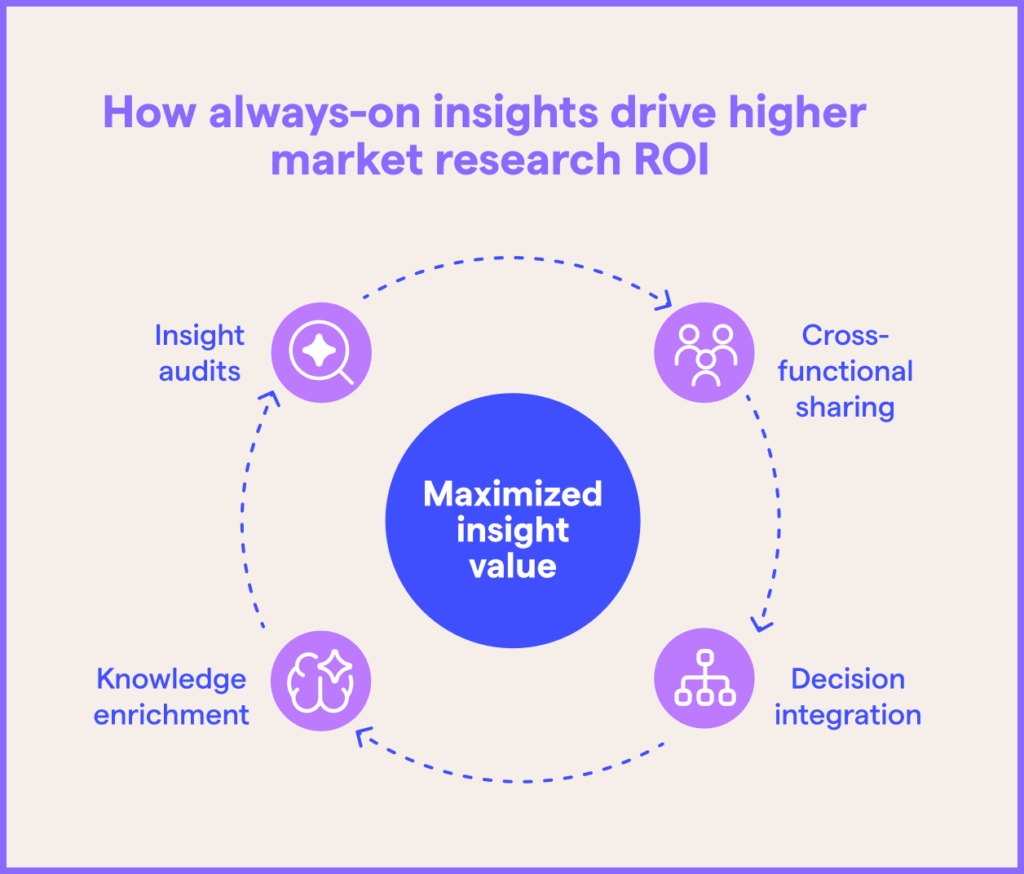
Combined with the right AI tech, these tried-and-tested strategies focus on creating systematic approaches to insight management while fostering organizational cultures that prioritize data-driven, customer-centric decision-making:
Conduct regular insight audits
Establishing systematic processes for reviewing existing consumer market research is crucial for identifying underexploited data and confirming its ongoing relevance. These audits involve comprehensively assessing all acquired research assets, evaluating current insights against evolving business objectives, and pinpointing gaps that new research initiatives should address.
Regular audits help organizations understand which consumer preferences, market trends, and competitive dynamics remain relevant to current strategic initiatives. This process also reveals opportunities to synthesize insights across multiple studies, fostering a more comprehensive understanding of customer behavior than any single research project could provide. Companies should create standardized processes for tagging and categorizing new research upon acquisition, ensuring future audits can quickly identify relevant studies and assess their strategic value.
This approach prevents valuable insights from becoming lost within growing research repositories while maintaining the organizational discipline essential for effective knowledge management.
Promote cross-functional insight sharing
Breaking down departmental silos ensures that insights from one area become accessible and understood by others throughout the organization. For instance, consumer research acquired by product development teams often contains findings that could inform marketing campaigns, while customer satisfaction studies might reveal opportunities for new service offerings that other departments could develop.
The right knowledge management platform can facilitate this collaborative environment by providing role-based access controls that maintain data security while enabling appropriate sharing across functional boundaries. Teams can discover research utilized by other departments, access insights relevant to their current projects, and contribute their own findings to the collective knowledge base.
Establishing processes for sharing significant research findings across departments should involve regular cross-functional meetings, shared dashboards highlighting recent findings, and even notification systems alerting relevant teams as new research becomes available.
Integrate insights into every decision-making process
Consumer intelligence should form the foundation of an organization’s strategic planning, product roadmapping, marketing campaigns, and innovation initiatives, rather than merely serving as supporting evidence for predetermined decisions. This integration requires establishing organizational processes that mandate consultation of existing research before launching new initiatives and creating decision-making frameworks that explicitly incorporate consumer insights.
Organizations should cultivate cultures where data-driven insights take precedence over intuition alone, while still maintaining the creative thinking necessary for innovation. This balance requires training teams to effectively interpret acquired consumer research, understand its limitations, and apply insights appropriately within their specific contexts. Decision-making processes should include explicit steps for reviewing relevant consumer research, identifying gaps in current understanding, and determining when additional research might be necessary.
This approach ensures valuable insights consistently inform decisions while preventing analysis paralysis that could delay important strategic initiatives crucial for customer response.
Continuously enrich your knowledge base
Organizations should also implement strategies for actively enriching their consumer research repositories with ongoing market signals, competitive intelligence, and internal data sources. This continuous enhancement transforms static research collections into dynamic intelligence assets that provide increasingly valuable insights over time.
The enrichment process involves integrating external data, such as industry reports and economic indicators, with internal consumer research. This provides crucial context for understanding how consumer preferences relate to broader market trends and competitive dynamics, leading to a more complete customer profile. For successful enrichment, organizations should establish internal processes for continuously updating their knowledge bases with new findings from research providers, internal teams, and external intelligence services, ensuring insights remain current and relevant.
DeepSights: enabling strategic insight maximization
Implementing these effective insight management strategies directly relies on utilizing the right platform. DeepSights manages and streamlines research workflows, from collaborating with research agencies and preventing duplicate efforts through AI-driven knowledge checks to enabling one-click audits of research projects. It ensures comprehensive access to valuable insights across departments by surfacing knowledge assets via federated search and enabling the retrieval of answers within any application, fostering seamless cross-functional sharing.
Additionally, its DeepSights API enables the integration of market insights directly into business systems and provides self-serve access to critical data, accelerating smarter, insights-based decisions across the organization. This continuous flow of market-winning knowledge empowers businesses to fully maximize their consumer research investments.
With DeepSights, you don’t have to worry about missing out on insights
Organizations invest substantially in consumer market research, aiming to drive innovation and gain competitive advantages. However, these benefits are only realized when insights are accessible, actionable, and integrated into processes. The challenges of fragmented data and missed opportunities demand sophisticated solutions that transform vast research findings into dynamic intelligence.
A trusted AI-powered insights platform, like DeepSights, can provide the necessary foundation for surfacing relevant insights precisely when needed, ensuring no valuable intelligence remains hidden. By adapting the advanced capabilities AI has to offer, organizations like yours can maximize their consumer research investments, build sustainable competitive advantages through superior market and customer intelligence, and truly accelerate strategic success.
Ready to unlock the full potential of your consumer market research investments? DeepSights is an award-winning AI-powered insights platform that can centralize your market intelligence, eliminate silos, and empower your teams with the actionable insights needed for strategic decision-making and accelerated growth. Schedule a demo today to learn how to harness the power to turn every piece of consumer intelligence into a driver of innovation.