


Share this article


In 2026, AI will be deployed by many businesses globally and embedded in their tools and dashboards. McKinsey estimates that 78% of organizations in 2025 use AI in at least one business function. Yet despite rising investments in AI, only 32% of organizations that use AI seen a change or idea generation improvements, according to a survey by Barclays.
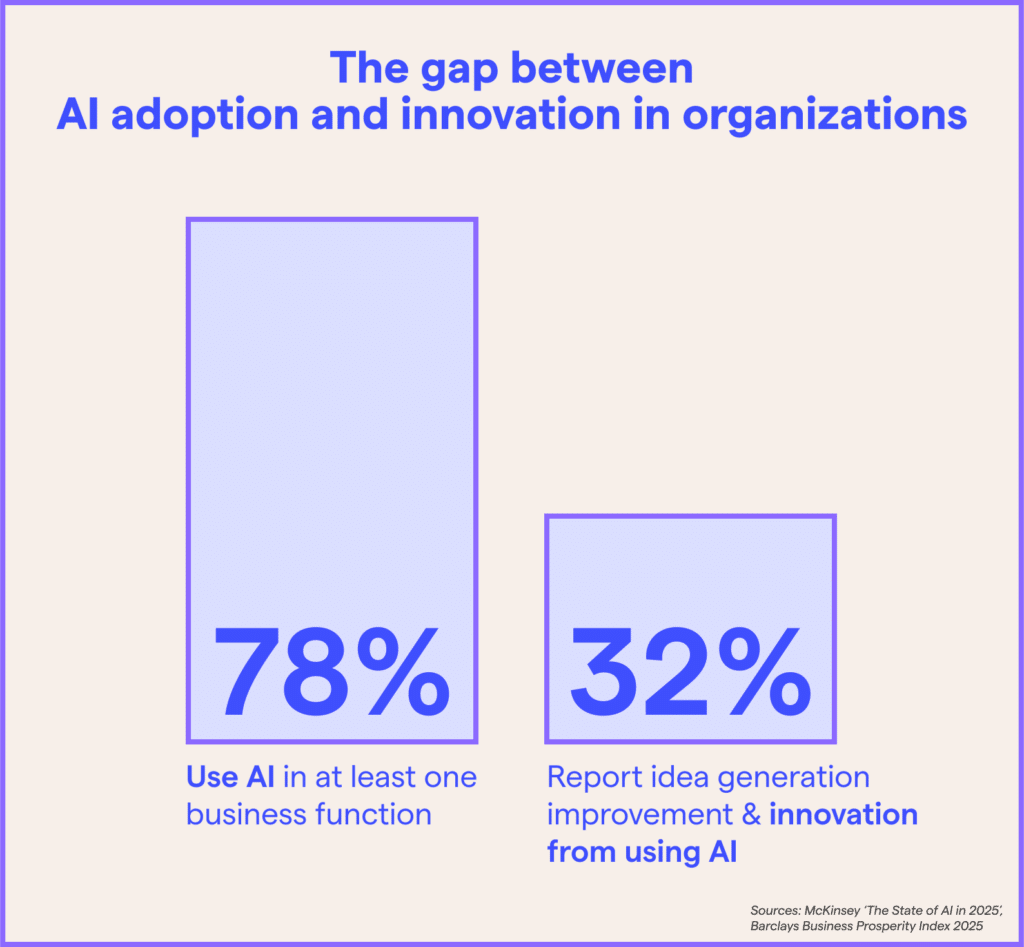
The question is, why is there such a big gap between AI deployment and its actual impact? And how can organizations ensure that their AI is truly working to their advantage, leveraging it to future-proof their business?
The answer is simple: Technology is an enabler, not a silver bullet, and AI does not transform businesses on its own. Leaders must do so by implementing effective landscape organization strategies and making deliberate operational, cultural, and governance choices to effectively embed AI into the fabric of their decision-making across the business.
Landscape organization, from an insights perspective, refers to how insights are created, shared, governed, and embedded across the organization—from data sources and AI systems to the workflows and teams that act on them. A well-designed insights landscape ensures intelligence flows continuously into decisions, rather than remaining siloed in reports or platforms.
For insights teams, this represents both a challenge and an opportunity. To enable change, Insights leaders must effectively steer organizations by championing an always-on, AI insights operating model: purpose-built for speed, scale, and relevance of insights. This helps them deliver proactive market intelligence into workflows and systems where decisions happen.
In this article, we break down the organizational choices leaders must make to enable AI to supercharge the organization, across three key tenets: operations, culture, and governance.
The challenge – Why insights stall before they scale
To start, leaders must realize that most organizations don’t struggle with a lack of insights; rather, they struggle with turning knowledge into action at scale.
Operationally, tools are fragmented, and data is siloed. Too often, insights are still treated as outputs to consume, not intelligence to act on. From a governance perspective, unclear standards and ownership slow adoption and erode trust.
This means that insights teams spend more time managing inputs — answering briefs, delivering reports, and presenting findings at key moments — rather than enabling decisions. That model worked when decisions were fewer and business cycles were slower.
But today, in markets where consumer behavior evolves in real time, waiting weeks for insights is no longer viable. Decision-makers within organizations need continuous, contextual guidance, embedded directly into the workflows, systems, and applications where decisions are made.
AI has the potential to solve these challenges. But for real change to happen, AI-powered insights must steer the organization across three key areas, bolstered by the right organizational choices:
- Operationally: from fragmented tools to integrated insight flow
- Culturally: from reactive research to proactive decision enablement
- From a governance standpoint: from ad hoc use to trusted, scalable intelligence.
Three key choices leaders must make to empower the organization with AI insights
1. Rewiring operations — from insight delivery to insight flow
AI can dramatically accelerate insights generation. But to unlock real value, Insights leaders must rethink how insights move through the organization. There must be a fundamental shift, from producing insights to enabling decisions.
This requires three key steps:
a. Designing insights for flow, not delivery
Instead of asking “What report do we deliver?”, high-performing Insights teams ask a different question: “Where should this insight live to influence action?”
That means embedding AI powered intelligence directly into the systems where decisions happen, such as:
- Product development tools
- Marketing planning and activation platforms
- CRM and customer experience systems
- Strategy and innovation workflows
The goal is a proactive flow of insights, automatically surfaced in context, at the moment of decision.
In this aspect, agentic AI tools gained more widespread use in 2025, enabling organizations to transform their static knowledge base into an active intelligence layer with always-on agents, and helping organizations supercharge their innovation pipeline.
b. Moving AI insights closer to the business
AI lowers the cost of analysis, but increases the importance of context. And as insights become more abundant, relevance becomes the differentiator.
Rather than in a silo, insights teams must operate as strategic partners, deeply aligned with commercial, innovation, and experience teams.
This requires:
- Emergence of new roles focused on enablement, not just analysis
- Shared KPIs tied to decision impact rather than output volume
- Clear ownership of insight activation, not just creation

c. Building trust in AI insights through operational consistency
When AI-generated insights are available everywhere, trust becomes critical.
Consistent definitions, shared data foundations, and transparent methodologies become essential for adoption at scale.
Operational priorities should include:
- Connecting data sources by breaking down silos between research, CRM, social listening, and transactional data
- Automating repetitive tasks like data cleaning, tagging, and trend detection so teams can focus on interpretation and storytelling
- Embedding insights into workflows, delivering intelligence directly into tools such as marketing automation platforms or product dashboards.
Purpose-built tools like DeepSights are designed to empower the business, enabling Insights to create one-click market intelligence reports and share them with the business via everyday communication tools like Teams and Slack.
Pillar 2: Building a culture where insights are trusted and acted on
Even the most advanced operational setup will fail without cultural buy-in. AI can generate insights at lightning speed, but without trust and adoption, those insights will gather dust.
Insights leaders play a critical role in shaping a culture where data-driven decisions are the norm. For boosting adoption, AI should be viewed as a partner and a collaborator, rather than a threat. But it should not be seen as the organization’s Chief Innovator either.
This cultural shift starts with redefining the role of insights in the organization:
- Position AI-powered insights as a strategic asset, not a “nice-to-have” input
- Shift expectations from perfect answers to faster learning and iteration
- Encourage teams to use insights continuously, not only at decision milestones
Key cultural choices leaders must confront include:
- Do we reward speed and learning, or perfection?
- Do we empower teams to self-serve insights, or centralize control?
- Do we treat insights as a driver of growth or a support function?

Pillar 3: Enabling scale through governance and responsible AI
As AI becomes embedded into decision-making, governance is no longer optional—it’s foundational.
Without clear rules of engagement, organizations risk bias, privacy breaches, regulatory exposure, and erosion of trust. When designed well, effective governance sets guardrails and provides:
- Clear standards for data quality, privacy, and usage
- Responsible AI principles covering fairness, transparency, and accountability
- Defined ownership and accountability for AI-driven insights
- Continuous monitoring to ensure relevance, accuracy, and compliance
Rather than treating governance as a separate layer, future-ready organizations embed it directly into their AI and insights landscape. This creates confidence across stakeholders and allows insights to scale safely across the enterprise.
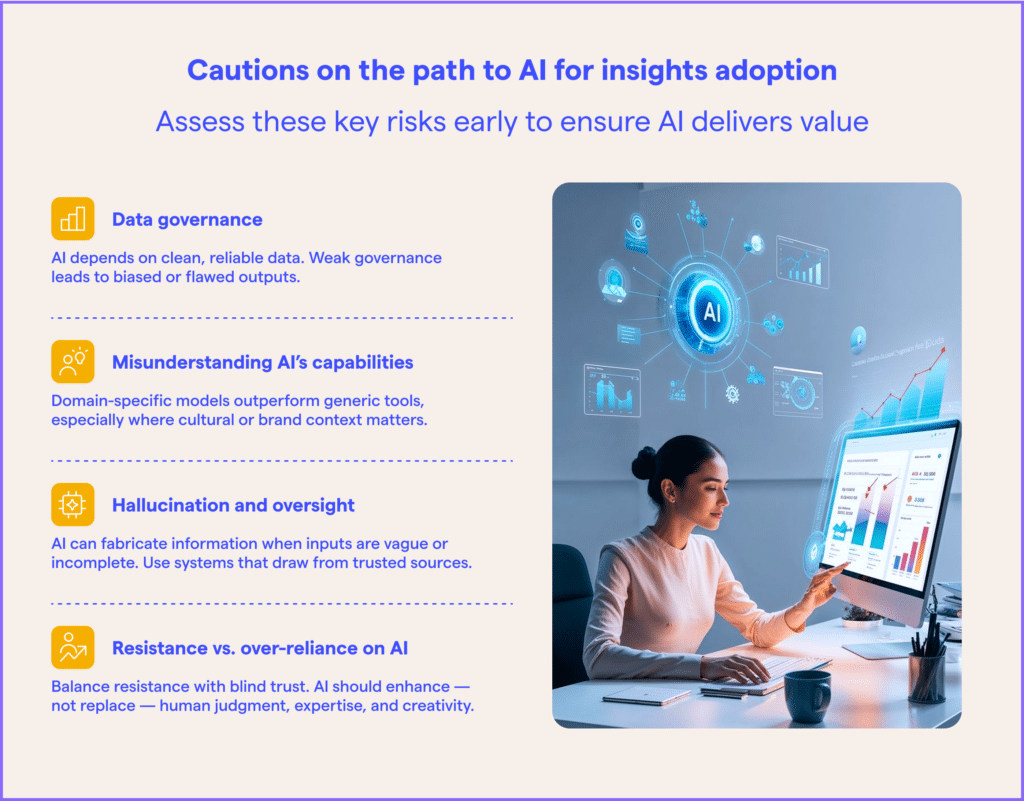
As an Insights Leader, it’s crucial to work closely with your CIO and IT team to identify the key data governance challenges in AI-powered knowledge management and address these, such as: protecting sensitive data and ensuring regulatory compliance, maintaining the quality and reliability of AI-generated outputs, integrating fragmented and complex enterprise knowledge sources, and driving adoption through clear use cases and change management. Finding a trusted AI solution that solves data governance challenges enables secure access to knowledge.
When people trust the process, adoption accelerates, and AI-driven insights can move from experimentation to everyday decision-making.
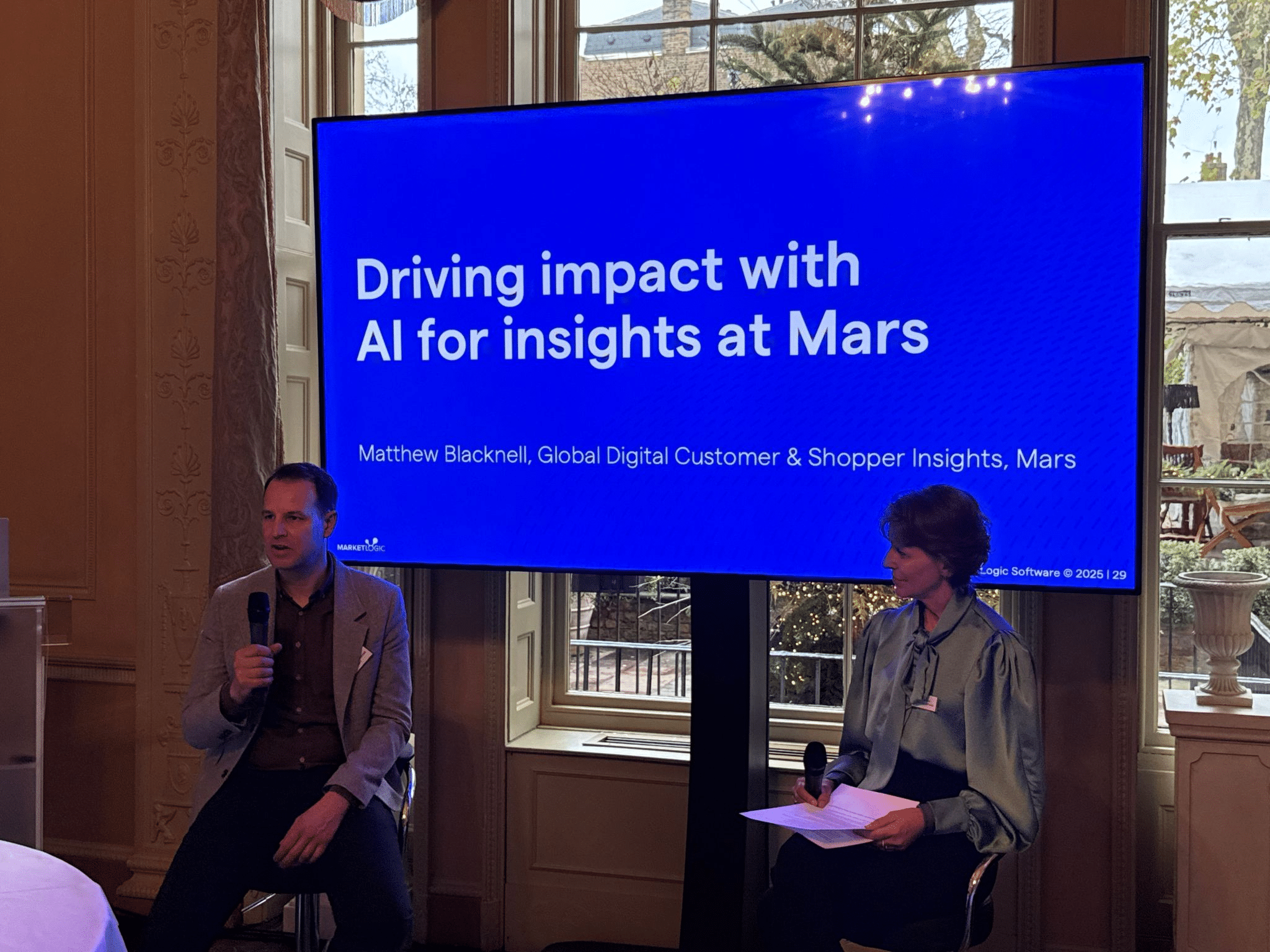
Case study for effective AI adoption in the enterprise: How Mars enabled an insights-first function
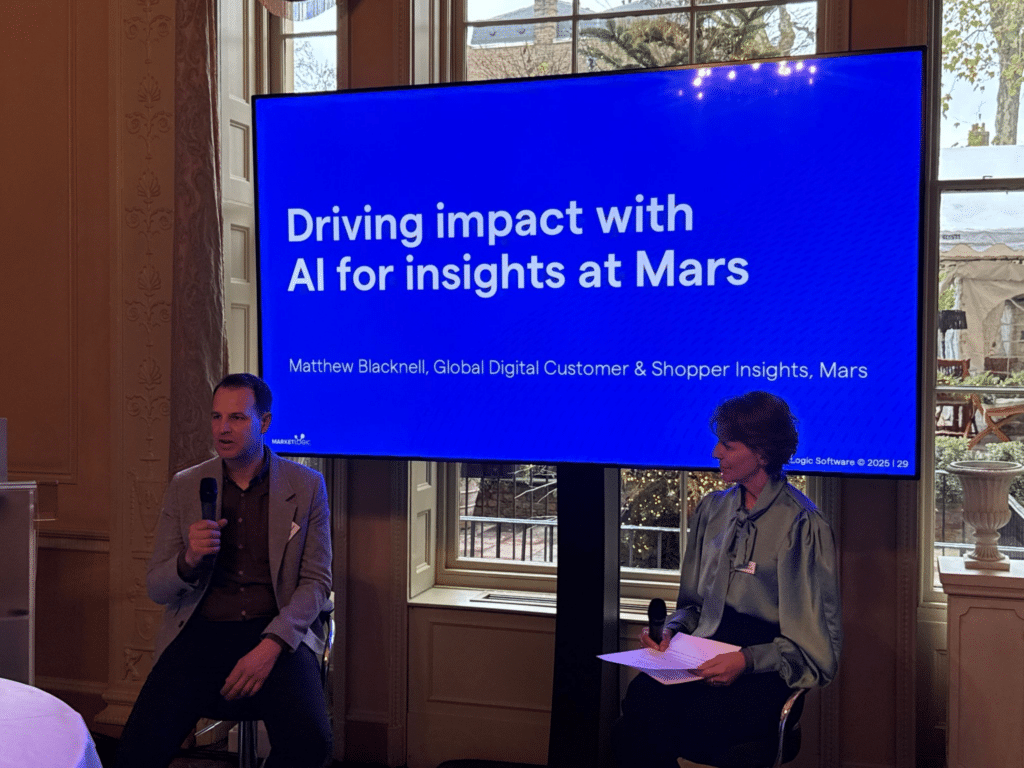
By investing in a centralized knowledge foundation and activating it with AI, CPG leader Mars is building an always-on insights culture—ensuring intelligence is continuously accessible, trusted, and embedded into everyday decision-making.
Their success story showcases what it takes to scale AI-enabled insights in a complex global enterprise, and what changes when the organization starts treating knowledge as an asset rather than a by-product of research. Here is how:
- Insights led the consolidation and activation of knowledge, creating a single, AI-powered source of truth from fragmented research
- Insights redesigned access around real decisions, enabling natural-language discovery so teams can self-serve answers in context
- Insights repositioned themselves as a strategic partner, shifting perception from research delivery to decision enablement
- Insights drove adoption and trust, building a network of champions and establishing responsible AI and data standards
- Insights scaled impact across the enterprise, ensuring research is reused, embedded early in workflows, and applied globally.
Future-proofing starts with the choices leaders make to embed AI insights in the organization
Ultimately, the organizations that succeed with AI will be those that align technology with the right operating model.
Leaders should focus less on adoption speed and more on creating the conditions for impact, aligning operations, culture, and governance so insights can work at scale and become a trusted engine for innovation and growth.
In this case, the always-on insights operating model is emerging as the foundation for AI-driven performance, empowering businesses to:
- Respond faster to market shifts
- Innovate with confidence, backed by real-time intelligence.
- Optimize resources, reducing time spent on manual data wrangling.
- Drive growth by aligning decisions with consumer needs and market trends.
A trusted insights AI platform, such as DeepSights, is the connective layer. It integrates data across the enterprise, automates insight synthesis, and embeds intelligence into everyday decision-making, so that AI becomes a trusted engine for decisions, innovation, and growth.
The question is no longer whether AI will shape the future of Insights. It’s whether your organization is ready to let insights drive the business forward: always on, always relevant, and always connected to action.
Turn insights into a continuous advantage with an award-winning, AI market intelligence platform, DeepSights. See how an always-on, trusted intelligence model helps Insights teams move faster, scale impact, and stay at the center of decision-making.