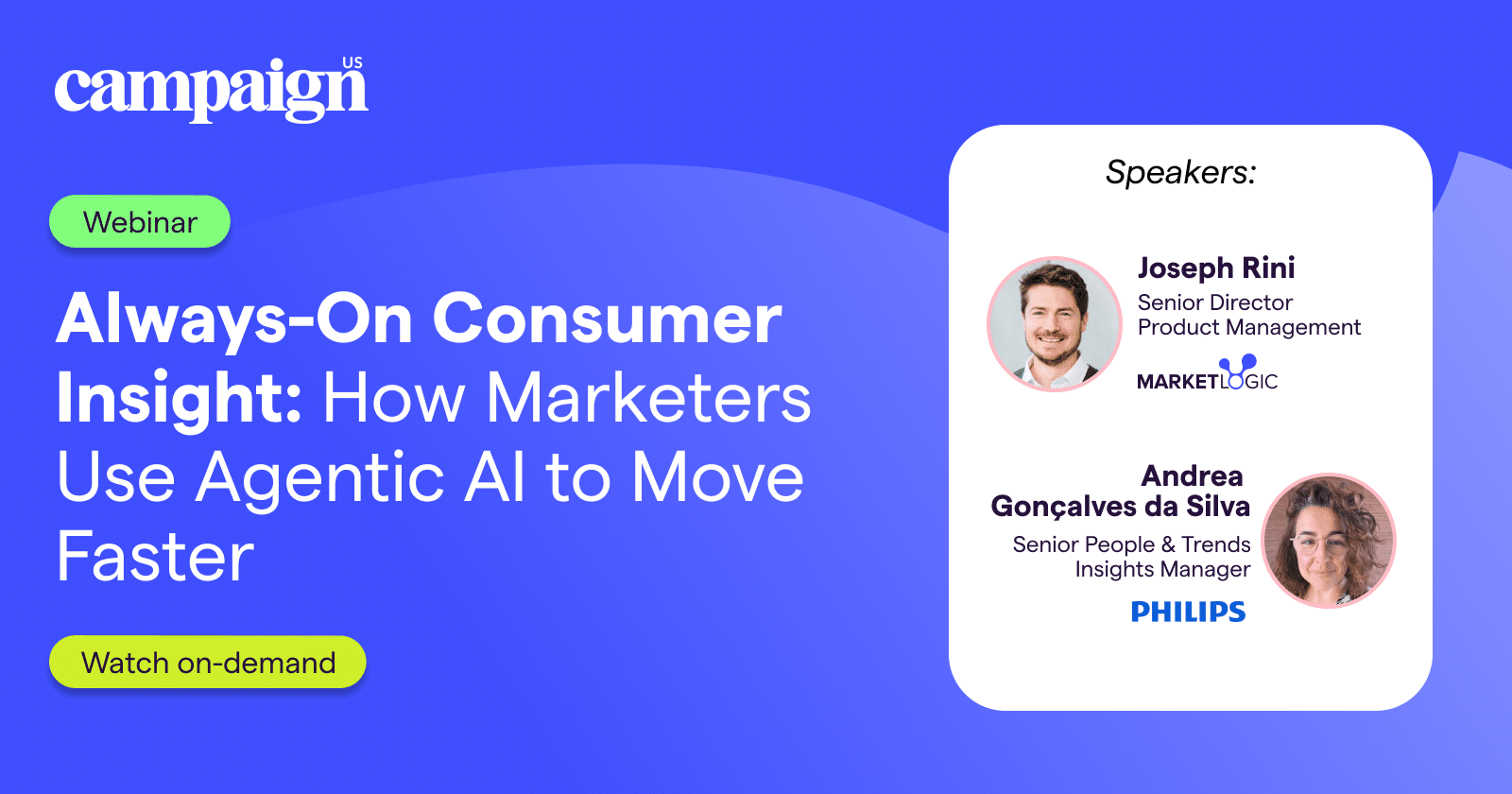


Great. Thank you very much, and thanks for coming today to this co presentation between Market Logic and Philips, all around how Philips has accelerated the consumer centric innovation with AI. And, yeah, again, my name is Joe Rini, I’m a senior product developer and product manager at Market Logic, and I’m joined today by Sehnaz and Andrea. And the plan today is essentially, I’ll spend the first five, six minutes taking you a little bit through who Market Logic is, and then introducing the problem and the solution that we believe our Persona’s offering provides. I’ll quickly show you the software, and then I’ll turn it over to my counterparts from Philips to really take you through all of the learnings that they’ve had in using this platform. So who’s Market Logic? Many of you may know us. We’ve been in this space for about twenty years. We’re a SaaS software provider to some of the largest and most well known brands in the world across consumer goods, pharma healthcare, retail, automotive. And we provide a platform that holds all of the insights on behalf of our customers, global teams, and insights, marketing, r and d, innovation counterparts are all in our platform, accessing that content, and we offer a level of or a layer of AI solutions to help them make sense of all that content, work with it, and ultimately make business decisions from it, while keeping the human in the loop. And today we wanna focus on the personas offering, is one of those AI offerings, which we see as solving a key challenge across our customer base when we’re speaking to them, which is how can we bring customers into the conversation more often, earlier in our processes, and ultimately leverage everything we know about our customers in a more efficient way. And we believe the Personas offering allows that by allowing our customers like Philips to run what we call forward looking audience intelligence at scale without sacrificing research rigor. A couple key points about our personas, they’re always current, they’re based on our customers’ current proprietary data, they’re trusted foundation of how they understand their own customers or b to b stakeholders. We also offer capabilities to build these personas on the fly from the larger research repository that we hold on behalf of our customers. And finally, started to move beyond the qual focused persona offering, which we’ll focus on today, into a quant based offering. So really allowing more quantitative outputs against surveys, against concepts and so on, using a larger number of respondents. So ultimately, and I’m gonna demo this in a second, the personas are based on our customers data, powered by large language models, and we see them being used in a couple of different ways, exploring the lifestyle and views of these personas, investigating early broader concepts, ideas, and so on, really accelerating time to insights. So I’m now gonna go into the platform and actually show you Philips’ personas, and I’m gonna take you through three key use cases that we see a lot of our users doing. The first is just exploring a given persona in a chat based environment, Then I’m gonna have an AI moderator take over and carry out the conversation with a group of personas, and at the end I’m gonna show you the personas evaluating some visual content that I’m gonna upload. So now in this demo, Philips has a bunch of different category setups that I showed there quickly, and a couple in the male grooming case. Here we see Felix, is a key persona around this younger segmentation, the gen z emerging approver. I can take a chat off with him here, but I’m actually gonna preload the conversation that I had earlier. And this is that use case of just exploring and learning a bit more about Felix at first, so like, you know, who are you, tell me about yourself, you can see all this data backed input, and I’m gonna start to drill down on key pain points in the grooming space with this persona. So all of these responses are of course based in Philip’s understanding of this persona, and finally start to wheel that down to some product ideas that we might take away and work on in a different environment let’s say. So a key output we see a lot of customers doing is generating an image off the back of that chat. I’ve just spun up a quick image here, summarizing who Felix is, telling us a bit about what was spoken about, that’s a great asset to download, distribute internally and help drive home what we just conversed about. I’m now gonna kick off an AI moderated chat with a group of personas here, and the idea is I can leverage the power of the model to understand what I wanna know from these two personas, and let it do all the heavy lifting of carrying out this conversation. So it takes a second here, the model is trying to reason about what I’m asking it to ask the personas, and it starts to formulate these series of questions in a back and forth now with the personas. So really, my hands are off the steering wheel, and the system is doing the heavy work here of understanding what the personas are saying, asking follow-up questions in a back and forth, typically five or six interactions, and then finally the conversation is summarized for me, I get a breakdown of everything we discussed, pain points that were surfaced, and so on, next actions. So a great kind of takeaway asset on top of what we just talked about. What we see more and more customers start to leverage additionally is, remember I said we hold that knowledge repository on behalf of our customers, we can now check if what was stated here lines up with all that market research that we have. So I’m simply gonna fire the compare with research, and now I’m getting a comparison, Is everything that the persona said matched in the market research we have from this market, from other markets, so really helping the insights or marketing person take that away to keep steering their output? And the final thing I mentioned is we see a lot of customers bringing visual assets, also video to the system, so I’ve simply uploaded two mocked up concepts here, and I’m gonna ask the personas, both of them, hey, could you reflect on these? And it takes a few seconds of course, and here we go, we get this feedback, I could then carry that child on further, follow-up and ask for claims or other areas we might go. And what I haven’t shown here is we started to ideate and build out, as I mentioned, more of a quantitative output. So imagine I could have fifty persona agents now, I could take the same image to that panel offering and get back more of a quantitative output to complement this early qualitative research that I’ve done here. And with that, I’ll turn it over to Sehnaz. Yes, thanks Joe. So I first want to start with explaining how our partnership grew with Market Logic. So we first started as a data aggregator, so we asked all our colleagues to upload their research documents into Eureka, what we call internally. And then actually Market Logic tapped into the AI world and then said we have a product called DeepSights. So then we started using our research reports with DeepSights and synthesizing the data with this tool. However, then we said, okay, we want to develop this tool also internally, so we said, hey Market Logic, can you also provide the documents back to us? So then they provided a Google Cloud Storage API where we monthly get back our reports and integrate it into our own internal AI tool. In twenty twenty five, we started co creating the personas, the synthesized personas together for all of our PH categories, personal health categories, and this year we are piloting a foresight module as well as a synthetic data project together. So today we will talk about the personas and how we created them and how we leveraged them at Philips. How we created them, so Andrea actually did a research with with all of our categories with multiple countries, and we have research reports where we sent it to Market Logic to help us feed into the personas. In addition, we also wanted Philips marketing definitions, how to create an insight, to also be integrated there because we use these personas to optimize our insights or optimize our concepts, so we wanted to have a similar format. And then of course we we need to ensure that they are up to date and recent as well, so whenever we do a consumer interview, we also plan to integrate the transcripts to make to ensure that the personas are more real. And in addition, for example, recent trend reports can also be integrated into the personas. So how do we use them? We, as insights, we advise on using these personas to really understand segments, understand people. And typically, in the old days, I guess, we would have to read a lot of reports, and there might be different perceptions about those people in different countries or in different parts of the organization. So these personas really help us in a very easy way, in a conversational way, to get to know and understand people better, whether they are a segment in Japan or in Brazil. Also, the use case for us is really all about optimization and early feedback. It’s really part of the process of generating faster but better, also more consumer centric kind of insights and concepts or claims or packaging, so really throughout innovation to communication. Synthesized personas, as I said, it really not just is a very easy way or approachable way to get consumer feedback or actually having data talking at you. We it’s also very easy now to actually upload images or upload videos that allows us to test, for instance, some creatives on communications, or some early packaging, or claims, even feedback on websites, for instance, because you can simply include a link and have the Personas chatting about it and giving feedback on it. So how does it work and how does it look like? We actually have built a lot of Personas in a lot of different markets and for different categories within Philips, and you simply have to select. Sehnaz will show it much better to you in a bit, but you can select them based on the category and country that you need. And as Joe also showed, then there’s a little description about who they are, what kind of from which generation they belong, and the type of consumer they are. So that allows you to understand a little bit about them. And then, which is one of always my favorite features, you can select or choose to speak to one only, but you can also interact with multiple Personas at once, which is really interesting, especially in our case, because we have different generations, have men and women, we have Personas in Japan, or in Brazil, or in Italy, so it allows us to really very quickly understand what’s the feedback from different countries or different generations, which we then can very easily also summarize and export for including it in presentations and so on. I would like to share as well a couple of use cases that we have been running through. And the first is really about claim optimization in Germany, in fact, for the oral care category, where we had a long list of claims internally generated, and we wanted to have feedback. We wanted you to understand its appeal or its potentials. So we have used the Personas to help us do that, optimize them, and actually improve them, so that later on they would be tested in a real life test. And the good thing, actually, about it is the fact that ones that were optimized actually got better results than the ones that weren’t. And then another example, which is really for our male grooming category, it’s not really the image that you see here, that’s the one we tested, but we wanted to also optimize our packaging from a visual perspective, but also from a textual perspective on the pack. So, as I said, easily included as images and got feedback to optimize the visual and the written content to, again, go and test and optimize with real life people. So over to you again. Yes. So this is our internal consumer insights and innovation tool, end to end one stop shop. So here, we wanna show you the entire tool so you get an idea how we end up in the personas. Here we have actually reports coming in from Eureka, which is the Market Logic’s platform. We have our proprietary data consumer research where we ask the needs and tensions of the data. We have our final concept, and then with our final concept, we directly go and optimize the concept with the Personas. So it’s it’s really an end to end tool from insights to ideation and then at the Personas. We ask, as you ask a normal consumer, how do you like this concept? If you were to further optimize it, how would you optimize it? And then we really read into it and understand, okay, what are they skeptical in? What do they want to further improve? And as Andrea mentioned, we can add another pack design, a pack concept, and ask. And I think this is really valuable because this is really based on real consumer research that we have conducted that we know that this is our target audience, so their input and feedback is also quite relevant and critical for us. Here you can see that, yeah, you can attach a file. This is our internal tool but of course this can be also done in the Market Logic platform as well. And here we just go ahead and ask certain questions. This is a group discussion as mentioned, so it could be a different generation or different segments that we’re targeting for the same product, and then you have the ability to also like have a summary of the chat that you’ve done. You can export it as well. But then, yeah, you can also ask how does this compare to the competitor as well. So so it’s it’s really an end to end tool where we’ve integrated with an API Market Logic’s Personas into our internal platform. So some stats, we actually launched this tool this year in March to the entire Personal health of Philips. We have trained three hundred colleagues. We have averaged two hundred active users actually already using the Personas. Their average time that they spend is five minutes per chat. The total messages are around eight thousand five hundred, total chats nine eighty, and we can see that the attachments that they add are quite critical, almost five hundred attachments have been added to optimize. So yeah, a few learnings. I think the learning parts are quite nice. So the first one is driving adoption. First of course, it’s important that you have senior stakeholder leadership buy in when you do these AI solutions as you know, but also driving adoption within the categories. We have integrated our tool into all of our marketing trainings at Philips. We ensure that the process is also followed. When we’re also giving feedback to the Personas, we ensure that they give really critical feedback, so we continuously shared our feedback and certain guardrails with Market Logic so they refined it accordingly. AI tends to agree with the questions that you ask, so we ensure that they actually push back and really give us real criticism on the concepts and the insights that we provided. The third important point for us is that last year we were actually piloting with a few other vendors, but Market Logic’s co creation and willingness to provide the API so we can also create something similar internally really helped us move forward, and I’m not getting paid to say this, but then the fourth one is qualitative input enriches output, really in order for us to ensure that it stays relevant and recent, we continuously update the Personas. That’s it. Thanks for listening.
At Philips, a campaign idea can now meet its first consumer before it reaches a research agency. That consumer happens to be a Synthetic Persona.
Presented at IIEX Europe 2026 in Amsterdam, this 20-minute session brings together Sehnaz Arasan and Andrea Gonçalves da Silva from Philips with Joe Rini from Market Logic to show how Philips is using Personas to bring consumer understanding earlier into innovation and communication workflows.
Co-created with Market Logic, these Personas are built on Philips’ own consumer research and are now part of how teams explore consumer needs, refine briefs, sharpen the questions they ask, test claims and concepts, and pressure-test ideas across generations, markets, and categories. The goal is not simply to get faster answers, but to make better decisions faster — using existing research more effectively while keeping human judgment, validation, and research rigor in the loop.
In the session, Philips shares how teams use Personas for claims and packaging optimization and how feedback from Personas can be compared with existing research to support more confident decision-making.
What you’ll learn:
- How Philips and Market Logic co-created Synthetic Personas for consumer-centric innovation
- How AI Personas help teams refine briefs, questions, claims, concepts, packaging, and creative assets
- How Philips uses Personas across markets, generations, and categories
- Why Personas support early exploration and optimization, but do not replace fielded research
- What it takes to make AI useful in practice: data, governance, integration, adoption, and continuous feedback
For insights, innovation, and marketing leaders looking to move AI beyond experimentation, this session offers a practical look at how one of the world’s most innovative companies is applying Synthetic Personas to make consumer understanding more accessible, interactive, and actionable.