

Recorded on March 3rd 2026
Market Logic is joined Campaign Live for an exclusive look at how agentic AI is changing the way marketers bring consumer insight into everyday decision-making — turning static persona segmentation reports into dynamic, always-on intelligence.
Stream our session and Q&A with Joseph Rini, Director of Product Management at Market Logic, and Andrea Gonçalves da Silva, Senior Intelligence Manager at Philips, as they demonstrate how marketing teams are using AI to move faster, stay closer to the consumer and build stronger, insight-led brands.
Hello, everyone, and thank you for joining us today. I’m Luz Corona, US editor of Campaign. Today, Campaign and Market Logic welcome you to the webinar, always on consumer insight, How Marketers Use Agentic AI to Move Faster. Through real world examples, you’ll see how organizations are accelerating concept and campaign development, reducing redundant research and making faster, more confident marketing decisions without replacing primary research or compromising rigor. So without further ado, I’d like to welcome and pass the mic to our speakers today, Joseph Rini, director of product management at Market Logic Software, and Andrea Gonzalez De Silva, senior market intelligence manager at Philips. Great. Thank you so much, for the introduction, and very happy to be here with you today together with Andrea from Philips to talk all about our Personas offering and how Market Logic and Philips or I should say how Philips is working with Market Logic to implement these in the organization. Andrea, do you wanna say a quick word to introduce yourself? Hi. Hi, everyone. My name is Andrea. And, yeah, I’m very excited to talk about personas here together and what we have been learning to date. So, yeah, over to you, Joe. Great. So quickly before yeah. I guess sort of the plan today would be, I’m gonna introduce Market Logic quickly and a little bit about the personas offering generally, and then show you a kind of general demo of the situation or of the of the of the platform, not the Philips specific platform, and then turn it over to Andre who’s really gonna talk you through the specifics of how Philips kind of co built this offer together with us and how they’re using that on the ground today in the organization. So first of all, just, you know, many of you will know us, but I guess many also will not. Market Logic. We’re a SaaS provider. We produce a software called DeepSights, which is an enterprise AI platform. It’s purpose built for market insights, consumer intelligence, and marketing organizations, and we serve basically some of the most well known brands in the world, typically across their kind of global teams in the insights and marketing. Our mission is to move companies towards what we’re calling active intelligence. So we’re thinking of an environment where insights are continuously connected, synthesized, and activated across the business. And DeepSights does this by bringing together trusted knowledge, typically all of the internal research, competitive intelligence, syndicated sources, news, various structured data sources that our customers will have, and we combine it in a purpose built, as I said, AI environment to help insights and marketing professionals understand, reason, and work with that content. We have a number of Gen AI based agentic solutions, one of which is our personas agents offering, and of course, that’s what we want to focus on today. So personas agents, they play a critical role in this overall DeepSights system as a strategic enabler as we see them, allowing teams to test early thinking before they invest. And I think we’ll see some of that both in my demo and also in what Andrea speaks about as well. Our persona agents are all powered and grounded in our customers’ organizational knowledge base and understanding of their own customer segments and we see this as a very strong play within our overall offering. Real quickly, what are these personalizations? You can think of them and I’ll show you a demo in a second. They are a chat based environment powered by large language models that allow you or allow our customers to speak with individuals or groups of their customer segmentations or persona. So it’s all built on their data and their understanding of their customer segmentation. And with these agents, you can go in, better understand their lifestyles and views, investigate early product ideas, concepts, marketing approaches, and so on. And additionally, can go beyond just text chats, you can really get in there uploading images, generating images and infographics, packaging, storyboards, etc. And the bottom line that we kind of see with this persona agents is you have the ability to really accelerate your time to insight. So going from perhaps waiting weeks to speak to customers and get that kind of feedback to being able to now twenty fourseven essentially go to these persona agents and get a kind of first discussion if you will with these synthesized personas. So with that, I want to open or come over to the platform and give you a quick demo so you can see what the environment is all about. Give me a second while I show my screen please. And today as I demo, I’m going to ask you to put yourselves in the shoes of Maya. So I’m a senior brand manager. I’m working let’s say I’m working in the longevity space. As I mentioned, right, I’m not going to be showing you the Philips platform per se, but what I will show you is very similar to what Philips uses in their own. And we know that these days there’s more and more pressure to one, influence the growth agenda. And in this particular case that what I’m going to take you through is this marketing manager is going to be trying to identify breakout supplements, they’re working in the longevity space. And how am I going to take you through that? And so demo is, first of all, I’m going to explore the customer segment, try to understand how much of the given customer segmentation knows about the particular area that I’m innovating in, then ultimately really shape a product concept together with the persona. So with that, let me come over to the environment. So right, I’m in a demo environment. I’m looking at some of the personas that would have been set up for my for me on behalf of or by the organization, by the insights team, and these would be totally vetted and built in the customer’s understanding of their segmentation. So, you know, we can take a look at, for instance, Maya here, I’ll chat with her in a second. She would of course be a fictional persona, but nonetheless fully grounded in the understanding of what this persona is all about. So she’s a thirty two year old UX designer in London. She represents a key segment or group that I wanna speak to today. Right? So I could kick off a chat with her. I’m actually gonna come over into a project I’ve been working on because I want to investigate some trending supplements today with Maya. I’m gonna come into an existing chat just to save some of the early discussion I did, I want to show you here what I was doing. So first of I just asked Maya, hey, like, tell me a bit about yourself, and you can see she’s essentially telling me, you know, where she’s based, a little bit about her personal interests around fitness and so on, what she’s thinking around snacking and food, etcetera. So these personas are configured in this case for the particular segment, snacking, I think it was a snacking and beverages area, so she’s going to talk about that a little bit just in the intro. And now I start to dive in or try to drill down on the particular longevity space that I’m interested in. So as I said, I simply ask, you know, can you tell me a little bit about longevity ingredients? Are these on your radar? And, she had in fact, given that she’s a wellness oriented snacker, heard about some of these things. So this is the one that I’m gonna hone in in on a second, but you can see I get a kind of feel for what this customer group might actually know about the space that I’m gonna gonna be talking to them about. And now I’m gonna really take it from there and start to interact with them. So the first thing I’m gonna do is say I’ll just paste this in so it’s easier. It’s great you mentioned this NAD plus supplement, which is where I really want to focus today. And the first thing I want to do is just tell her a bit more what that’s about and ask if that’s something she would consider for herself. So when I do this, what’s going to happen is the model is now taking its understanding of Maya, right? It’s all configured in the back end and it’s reflecting upon this new information I’ve given it and it says, yeah, okay, I would actually be interested, so Maya would be interested in trying these snack bars, but she needs solid evidence that it actually delivers, right? So right away she’s in a very nuanced way based on the customer’s understanding of this persona group saying yes, would try it, but it needs to be, you know, in a certain way. And now I’m going to take a couple of concepts, so probably offline, maybe in a team, maybe in another aspect of Market Logic tool. I’ve worked on a couple of product concepts here, each containing this NAD plus supplement group, but different, let’s say, bars in this case. An energy bar, cognitive bar, motor recovery focus bar. And let’s get her reflection on which one she’s most likely to resonate with. It takes a second as she, again, considers each of these options. And as you can see, she’s essentially giving me back now the appeal. Why or why not? It doesn’t land. Right? And for each of these, she’s letting me know which one well, what she likes and doesn’t like about them, and then ultimately, actually pointing to the one that’s most relevant for her. As a final follow-up here, I’m gonna say, okay. That’s great. Could you please perhaps give me three slogans for the one you’ve decided on that I can, you know, maybe take away as part of my campaign work here? And, again, I’m gonna get back some targeted slogans now based on this kind of novel reflection on that particular bar, And there we have a very well packaged sort of set of reflection on this concept idea. I could, of course, now summarize that chat, maybe take this away and give it back to someone internal who’s gonna continue working with it. And now a large language model simply takes the entire chat history and it has pulled key quotes from me and allowed me to copy that, download that, take that away. I might also though want to get some multimodal or some visual expression about what’s happened here. So I’m going to click into the generate image area and generate maybe a cartoon storyboard. So I can also use that to visually demonstrate one, a little bit about this persona and two, take that story and turn it into something visual so I can communicate it internally. Could also perhaps get packaging inspiration and so on. So I think this this visual component of this this offering is also very strong. Just while that’s loading, of course, I could always export the chat, get it into a Word document, and take the entire text away as well for further rework. And let’s just give it a second as the image generates here. And there you can see I just click in here. That the entire kind of chat that we just had is now captured in this beautiful visual expression here. So the the pain points, the various products that were shown to Maya, and ultimately, particular one that she decided on and why. So really, again, strong way to take that downstream and continue my concept building journey as the marketer. So that might conclude that component of my work. Probably I might be working on some later stage concepts or ideas as well. So I’m actually going to now show you how we could quickly test some packaging, and I’m gonna do that in a group setting. So I’m gonna go to the snacks and beverages personas and now speak to perhaps three of them at once. So I’m just gonna Quickly ask them to introduce yourself themselves. And then I’m going to while that’s loading, bring over, imagine some packaging work that we have been doing. We have a couple different variations here. All I’m going do is simply copy that, paste it in, and ask them if they complete grade each concept example here. So not very much context given to them. The system knows what to do. It’s now going to ingest that image and have each of the unique personas, right, so they offer different kind of setup and so on in the back end. Reflect on those and let me know what they like and don’t like about each of the packages. Again, rank them and so on. This is gonna happen quite a free flowing way. We can also configure this to be a little more regimented according to our customers’ criteria around how they like packaging concepts, etcetera, evaluated. So we’ll just give it a second as the model reflects here. And if it’s taking a bit too long, I can come over to an example that I had previously done. So literally the same one just run by the model, and you can see that for each of the concepts, each of the personas is now ranking them, giving the appeal, why it works, it doesn’t work. And, you know, if I want to follow-up, I can always at one of them and ask for, you know, tell me more about why you liked that concept and so on. So again, I think a strong play for how the personas can be used to reflect kind of in later stage packaging and concepts and so on. Okay. With that, I will stop sharing and come back to the presentation. And I’d like to hand it over to you, Andrea, at this point. Oh, sorry. There we go. Thank you. Thank you. And maybe in my introduction, I forgot to say it, but I’m basically working for the the consumer side of Philips, so what we call personal health. And in that, I’m I’m supporting all those different categories to actually become more consumer centric and more trends centric. So, let me first kind of give you a bit of a overview of our partnership with Market Logic, which started before the personas. But, so, yeah, we started partner our partnership in two thousand and and nineteen where, at the time, Market Logic was our data aggregator. And, basically, internally, we call it our Eureka platform, basically, where all the consumer research reports can be found by our insights teams, but also, obviously, by marketeers in the businesses and in the regions. With the AI boom, Market Logic launched DeepSights, which I think was very on built on insight because we obviously have a lot of information typically, but it’s always very It was very hard to actually find it and find the latest one and the real one, having that one source of truth. So, that really helped in synthesizing data faster. Two thousand twenty four, we started we moved into this whole API era and and started also building our own internal AI driven tool. And, yeah, then the next step was really going into what we like to call synthesized personas for all of our consumer categories in personal health. And how did that started? Like, was basically to put you, like to put yourselves in my shoes as an insights colleague or as a marketeer. We quite data rich or But the data sits always in reports. Even in synthesized is really not easy to use in the regular processes that we have, whether it is communication creation or or or proposition development. So we started off on this persona synthesized personas with a bunch of data that we have, but it’s really hard to interact with with a demo really to to show us what it could be, which you have seen, but now it’s, like, definitely evolved. And also with this shared vision that we had that we well, you pretty much showed the vision, I think, already coming to place with with Joe’s demo. And then we started codeveloping personas based on all the data that we have, but also knowing our business needs, typically, use cases. We have started the rollout and the deployment within the business units already last year. And now we are integrating it actually, this persona API into our internal AI insights tools tool. Because we noticed that that’s also very easy to improve accessibility and therefore people will easier more easily actually access it and use it in their daily jobs. About creating personas or the synthesized personas, we consider it extremely important that it’s actually based on data, on our proprietary data. In our case, we have extensive segmentation studies done for all the categories, very quant driven. So and that’s actually the reason why we chose to ask to talk to them or to call them synthesized personas to show that it’s really based on what we know. And also, we fed it with our marketing definition. So, do we write an insight? How do we write a claim? Besides that, we also supplement it with Or keep it up to date with trend reports, but also transcripts to really make sure that the personas gets as realistic as they possibly can. What we find also extremely important is to teach and show pretty much when to use the personas. So, we see it as an amazing help in terms of optimizing insights, communication, claims. That’s really an optimization tool. One that also does that for us much, much faster that we could do in the past. But we also say, we consider it extremely important to still have validation with real consumers. And this is now, this might change as we go and as technology also evolves and techniques. This really, again, also enables newcomers to really get to know the segments and get to know that data that we know, and therefore sharpen the propositions for them. So, it’s really also a way to onboard people in the wealth of data we have, but in an extremely simple way, in a chat way. And then, of course, there’s a feature that I think everyone likes and Joe also demonstrated it, which is really about testing or being able to test materials, whether it’s storyboards or concepts or claims. That is really something that marketers really like to do and makes, again, their job, the optimization of Steamly also incredibly faster and easier. Our role, or at least how we develop them and we still keep on looking at them, is really that we find it extremely important also as human oversight to test the personas and curate them. So, instance, to make them less salesy or advisory tone to a more human tone. Therefore, the importance of transcripts, for instance. But also, it’s important to to build in realism. Like, for instance, a guy will never know the type number of the shaver that he uses. So, maybe, do you know the LLM would, but that’s not what he does. So we make sure that, do you know, the personas also don’t do that. We add personality to them, but also the context in as much as possible authentic consumer language. And referencing to also the real world, if you will. Like for instance, my TikTok references in a gen z persona also increases the believability of that persona, because it’s real and we know it’s also what young people do and use these days. So, we are now also at this stage of, we have built, actually co built a lot of personas. We find it also very important to do that in market rather than having this global persona that’s really a very abstract thing that doesn’t really exist. Because we know that that will enable also use cases from a market perspective, and localization of claims, or even campaigns. So, we support change. So, we make sure we onboard, we organize onboarding sessions, we share best practices, and we also empower the super users as ambassadors in each one of the categories, because then it pretty much is not just insights really led, but it’s really user led, marketeer led. And of course, it’s very important to continue on evolving personas together, to make sure that they continue, they stay updated and accurate. So, incredibly important to include feedback and update personas. So, sharing some learnings that we have of this journey so far. We consider extremely important that the tool we have and in a partner that we do this with is scalable. And there’s a certain framework on how we build personas, what we use it for. So this roadmap and the scalability is of utmost important actually to make it work. It’s also extremely important to have feedback to make sure that we refine and test and curate what we create because that will make it or break it in usage for the marketers. Also, to ease of access, we want to integrate it in our ecosystem that we have, because it’s much easier to access and therefore use. And also, what I think is an extremely important part that we have to do every time more of is to include transcripts and and social comments to make sure the personas continue rich and and updated. So, that’s what I would like to share with you. Over to you, Joe. Great. Thank you so much for that, Andrea. I’m sure there will be some questions in the follow-up period to dig a little deeper into some of the points. And, yeah, I think I I don’t wanna spend too much time rehashing this this aspect of it, but just to really drive home some of the different use cases that we’re seeing customers using the personas for is, you know, all around campaign testing. I showed you some product concept reviewing there. Lifestyle lifestyle exploration is another important one, which is more of a, how can we better understand the segmentation in the first place, I would say, especially as new joiners are trying to better understand their own customer groupings. So that lifestyle exploration piece was kind of one of the original ones that we saw a lot of customers using, and I think it’s still an important one. I also showed the packaging feedback. I think the one on the upper right, adoption journey mapping, is something unique that we see in the b to b space or the pharma health care space. This is a little bit of a different angle, but we have customers setting up, for instance, like HCPs, so doctor groupings, nurse groupings, dentists, pharmacists, etc, in various ways, right? And then you’re able to interact with them in a b to b setting. So what would it take as a pharma company to get a particular set of pharmacists or doctors to shift towards your drug versus competitors? So that’s an interesting use case that we see in the B2B space, and you’re then able to, similar to how you might with end consumers or end customers, test, you know, your communications with them, test strategies with these b to b groups. So that’s a nice one we’ve seen. And finally, of course, the segmentation comparison. So this group chatting capability, I think, lets you do everything I mentioned, of course, across multiple personas within a given category, or even experiment across regions and so on to see how different personas might react across markets and so on. As we move into the kind of nitty gritty, so the setup of the personas that we see, There’s a couple of different ways that personas can be set up. I think the first one is based on your predefined persona assets. That’s the closest to what we did, what we’re doing with Philips, which is Philips really has already done a lot of the work to have the person They’ve done all the work, I should say, to have the personas built in their category country or in their key category country splits. And these are, you know, already done the data analysis. They’ve already done the legwork to get these into fully built out presentations, which can be which are already actually socialized within the organization, even pre a solution like the Personas. So we we encounter a good subset of customers who have those materials, and there we then take those and configure them and bring them to life in our system. Andrea mentioned using transcripts. So, yeah, we can also augment the first way with transcripts. We have customers who just have transcripts. Maybe they haven’t done all of that persona work. They don’t have those presentations built out internally, but they have raw interviews with, I don’t know, customers or those b two b segments that I mentioned. So we can take just that raw transcript work or other raw materials and turn that into personas in and of themselves. So that’s another kind of way that we see, and, of course, the blend of those as well. Another key one is with trusted partners. So we have a couple customers who are using partners like Mindline in Germany, Next Atlas, also in Europe, in Italy, and these are they themselves generate persona descriptions based on various types of customer data, and we can then either take it from those partners or actually have the partners in our platform, in some cases, really configure them in the back end. So that if there’s a specialist provider of the personas that you want to leverage, they can also live in the market insights platform. There’s Market Logic for customers. So that’s all around how these this first wave of personas, if you will, that we co built originally with Philips work. We’re now moving into something that we’re calling persona builder, which is more of an on the fly persona generation capability. And here, this is imagine customers don’t actually have a persona setup whatsoever, but they’ve got data sources that could feed segmentations, and we can configure a kind of filterable and plain language interface where people are marketers, insights are able to come into the platform and just write or express what kind of persona they would like to speak to, and we generate that in the back end on the fly. It takes about a minute, and you get this persona spit out essentially. You can then chat with it in the same way that I showed. So that’s an interesting angle that we’re now going down, especially with customers who didn’t previously have built out personas. It’s a it’s a very interesting way to actually get personas that you can then talk to. In terms of what’s coming, road map, next steps, and so on, I’m excited to talk a little bit about everything we’re working on. I previously had the image generation up here on the slide, but we’ve since, let’s say, knocked that off. So that’s actually live now as I showed for customers. One big next step in terms of multimodal or multimedia or different types of media is video ingestion. So we were going down that route in coming weeks essentially by by early q two that video ads, ad copy, etcetera, can be uploaded and ingested by the personas. So see there’s another strong leap in terms of letting customers really bring not just images, but also video to the platform and have the personas reflect on them. We’ve also started to bring in external sources. Andrea talked a little bit about keeping the personas fresh and updated. We’ve just introduced with one of our partners, Next Atlas, this integration where in the chat, if you ask the personas about hot topics, innovation areas, trends, we can actually have the personas being fed by that Next Atlas content, which is very strong in that area so that the persona output stays very fresh and up to date. Of course, this is for customers who are working with Next Atlas as well. We’re also introducing an AI moderation piece because we know it can actually be one time consuming, also challenging to actually question these personas, like, many times and also in a structured way so we can actually simply allow users to come in, write a few sentences around what they want the persona what they wanna explore with the persona, and essentially have the AI itself carry up the moderation as well. We’re also starting to introduce more what we’re terming knowledge check, and this is more of a close connection between the personas and the overall knowledge repository that’s that is DeepSights that we spoke about at the beginning, and Andrea also spoke about, so that if customers want, they can take the output of the persona chat and do some work to check how much the the insights, the market research, etcetera, lines up with what the persona said. And, of course, there won’t always be a perfect match, but it’s another way to link that to your knowledge repository when you go and start making decisions. And maybe the last exciting piece that we are starting to to pilot with a with a few customers, and I think it’s a key area for us, is what we’re calling synthetic panel agents. And, essentially, this is taking these this idea of these individual chat based personas and blowing that up into a larger sample size, if you will. So you get this synthetic panel now based on the underlying data that you can then get a little bit more of a robust output in terms of testing concept, testing ads, doing surveys, etcetera. So rather than just one synthesized or synthetic persona reflecting on that, you can actually get a hundred giving you a wide spread of feedback. And the idea is there we get some statistically significant output that, you know, could be actionable in a different way than the the kind of qualitative feedback you’re currently getting from personas. So that’s a super exciting area. And, of course, you know, happy to speak with any of these going forward. And with that yeah. I think I think go ahead. If you if you’d like to take a scan of this, we can you can always try the reagents, try them out. And yeah, I’d to conclude and turn it over for q and a. Thank you guys so much. That was fascinating. It’s It’s crazy to see how far this technology has brought us now. So I do encourage our attendees, please jump in with any questions. In the meantime, I have questions for these guys. So my first question is for you, Joe. There’s what are the benefits of the DeepSights personas versus various other standalone personas offerings out there? Yeah. I think there’s a couple I mean, there’s a few different areas, I would say, where there’s potential benefits. A lot of providers don’t build the personas based on the customer’s data, which I think is a key huge differentiator. So there’s providers where you can kind of get generic personas for a given market. But one strength that we see being the market insights platform provider for our customers is we can we can access and use their proprietary data, so really their internal understanding of their customer segmentations to build personas in a way that are not generic, but really that only they they truly know. So that’s one key advantage. That link to the larger repository is also something that we’re continuing to build out, as I mentioned, with that knowledge check piece and so on. And then also, you know, all of those features that I showed, like the video ingestion, the the video the image generation, a lot of the providers simply a text based chat. So we’re really pushing the envelope in terms of those features and so on. I think those are some of the key differentiators that we offer. And then, Andrea, my question for you, what can you share regarding the initial feedback from either business stakeholders or leadership on this product? Yeah. So we have been, especially with one of the businesses piloting, and I think the agents like the personas get We get words like sparring partners. And it’s really kind of very interesting to see when we show them what we can do is like pretty much what Joe showed that then they’re like, oh, but I can ask this like twenty fourseven or I can improve my claims just like this. So it’s yeah. It’s really, I think, little miracle, if you will, like to the point that indeed we get questions or like, oh, but can I validate? And that that’s why every I always talk with guardrails because it’s like it’s so so amazing to have that access. So I I think it’s very interesting and very good the feedback that we are having to date on being able to actually save time. For instance, in terms of improvement of everything from claims to packaging, which is typically was a bit of a blank spot. It was something we didn’t do. We just went validating sometimes. And now it gives you maybe the possibility to explore more so that, yeah, you’re sure of what you’re doing and more consumer centric in what you’re doing. So good feedback, for sure. Feedback. Were there any and it’s okay if you say no, but were there any misconceptions or anything from any of these stakeholders before, you know, trying this technology and then that was kind of, you know, demystified after? Yeah. I do think very often it’s also, I think yeah. In the sense that people might think that it’s, you know, like chatty kind of a chattypity. It’s just it’s just like talking to chattypity and it will try to sell you things. So I I do think that people before they try, they they might think that, you know, that this is just like an adviser because typically that’s how they use a chat function on on on a large large language model rather than being chatting with somebody that represents a segment. So I think I think that’s one that once you use it, they they are positively surprised, and they feel quite human. Yeah. That’s great. Thank you so much. And then, Joe, I’d love to kinda take a look under the hood a little bit. Can you talk about the technology underpinning the personas? Like, how is AI involved here? How exactly is it linked to other Market Logic offerings like DeepSights, Answers, and and your other offerings? Yeah. Sure. So little, I guess, more technical answer. But in terms of the persona chat, so if you take exactly what I demoed there, right, what’s happening under the hood is we are using kind of best in class, large language models. In this case, we’re using the Claude family of models for Metropic. And, we have we build a text based description based on the customer’s input. So in Philip’s case, these presentations I was speaking about and additional augmenting data they provided. And that lives in a static way, if you will, in our back end. And that then interacts with the user’s chat and the large language model in this guardrailed contained way throughout the chat history. Now when images get uploaded or generated, we bring in different models who are that are strong understanding and reading images and also generating images, but that’s all linked in the back end by our by our architecture. In terms of the linkage to the larger repository, I think there’s a couple ways. So I mentioned this knowledge check capability that we want to build out. As we continue to build some of our other offerings, like an innovation oriented agentic piece, it will speak to the customer’s persona. So imagine that we’re working through we’re generating concepts, ideas on behalf of the customer. We can then get some feedback from the personas kind of under the hood. And actually, Philips is doing some unique stuff with our APIs. Andrea also mentioned that. That means that we make the personas available via an API outside of our platform. So you don’t need to come log in and see the chat interface I was working with. You can have the engine being called externally in other environment. Actually, Philips is doing some really unique stuff with with that offer as well. Thank you for that. And then for for anyone who is watching, how can customers get started? Like, what kind of materials and steps are typically required to get customers set up on your persona’s offering? I guess well, it’s a little bit to to the the the setup slide that I talked about there. So for sure, if you have a you, dear customer or your potential customer, have previously have had these personas in your organization. Right? So you’ve had an insights or or other team building them. You’ve probably seen them in static PowerPoint presentations, and, you know, maybe you’ve seen them in internal enablement sessions and so on. And the idea is, like, you’re supposed to absorb this material and just use it when you’re working on your latest campaign and so on. That that’s a great candidate for the personas because we can just take those presentations and turn them into live personas in our system. But also if you have, as I said, transcripts, interviews with key customer groups or in the b to b setting, those types of stakeholders. If you have usage and attitude survey data, so maybe you’re working with a demand spaces framework and you have access to that data. We can also use those to create personas. So, yeah, there’s there’s a couple different ways that I would say. Worth reaching out. Was gonna say, you know, before even even getting to you know, working with you guys, do you have any recommendations or best practices for the folks in the audience on kind of getting their house in order, you know, before partnering with someone like you, and advancing that? What are some things that they really need in place in their own internal orgs? Andrea, you can also comment on the work you guys did to get the personas up and I would say we certainly have had the case also with existing customers of DeepSights, right, so large enterprises who already use us where when considering whether they’d like to add the Personas offering, there was some hesitation because I don’t know, they didn’t have a fully built up Personas offering and and thus they didn’t know if they had the raw materials, market research, the interviews to to build the Personas. So I would say some thinking around whether or not you internally have a reasonable understanding of your customer segmentations in the first place. If not, the exercise of trying to build them is anyways a healthy endeavor to go down, of course, takes some resources and time. And I think some of the stuff I was showing you around this persona builder can now help customers to do some of that legwork, which was always a request we were getting early on. Yeah. That’s all I guess I would put it. I don’t if you have anything to add, Andrea. I mean, our side, but as I said, it was maybe, I don’t know if it was a luxury position. At the time, I just had we just had, like, an immense amount of data and reports of way too many pages that then sit somewhere, do you know, in a closet or even in a in a knowledge management system, but it’s very hard to actually use. And and I think so we were kind of, in that sense, lucky we had all that data and then we could build on it. But actually it still remains because I do it for or I do it, I try to create a framework that works across, like, to Joe’s point, it’s very good to think of your marketing objectives, your business objectives, and then kinda there’s a bit of our team making personas as well. But it’s very good to go through that process actually. And and the data is in a way an enabler to be able to do that in some things are also assumptions. Yeah. That’s fair. And then, Andrea, my my last question is for you before we wrap. Where do you hope to see personas deployed in a year’s time? Oh, so, yeah, it’s very exciting because as I said, we already started doing some warm ups in terms of onboarding, but we are going to do, like, a major launch event actually next week. And personas is indeed one of the three parts of this AI tool that internally we set up. So in a in a year’s time, I’m hoping that, you know, in the organization, whether it is in a in a business or in a market that it’s personas are just, you know, embedded in the ways of working that we have for both product innovation as well as campaign development. And and we are, like, creating now our little universe of personas, onboarding people. So I hope that next year, it’s really all about update if in in terms of my work that is about updating, that I make sure they are really up to speed because everyone is working with them. Yeah. That’s great. So I think exciting. Well, we can’t wait to catch up with you in a year’s time to hear how it’s going. But in the meantime, thank you both so much for your time. Thank you, Joe. Thank you, Andrea. Thank you, attendees, for tuning in, and thank you. Have a great day. Likewise. Thank you. Thank you. Bye bye. Bye.
Meet Persona Agents: an active intelligence system for insight-led marketing and innovation.
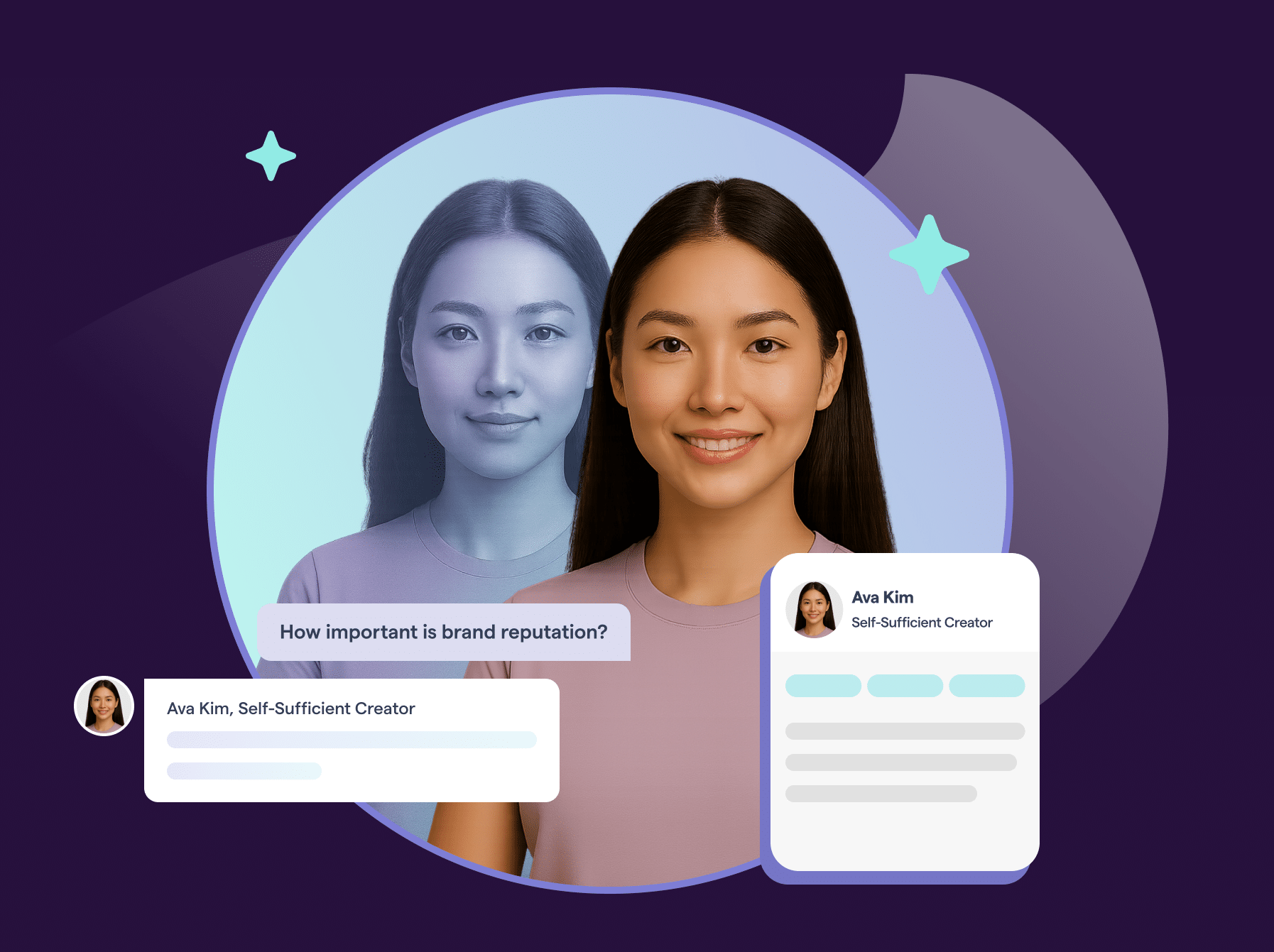
Agentic AI has reached a new milestone for modern marketing teams. Persona Agents are AI-powered, conversational consumer personas that bring segmentation to life — enabling marketers to explore audiences, pressure ideas and spark creativity every day.
Built entirely on a company’s insight assets, DeepSights Persona Agents simulate real consumer segments, capturing demographics, behaviors, preferences, tone and context. This gives marketers a practical way to activate research insights drawn from formal studies at any time. This makes it easier to keep consumer understanding front and center across brand, campaign and innovation work.
In this session, we will show how Persona Agents integrate into the DeepSights Innovation Studio to support an Always-On Intelligence approach for marketing teams. Through real-world examples, you’ll see how organizations are accelerating concept and campaign development, reducing redundant research and making faster, more confident marketing decisions — without replacing primary research or compromising rigor.
Key Takeaways:
- How Persona Agents reinvent traditional marketing personas — and where they add the most value
- How marketers can test messaging, concepts and assumptions earlier using existing insights
- How Persona Agents fit between research cycles to support faster, more agile marketing workflows
- How teams use Persona Agents to speed insight, reduce duplication and improve cross-functional collaboration
Speakers:
- Joseph Rini, Director of Product Management at Magic Login
- Andrea Gonçalves da Silva, Senior Market Intelligence Manager at Philips