



Share this article


Expanding into new markets offers major growth potential for consumer packaged goods (CPG) companies, but it also comes with high risks and complex challenges. The reality for new product endeavors, which are often at the heart of successful market expansion in the consumer sector, is stark: according to a Boston Consulting Group (BCG) analysis, 76% of yearly product launches fail, with two-thirds of these not achieving 10,000 unit sales.
The core challenge in new market expansion is gaining a deep understanding of local market dynamics, which is why even well-established brands fail to gain traction in new regions. Cultural norms, shopping behaviors, and competitive pressures vary widely across regions — and surface-level demographics aren’t enough to drive success. What succeeds in one market often fails in another, and that’s where strategic CPG market research and insights come in.
When CPG teams systematically gather intelligence and apply the right insights, they can adapt their products, messaging, and go-to-market strategies with confidence. The result: lower risk, faster execution, and stronger long-term performance in new markets.
This article explores the core challenges of CPG market expansion — and how unified insights can help brands navigate them. We’ll look at how strategic market intelligence supports product adaptation, marketing strategies, and competitive positioning, and how AI-powered insights platforms like DeepSights™ accelerate success by turning vast research data into actionable directions.

The complexities of new market entry for CPG
Expanding into unfamiliar markets comes with unique challenges that can undermine performance and erode brand equity. This is especially true when decisions are made without using the right, actionable insights.
Understanding these complexities reinforces why thorough research and strategic intelligence are essential to long-term success:
- Navigating unfamiliar consumer preferences: Regional tastes, purchasing habits, and socio-cultural behaviors shape how consumers engage with brands. Without localized, market-specific insights, even top-performing products risk rejection due to a poor fit or off-target messaging.
- Deciphering competitive dynamics and market potential: Local players often dominate with deep market knowledge and strong distribution networks. Winning a share in a newer market requires localized intelligence on market size, growth potential, and competitive strategy. This includes pricing, positioning, and loyalty levers—to avoid misallocated resources and missed opportunities.
- Adapting brand equity while mitigating risk: Market entry introduces regulatory complexity, supply chain friction, and cultural disconnects that can stall progress. Success requires balancing brand consistency with local relevance — supported by continuous feedback and localized insights to refine positioning in real time.
- Navigating regulatory and operational hurdles: Complex local regulations, compliance demands —especially in highly regulated sectors like healthcare and pharmaceuticals — and supply chain challenges can delay or derail market entry. Early and ongoing insights into these factors are critical to ensuring smooth launches and avoiding costly setbacks.
Aligning teams around disconnected research workflows: When insights are scattered across regional silos, agency decks, and legacy systems, decision-makers lose time chasing answers and second-guessing market intelligence quality. Without a single source of truth, it becomes difficult to validate assumptions, align strategies, or act with speed, slowing down market entry and increasing the risk of costly missteps.
Fragmented insights, complex consumer behaviors, entrenched competition, and cultural adaptation all create significant obstacles for CPG market expansion. Without precise, localized intelligence, companies risk poor product fit, misaligned strategies, and regulatory setbacks. That’s why having a unified, insight-driven approach is essential to navigate these challenges efficiently, reduce risk, and accelerate successful entry into new markets.
From market understanding to measurable innovation value, driven by market insights
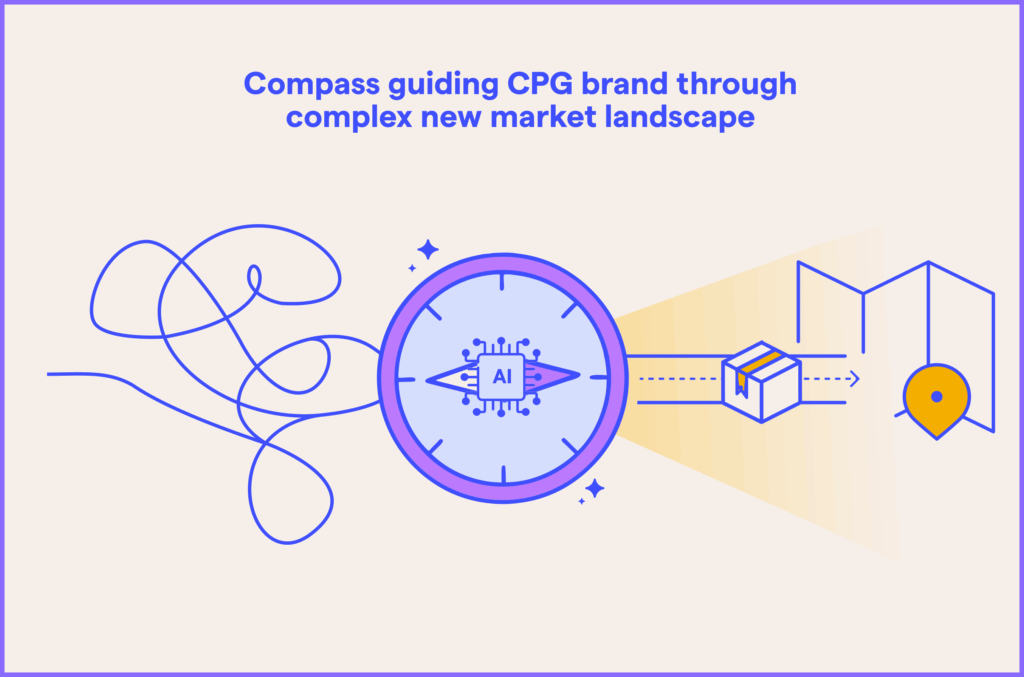
Why strategic insights are your compass for profitable CPG expansion
Leveraging critical CPG market intelligence is essential for successful market entry. Strategic insights guide decisions across every stage of expansion — helping companies turn uncertainty into clear direction and actionable plans.
The following areas illustrate how strategic insights strengthen every aspect of CPG market entry:
1. Shaping product and brand adaptation
CPG insights reveal which existing products will resonate with consumers and which need tweaks, such as changes to ingredients, packaging, or format. They also let you know where entirely new products are required to meet local tastes and socio-cultural expectations. This data-driven approach prevents wasted investment on assumptions by focusing resources on meeting real consumer needs.
Beyond products, these insights can also help tailor brand messaging, tone, and visual identity to fit the new market. By analyzing cultural values, communication preferences, and aesthetics, companies can preserve brand equity while making adjustments that improve local appeal and emotional connection.
2. Guiding marketing and distribution strategies
Creating baseline metrics before applying insights-driven initiatives is essential to accurately measure Strategic insights can help clarify the best marketing channels, pricing, and promotions to match local consumer behaviors, media habits, and market infrastructure. Understanding how customers discover, evaluate, and buy products allows your teams to optimize budgets and maximize reach and engagement.
The more granular the insights, the better, as they also help fine-tune go-to-market plans to deliver the highest return on investment (ROI). They reveal which channels generate the most engagement, pricing strategies aligned with local purchasing power, and optimal promotional timing — leveraging cultural events or seasons. This ensures that your campaigns feel authentic and drive measurable business results.
3. Unifying insights for better decision-making
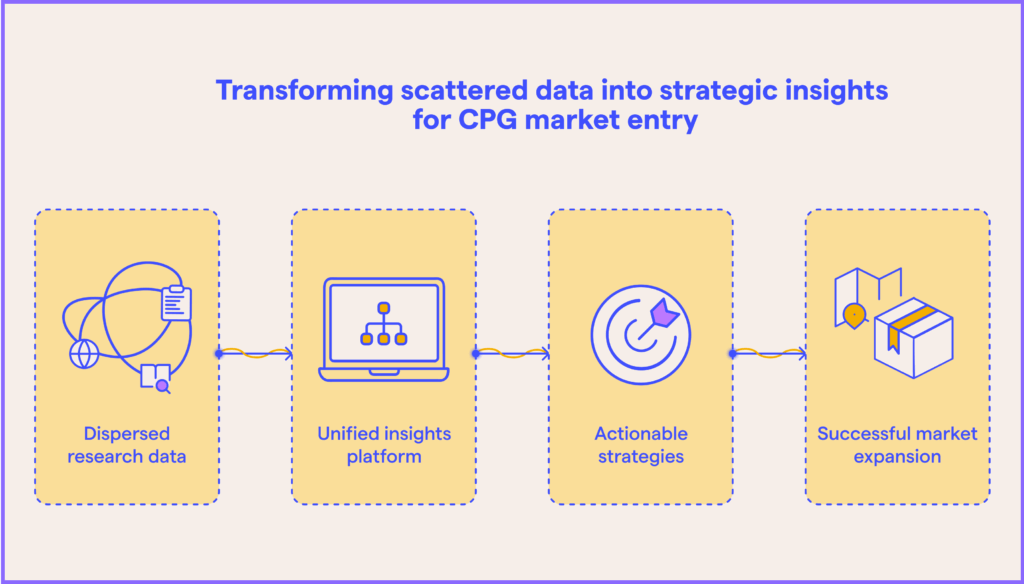
Bringing together research data from across teams and markets is essential for building a complete picture of the expansion landscape. When critical insights remain siloed across teams, formats, or systems, strategic blind spots multiply, slowing down market planning and increasing risk.
By centralizing research from your varying research sources, including historical studies and past market entries, you can create a connected, accessible knowledge base that supports faster, smarter decisions. A trusted market insights platform like DeepSights enables this by making all that information instantly searchable, linkable, and actionable — removing friction from the decision-making process and surfacing critical context exactly when teams need it.
4. Uncovering the drivers behind consumer behavior
Truly understanding a new market means uncovering the values, habits, and cultural factors that influence how people buy and use products. Ethnographic research from sources like in-market interviews and surveys reveals the why behind consumer choices. For instance, what motivates customer loyalty, what triggers rejection, and how local context shapes expectations for different communities.
These insights enable companies to develop products and messaging that reflect real consumer behavior rather than demographic assumptions, resulting in more effective positioning and stronger market fit.
Clarifying the competitive landscape for sharper positioning
Competitive intelligence, such as that drawn from syndicated reports, retail audits, social listening, and local market research data, reveals how regional players operate. It highlights specific market indicators, like product features, pricing models, distribution strategies, and messaging tactics that drive consumer loyalty and market share.
By benchmarking this data, you can identify white space opportunities, anticipate barriers to entry, and develop differentiated value propositions that resonate. A grounded view of the competitive environment helps teams build smarter go-to-market strategies that minimize risk and sharpen positioning from the outset.
Driving continuous improvement through adaptive feedback loops
Just because your products land on new shelves doesn’t mean you’ve achieved successful market entry. Real success depends on the ability to track post-entry performance, gather customer feedback, monitor competitive response, and apply those insights to refine your product, positioning, and execution. This system must be in place from the start to ensure your strategy stays aligned with real-world market conditions.
By analyzing what’s working—and what’s not—teams can fine-tune pricing, messaging, and channel strategy to keep pace with evolving consumer preferences and competitive dynamics. A strong feedback loop keeps companies relevant, agile, and primed for sustained growth in new markets.
How DeepSights accelerates CPG market entry with unified, always-on insights
Generating deep, actionable CPG insights is essential to overcoming market complexities and ensuring successful expansion. DeepSights empowers teams to gather, organize, and apply these insights by unifying fragmented research data into a centralized, searchable platform. This is made even more powerful by its agentic AI agents that produce always-on insights.
The financial impact of such a data-driven transformation is immense: a recent McKinsey & Company report estimates that leveraging AI and digital transformation can unlock an additional $160 billion to $270 billion annually in profit (measured by EBITDA) for CPG companies globally, with customer and channel management, heavily reliant on superior insights, being a primary driver of this value.
Here’s how DeepSights’ AI-powered insights platform can help CPG companies turn vast market research data into confident, timely decisions:
- Centralized, structured research data access: DeepSights transforms diverse research sources, including primary research studies, syndicated data, and internal reports, into a single source of truth. This makes it easier for teams to locate, connect, and compare insights across regions, products, and consumer segments, reducing duplication and accelerating discovery.
- Collaborative, customizable workspaces: The insights platform enables teams to build tailored environments for specific markets or projects, streamlining insight sharing and workflow coordination. This ensures strategies are aligned, focused, and responsive to localized market dynamics.
- AI-powered natural language search: DeepSights allows users to ask complex questions in everyday language, rapidly uncovering relevant insights without the need for specialized skills. This feature speeds insight discovery and empowers a broader range of team members to make data-driven decisions.
- Seamless integration and continuous insight refresh: DeepSights connects with existing business intelligence (BI) and workflow tools to embed intelligence directly into decision processes. Its ongoing updates keep knowledge current, supporting agile adjustments based on the latest market conditions and performance data from your existing knowledge base.
- Always-on insights with AI-powered agents: DeepSights uses agentic AI to continuously monitor, synthesize, and update insights from your research data. This transforms your static knowledge base into an active intelligence machine, providing up-to-the-minute updates on consumer trends and market shifts. This ensures you can turn insights into impact with always-on insights at scale.
By delivering the right insights at the right time, DeepSights reduces risk, shortens time-to-market, and equips CPG companies with everything they need to enter new markets with precision and confidence. A recent Market Logic Survey confirms this need, reporting that nearly 90% of product and innovation managers state that better access to consumer insights would increase their product launch success rates — demonstrating these insights as a crucial factor for CPG companies looking to expand into newer, unfamiliar markets.

De-risk and accelerate CPG market expansion with DeepSights
Successful CPG market expansion depends on turning uncertainty into opportunity through strategic, comprehensive market intelligence that informs every step of the entry and post-entry process. When you prioritize generating critical, actionable insights, your teams can confidently navigate challenges and seize growth opportunities to build a lasting competitive advantage.
Leveraging the right unified market intelligence and insights platform, like DeepSights, makes expansion more predictable by consolidating diverse research data sources into a single, actionable view. This approach streamlines decision-making, reduces risk, accelerates time to market, and drives stronger long-term results.
Discover how DeepSights empowers your teams with a unified platform that transforms fragmented research into clear, actionable insights. Designed to streamline knowledge management and accelerate decision-making, the award-winning insights platform helps you reduce risk and drive growth in new markets. Request a demo today to see how it can elevate your CPG expansion strategy.