Share this article


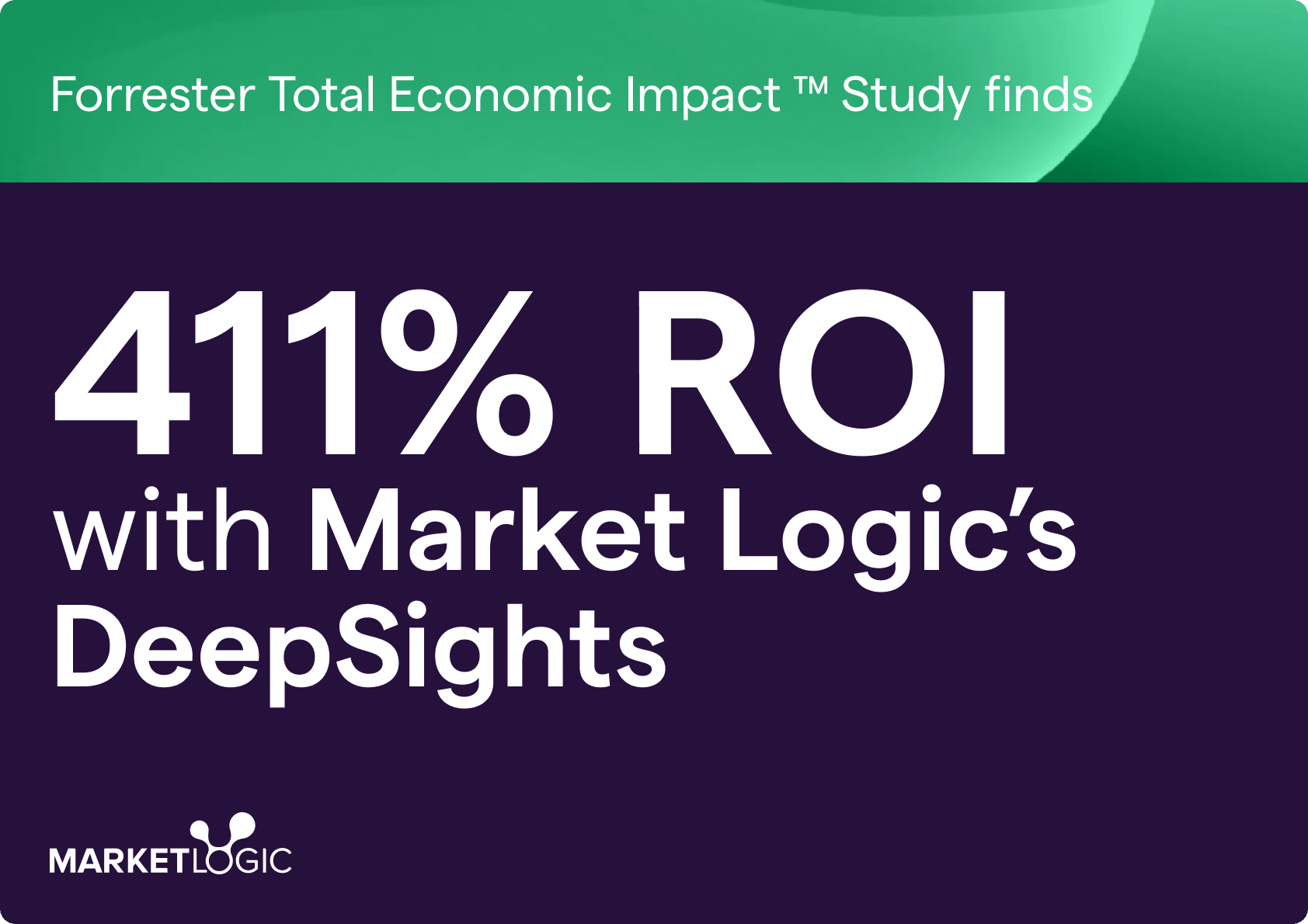
The ROI of active intelligence falls into three categories: speed, efficiency and outcomes. Forrester’s Total Economic Impact™ study quantifies the speed and cost gains for a composite DeepSights customer, while the largest, compounding value comes from better-timed decisions over time. The study found that organizations achieved 411% ROI and $7.18 million in net present value (NPV) over three years, alongside a 97% reduction in time to answer insight requests and a 27% reduction in market research expenditure.
The business case for active intelligence is sometimes framed as a cost argument: if we can find insight faster and reduce duplicated research, we spend less. That framing undersells the opportunity. The more important case is a growth argument: when the right insight reaches the right decision-maker at the right time, better decisions follow, and better decisions compound over time into competitive advantage.
The three categories of return
Speed is the fastest category to measure. A Forrester analysis of DeepSights found a 97% reduction in time to find relevant insight: a metric that translates directly into faster decisions and reduced analyst hours spent on retrieval work.
Efficiency takes longer to accumulate but is often the larger absolute number. The primary efficiency gains from active intelligence come from increasing speed to insight and reducing duplicated research commissioning.
Forrester’s Total Economic Impact Study on Market logic’s DeepSights platform noted 97% faster speed to answer for insights queries and a 27% reduction in market research costs due to duplication avoidance.
Outcomes take longest to measure but represent the most significant value. When better-timed intelligence improves the quality of product decisions, campaign strategies, and capital allocation choices, the downstream revenue and market share impact can dwarf the cost savings.
What the adoption data tells us
One of the most reliable early indicators of an active intelligence system’s value is adoption: the number of people across the organization who are actively using it to inform decisions. Fonterra, the global dairy cooperative, saw a 58% increase in unique users accessing insights following their DeepSights implementation.
This is not primarily an efficiency metric. It is a signal of how many more decisions across the organization are now being made with evidence rather than instinct. Each of those additional users represents a decision process that previously ran without systematic access to the organization’s intelligence.

The compounding effect over time
Returns from active intelligence are not linear. They compound. In the first year, the primary value is in speed and efficiency. In the second year, the knowledge base has grown and the system has been tuned to the organization’s specific needs. By year three, organizations with mature active intelligence systems typically report that the biggest value is strategic: the compounding effect of making slightly better decisions in each cycle, across every function, has translated into measurable market share and commercial performance improvements.
Forrester’s Total Economic Impact Study of Market Logic’s DeepSights platform recorded a 411% return on investment for customers by year three.
Three metrics are worth tracking from the outset. First, time to insight: how long does it take an analyst or business partner to find a relevant answer? Second, self-serve query volume: how many questions are being answered without a formal research request? Third, research commission rate for questions the knowledge base should be able to answer: is this falling?
These three metrics track the leading indicators of value and identify gaps in deployment quality before they compound into missed return.
A note on what the ROI case cannot claim
The claims that resonate most with boards and CFOs, such as “our innovation success rate improved by X%,” need to be backed by your own numbers, not by analogies to other organizations. Building the measurement framework from the outset of deployment makes this possible; retrofitting it later rarely works.
Active intelligence is also a necessary but not sufficient condition for better decisions. The system can surface the right insight at the right time. What happens next still depends on the judgment of the people who act on it.

Frequently asked questions
What is the ROI of active intelligence?
How is the return measured?
What does the adoption data show?
Does ROI grow over time?
What can the ROI case not claim?
the business case for active intelligence
How to Build an Active Intelligence System: The Four-Stage Roadmap
▶ Talk to a Market Logic expert about building the measurement framework for your active intelligence investment.